 By Tsuky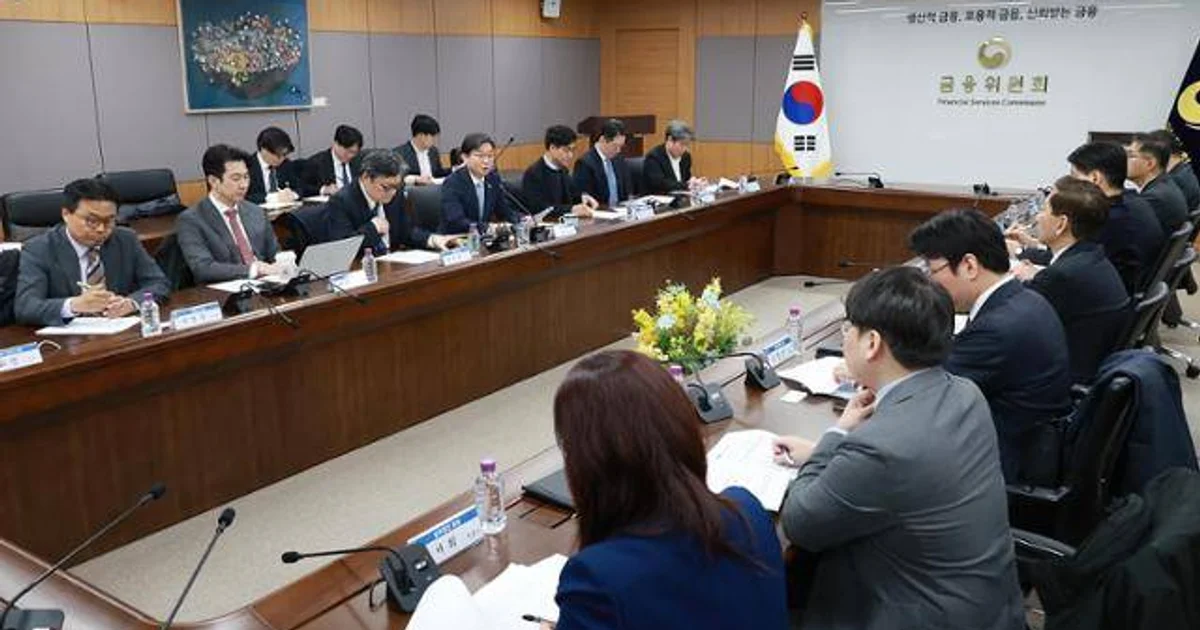
The FSC published the roadmap on September 4 after the third meeting of its public-private consultative body on security tokens.
Its long-term target reaches across the capital-market chain: issuance, circulation, account management, trading and eventually payment and settlement.
Phase one deliberately starts with narrower instruments
The amended Electronic Registration Act will legally recognize security tokens as a digitized form of securities from February 4, 2027.
Institution-only private money-market funds and certain bonds are among the first conventional securities scheduled for tokenization.
Unlisted equities are also included, initially through trust structures. Publicly offered fractional-investment securities make up another part of the first wave.
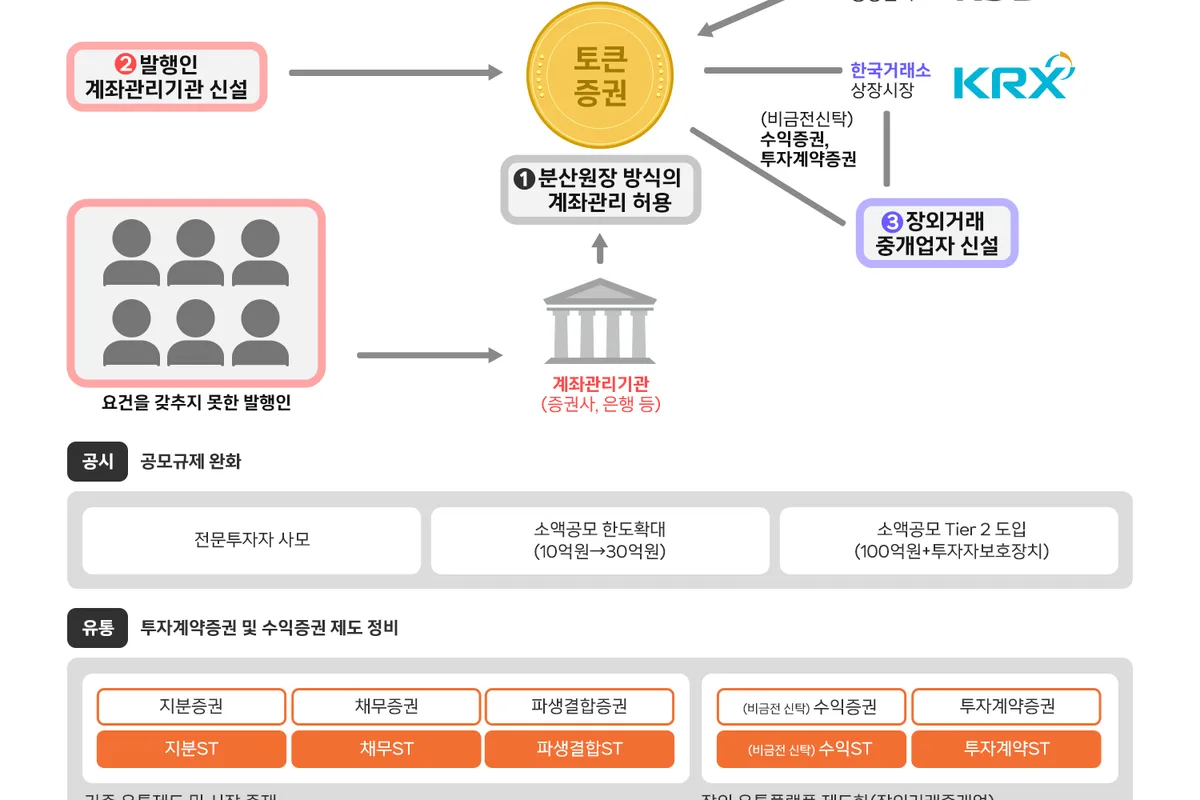
For unlisted shares, the underlying stock can remain within the established securities system while investors hold a tokenized trust-beneficiary security representing their interest.
Public securities come later
The second stage is designed to open tokenization infrastructure to publicly offered securities more broadly.
The FSC explicitly wants the system to reach established asset classes including stocks, bonds and funds rather than remain a specialized venue for unconventional investments.
Timing will depend on how the initial 2027 rollout behaves.
Existing securities firms can enter without a special token license
Licensed brokerages and securities companies are expected to be able to handle tokenized securities without obtaining an entirely separate license merely because distributed-ledger infrastructure is involved.
That reflects the regulator's underlying approach: changing the record-keeping technology does not make the instrument stop being a security.
Connection to the Korea Securities Depository and compliance with technical and operational standards will still be required.

Some issuers could manage token accounts themselves
The legal framework introduces an issuer account management institution regime for tokenized securities.
Qualified non-bank issuers would be allowed to perform account-management functions directly if they meet capital, personnel, internal-control and IT requirements.
The FSC currently plans to set the minimum equity-capital requirement at 4 billion won.
Dedicated staff would also be required for account administration, compliance and information systems.
Distributed ledgers will have to pass institutional tests
The Korea Securities Depository is preparing standardized requirements covering ledger participation, consensus mechanisms, preservation of registration data and other operating rules.
Institutions applying to connect a distributed ledger will face reviews and functional testing.
The guidelines also address business continuity when errors or outages occur. The FSC expects security-token infrastructure to provide stability comparable with the existing electronic securities system.
Retail OTC trading will not be completely unrestricted
The roadmap also defines a controlled role for over-the-counter token-security markets.
OTC operators must consult the Financial Supervisory Service, while retail investors are expected to face a 100 million won annual net-purchase limit per venue.
Tokenization, in other words, is being inserted into the existing regulatory architecture rather than used as a reason to remove it.
Stablecoins only appear at the end of the roadmap
The third phase is the most crypto-native part of the plan.
South Korea ultimately wants an on-chain payment and settlement infrastructure linked to stablecoins.
That could allow the security and the payment asset to move through compatible digital rails rather than forcing a tokenized instrument to settle through an entirely separate legacy process.
There is no firm launch date for this stage.
The FSC says phases two and three will remain flexible based on the results of phase one, technological development among market participants and pending stablecoin legislation.
Settlement is the harder transformation
Representing ownership of a stock or bond as a token is only one part of a capital market.
A deeper change arrives when issuance, trading, cash movement and final settlement can operate through coordinated digital infrastructure. Faster settlement and more continuous markets become technically possible there.
The operational burden also increases. Reversals, outages, compromised participants and erroneous transactions still need defined procedures even when the ledger itself is functioning normally.
Korea is borrowing from experiments already happening elsewhere
The FSC points to BlackRock's BUIDL tokenized fund and Hong Kong's tokenized green bonds as references for its work.
It also plans to consider pilot programs associated with NYSE and Nasdaq as Korea develops an exchange-based tokenized market centered on Korea Exchange.
The first domestic stage begins in February 2027.
2027 will be the beginning, not an overnight blockchain conversion
Several secondary rules still need to be finalized, including eligible securities, OTC-market requirements and detailed registration standards for issuer account managers.
The FSC plans to put those subordinate regulations through consultation beginning in September 2026.
Stocks, bonds and funds now have a defined route toward tokenization in South Korea. The stablecoin settlement layer remains a later-stage objective dependent on legislation that has not yet been completed.