 By Tsuky
February 4, 2027 is the legal starting line
The Financial Services Commission published the roadmap on September 4 after the third meeting of its public-private token securities consultative group.
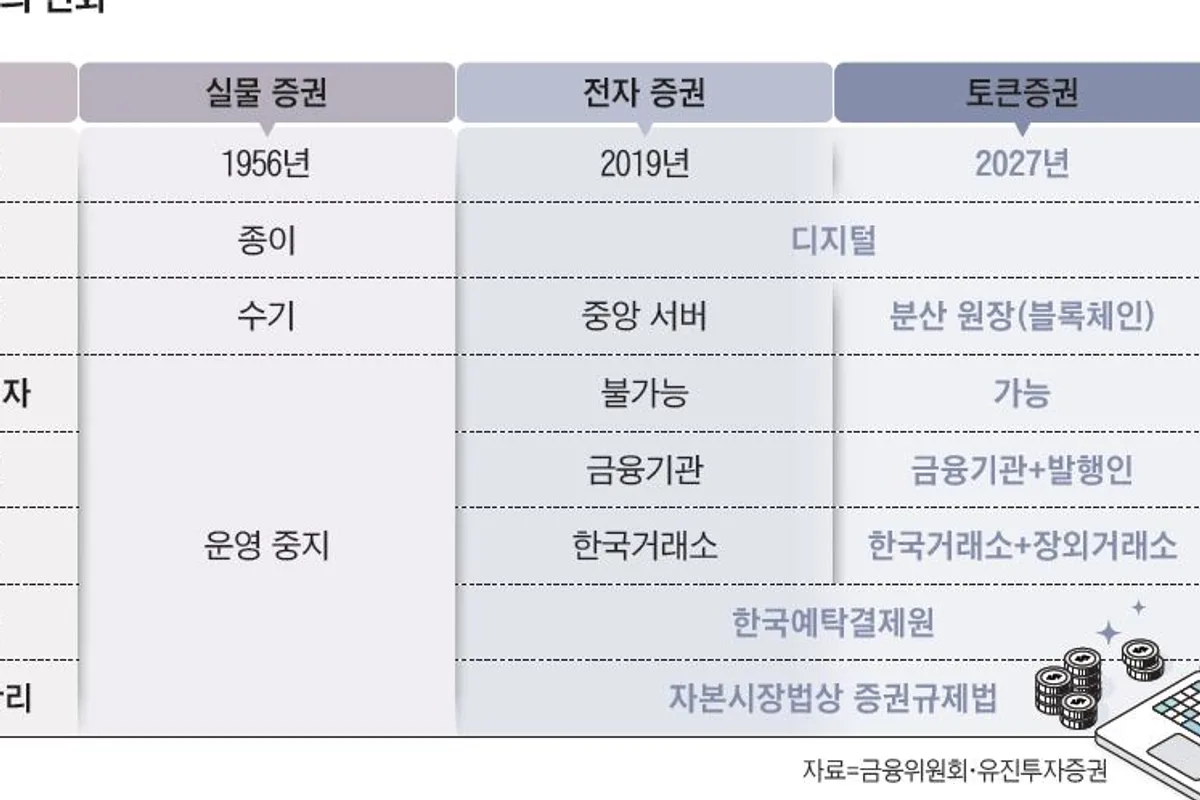
Amendments covering token securities are scheduled to take effect on February 4, 2027. Blockchain-based securities can then operate inside the legal framework that governs securities ownership, issuance and investment activity rather than existing as a loosely defined crypto substitute.
The first deployment is deliberately narrower than the long-term plan.
Private funds and bonds come first
Phase one includes tokenized private money-market funds and private corporate bonds for institutional investors.
Fractional-investment securities are also part of the initial framework.
Unlisted equities take an indirect route. Existing shares remain inside the conventional system while a trust can issue tokenized beneficiary securities representing the associated interest.
That distinction matters when describing the project. The first stage does not simply move every underlying stock certificate onto a public blockchain.
Public offerings are phase two
Once the initial infrastructure has operated successfully, the FSC plans to extend tokenization to publicly offered securities.
There is no fixed launch date for this second phase yet.
The regulator is preparing subordinate rule changes and said further revisions should be proposed by the end of September before later-stage schedules are determined.
Stablecoins arrive when settlement goes onchain
Phase three is technically the most ambitious part of the roadmap.
South Korea wants to establish an onchain settlement infrastructure in which tokenized securities could be paid for with stablecoin-linked digital payment rails.
No particular stablecoin has been selected. The FSC has not yet defined the complete framework for eligible payment assets, redemption, reserve requirements or settlement finality.
This is therefore an intended architecture rather than a live payment system.
Moving the cash leg matters as much as tokenizing the asset
A tokenized bond does not automatically create an end-to-end blockchain market. If the security moves on one ledger while money travels through a conventional banking and clearing process, two infrastructures still have to meet.
An onchain payment asset creates the possibility of delivery-versus-payment within a coordinated transaction: ownership and payment can move together.
Smart contracts can make that exchange atomic, but code does not settle the legal questions around erroneous transfers, asset freezes, payment finality or who absorbs a failure.
Traditional brokers stay inside the system
The FSC is not designing a separate capital market reserved for crypto companies.
Existing securities brokerages and trading firms will be permitted to handle tokenized securities without obtaining an entirely new license, according to the regulator.
Over-the-counter venues face additional controls and must consult the Financial Supervisory Service.
Retail investors using those OTC venues will be subject to an annual net-purchase limit of 100 million won per venue, approximately $74,000 at the exchange rate cited in reporting on the announcement.
Issuers can run token accounts, if they meet the requirements
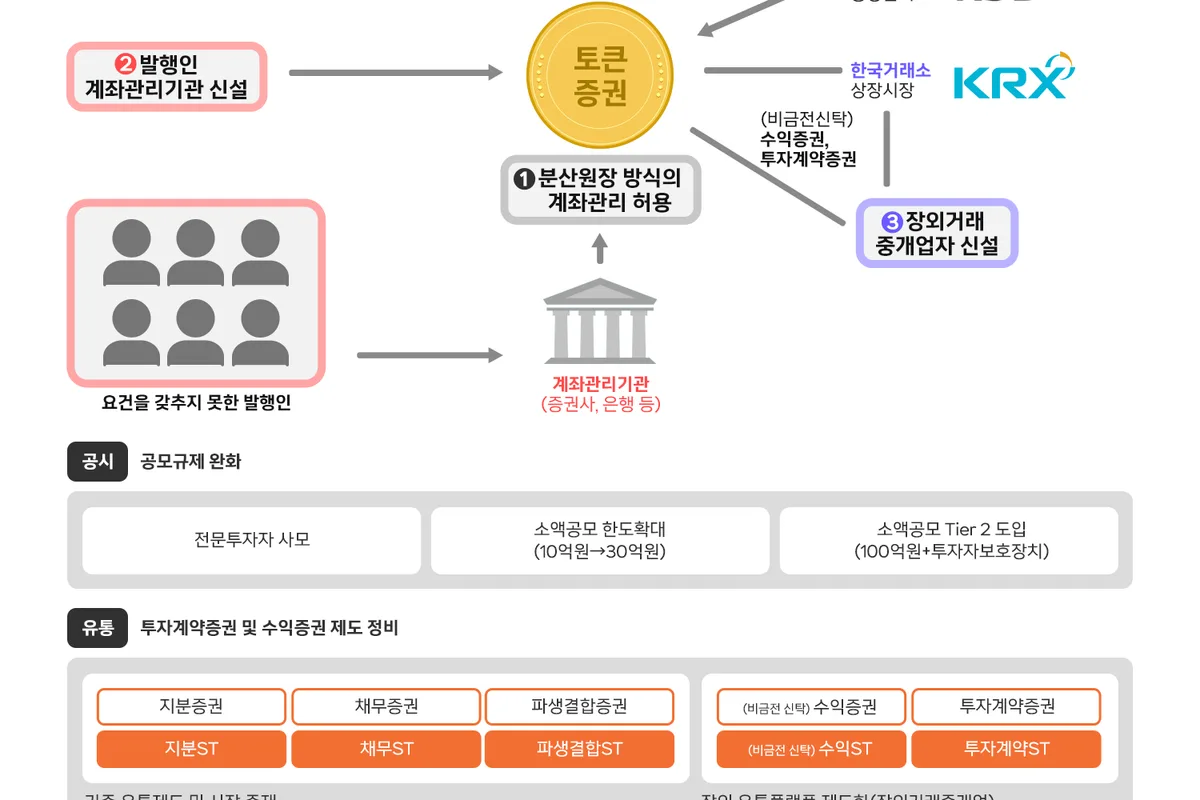
South Korea is also creating a route for eligible non-bank issuers to operate investor account-management functions for their own token securities.
The requirements include 4 billion won in equity capital and dedicated personnel for accounts, compliance and IT operations.
Issuers that cannot meet those conditions will continue to rely on qualified financial institutions.
The old market plumbing is not disappearing
Korea Securities Depository remains central to the infrastructure work, and the FSC is coordinating with it ahead of the 2027 rollout.
The regulator also points toward Korea Exchange as a core venue for organized trading rather than proposing that public securities simply migrate to decentralized exchanges.
NYSE and Nasdaq tokenization pilots are among the reference models mentioned by the Korean authorities.
BlackRock and Hong Kong are already providing case studies
The roadmap cites BlackRock's BUIDL tokenized fund and Hong Kong's tokenized green bonds as examples of institutional tokenization already operating under regulated financial structures.
That comparison says quite a lot about South Korea's direction. The blockchain is being introduced as financial infrastructure, not as an escape hatch from the securities system.
No, the entire Korean stock market is not moving onchain next February
February 4 is when the new legislation takes effect and phase one begins.
Publicly offered stocks and other securities belong to a later phase. Stablecoin-linked onchain settlement is later again.
Neither phase two nor phase three currently has a final implementation date.
Tokenization is starting to look less like crypto
Much of the roadmap is about custody, capital requirements, investor accounts, regulated intermediaries and settlement infrastructure.
That is precisely what makes it notable.
South Korea is attempting to make distributed ledgers part of ordinary capital-market plumbing. The first pieces go live when the new legal framework takes effect on February 4, 2027.