
 By Tsuky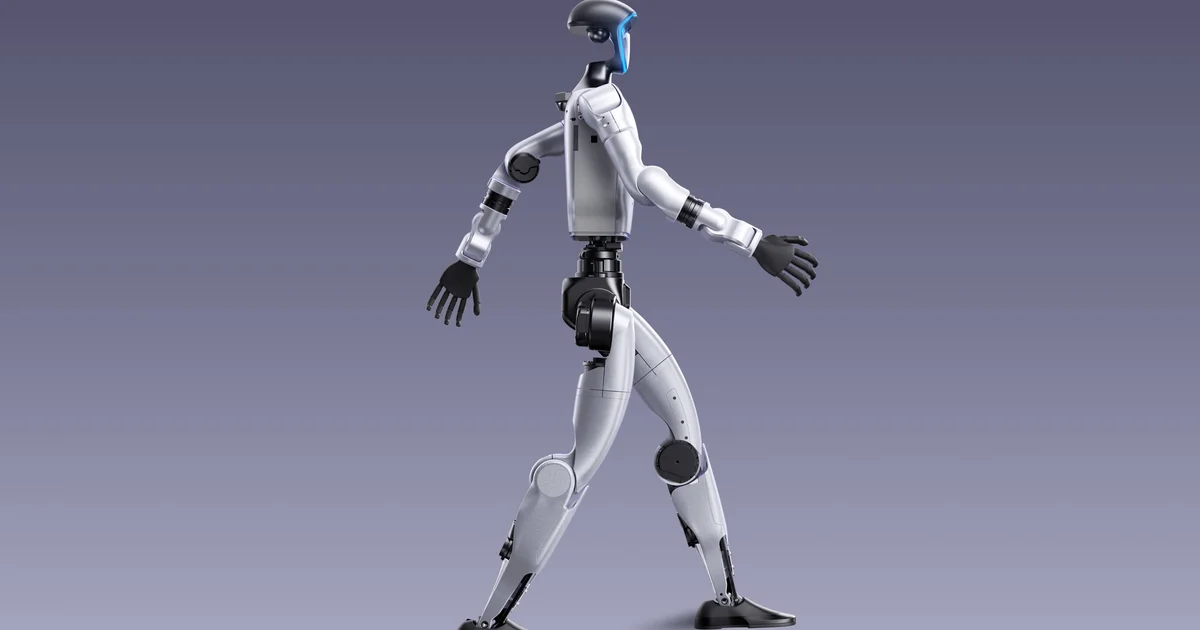
A Reuters investigation published on August 27 puts numbers behind that mismatch. The news agency reviewed hundreds of corporate filings and government procurement records, visited factories and training centers, and interviewed 40 executives, investors and researchers.
About 20,000 humanoid robots shipped worldwide in 2025, according to BofA Global Research, with Chinese manufacturers accounting for roughly 95% of them. A Chinese industry ministry official said in July that the country expects to build more than 100,000 humanoids this year.
Those figures establish manufacturing dominance. They do not establish that the machines are ready to replace general-purpose human labor.
The body is developing faster than the brain
Chinese companies can already build increasingly capable mechanical platforms. Unitree's G1 starts at $13,500 and offers a full bipedal body with depth sensing and LiDAR. UBTECH's industrial Walker S2 has entered mass production and can autonomously swap its own batteries to extend operating time.
Public demonstrations make the progress particularly visible. At Beijing's World Humanoid Robot Games this month, machines ran, competed in sports and showed major improvements in balance and movement.
Real industrial work asks different questions. A useful robot has to recognize when an object is not exactly where expected, adjust its movement, recover from failure and continue working without an engineer constantly redefining the task.
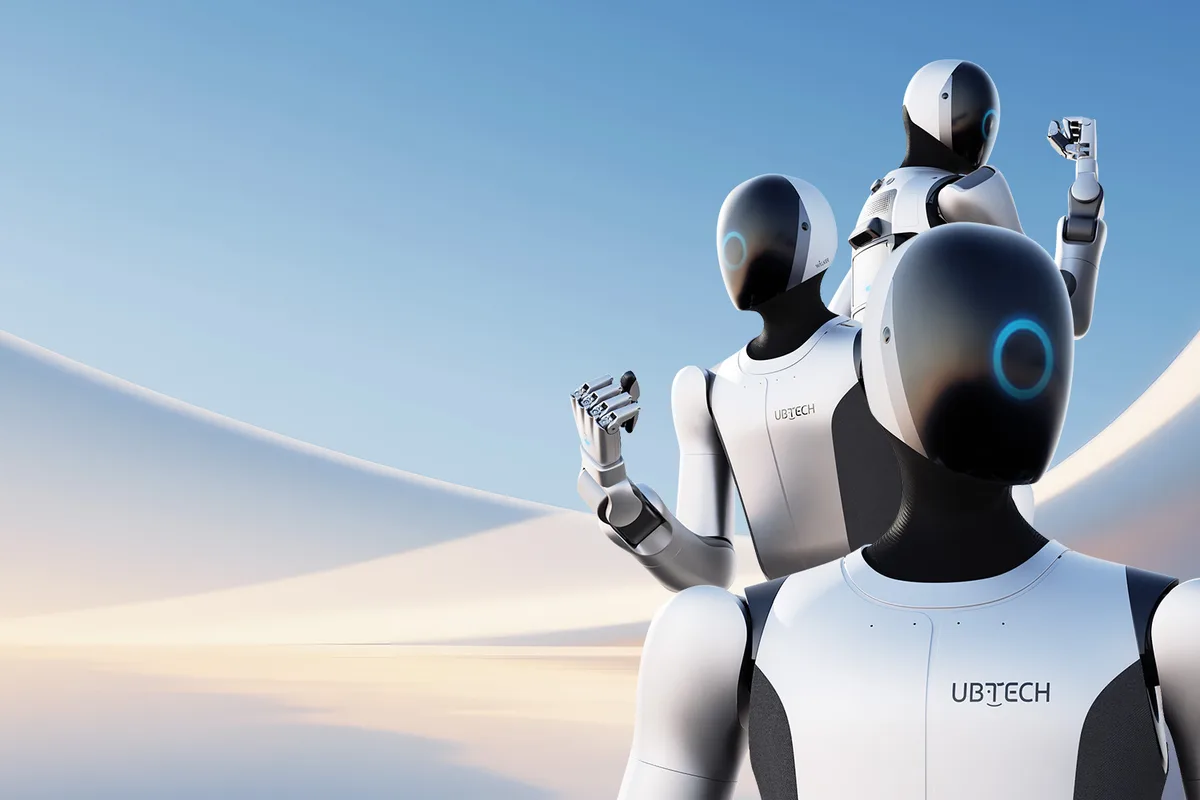
Executives and researchers interviewed by Reuters said today's humanoids still lack the intelligence required for general-purpose work. Tasks can be slow, brittle and heavily dependent on conditions that resemble the training environment.
Factories already have robots that do not need legs
Humanoids also face an unusually competent incumbent: conventional industrial automation.
Fixed robotic systems can be faster, cheaper to control and optimized for one operation. Xiaomi says 91% of assembly at its Beijing EV factory is automated. Its body shop uses more than 700 industrial robots for welding, riveting and adhesive work.
Xiaomi is also training humanoid robots for jobs including nut installation. That puts the economics into perspective. A humanoid does not merely need to perform a factory task; it needs to provide enough flexibility to justify replacing machinery that already performs predictable work extremely well.
Human-shaped machines become more compelling in environments built around people, particularly when tasks or locations change often enough that dedicated automation becomes inconvenient.
China is building the industry before demand fully catches up
That has not slowed investment. Reuters identified more than $230 million in Chinese government subsidies for the humanoid sector during the early part of 2026 alone. Local governments are also supporting training facilities, pilot deployments and data-collection centers.
In June, China's Ministry of Industry and Information Technology and the state-assets regulator launched a national program to put humanoids and embodied-AI systems into real industrial, service and specialized environments.
The official target is to validate regular deployment in representative scenarios by the end of 2026, identify more than 100 high-value applications and create the ability to deploy systems at a scale measured in tens of thousands of units.
This week, the ministry also opened public consultation on a national standards framework for the humanoid-robot industry.
Physical AI has a data problem that chatbots did not
The intelligence bottleneck is partly about training material. Language models could consume enormous collections of text and images that already existed on the internet. A robot learning to manipulate the physical world needs something much more specific.
Developers need recordings of real actions tied to perception: hands approaching objects, failed grasps, force, position changes and the corrections required when an environment does not behave as expected.
China has been building dedicated facilities for that purpose. At an AgiBot data-collection center in Shanghai visited by Reuters in 2025, roughly 100 robots operated each day under the control of about 200 human trainers. Similar initiatives have emerged in Beijing and Shenzhen.
Scaling robots therefore requires a slightly awkward intermediate step: large numbers of people generating examples that teach machines how to operate with fewer people.
Prices are falling before autonomy is solved
China's supply chain and competitive pressure are already reducing hardware costs. Morgan Stanley expects the average humanoid price to fall about 15% this year, Reuters reported.
Cheaper hardware helps, but purchase price is only one part of the deployment calculation. A robot that requires extensive training, human supervision or frequent recovery can remain expensive even if the machine itself becomes affordable.
There are nevertheless narrow tasks where deployment has started to make sense. UBTECH says more than 80% of the full-size embodied humanoids it sold in 2025 went into automotive manufacturing, smart logistics, electronics, semiconductor production, aircraft manufacturing or industrial data collection.
China has largely answered the question of whether humanoids can be manufactured at scale. The harder question now sits in the software: whether perception and embodied-AI models can become reliable enough for all those bodies to do useful work outside carefully prepared demonstrations.