
 By Tsuky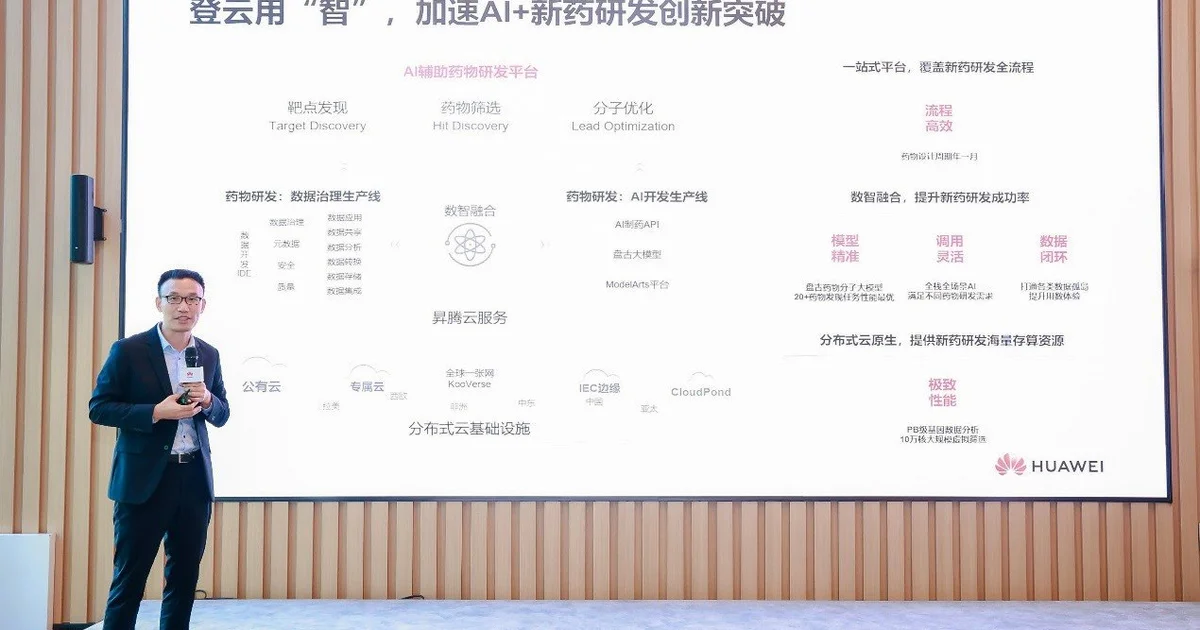
William Zhang, president of Huawei's healthcare business, told Reuters that the company intends to deepen its presence in AI-powered pharmaceuticals. The expansion is expected to focus primarily on collaborations with domestic drugmakers.
Huawei is not entering the sector with a single chatbot or isolated model. Its pitch combines cloud infrastructure, specialized AI systems, molecular-screening tools and its own Ascend and Kunpeng computing platforms.
Drug discovery gives AI infrastructure a very different workload
Early pharmaceutical research involves searching enormous chemical spaces and trying to identify which molecules are worth testing further. Models can rank compounds, predict interactions with biological targets and help researchers discard weak candidates before expensive laboratory work begins.
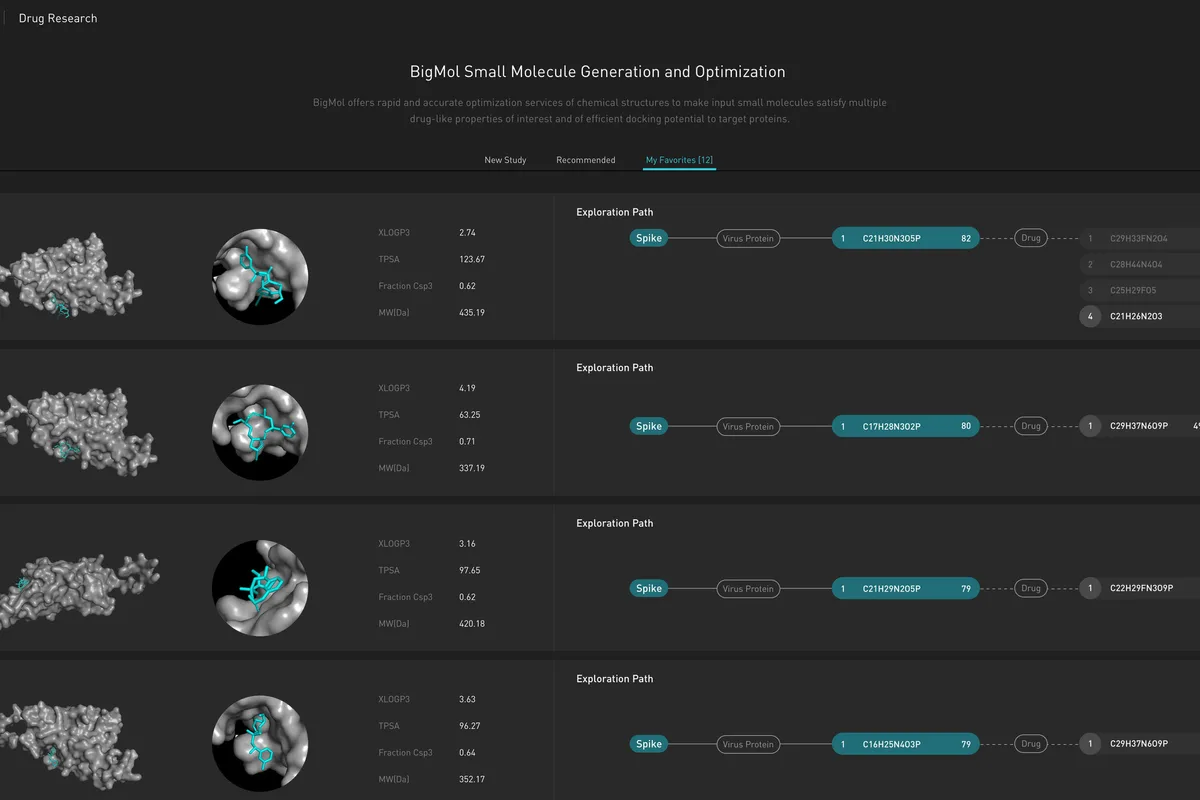
Huawei has been developing that part of the stack for years. Its Pangu Drug Molecule Model was jointly developed with the Shanghai Institute of Materia Medica at the Chinese Academy of Sciences and, according to Huawei, learned from the chemical structures of 1.7 billion drug-like molecules.
Huawei lists compound-target interaction prediction, property scoring, molecule generation and lead optimization among the system's capabilities.
None of those tasks should be confused with proving that a medicine works in patients. AI can narrow the search space. A candidate still has to survive laboratory validation, preclinical work, clinical trials and regulatory review.
Huawei also wants the compute to be Chinese
The infrastructure angle makes this expansion particularly relevant to Huawei. If pharmaceutical companies use its models on Huawei Cloud and run them on Ascend or Kunpeng hardware, the company gains another demanding workload for a computing ecosystem built to reduce dependence on foreign technology.
Reuters reports that Huawei and state-owned Guangzhou Pharmaceutical Holdings validated the first production use of pharmaceutical research models adapted to Ascend and Kunpeng technology in May.
Drug research is useful evidence for Huawei because it pushes AI hardware beyond the familiar large-language-model benchmark contest. Molecular workloads and scientific computing create different demands on memory, software libraries and accelerator performance.
There are already results, but they have a narrow meaning
One of Huawei's most frequently cited projects involved researchers at the First Affiliated Hospital of Xi'an Jiaotong University. They used a Pangu-powered drug-design service while searching for a new antimicrobial compound.
Huawei says the platform reduced lead-compound discovery from several years to about one month and cut R&D costs for that stage by 70%.
Those figures are significant, but their scope matters. They describe a particular discovery phase rather than the complete cost or duration of bringing a drug from an AI-generated candidate to an approved medicine.
The resulting compound subsequently moved through animal experiments and preclinical research, illustrating exactly where the computer-assisted part of the process stops being the whole story.
AI companies are competing for pharmaceutical workloads
Huawei is hardly alone in seeing drug development as an infrastructure market. Pharmaceutical companies are investing heavily in machine learning and automation, while technology suppliers are pursuing partnerships that place their hardware and software inside research pipelines.
Nvidia has taken a similar route through collaborations with major international drugmakers including Eli Lilly and Novo Nordisk. Huawei's position is different because its strongest immediate opportunity is inside China, where domestic AI infrastructure has additional strategic value.
Zhang says Huawei wants partnerships covering areas from drug development to clinical practice. Reuters did not report a newly approved Huawei-assisted medicine or a precise schedule for the next agreements. The announcement is therefore best read as an expansion strategy for Huawei's healthcare AI business, rather than evidence that AI has already solved the harder parts of pharmaceutical development.