
 By Tsuky
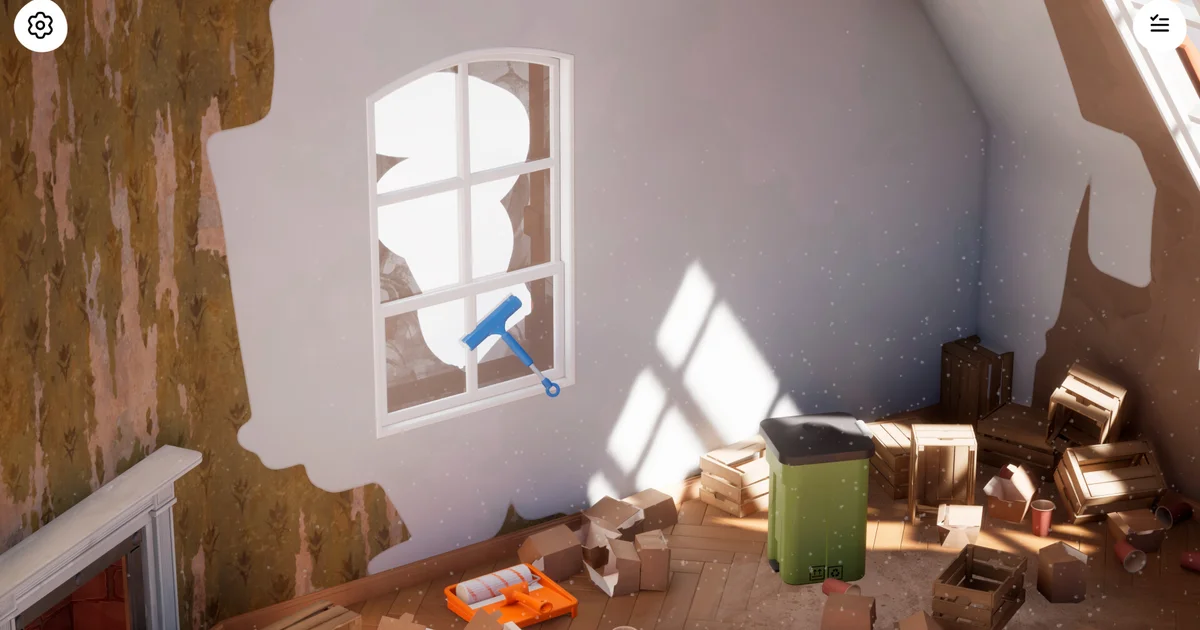
A controller cannot recreate the full sensation of holding a crowbar or running a wet mop across a wooden floor. It can, however, reproduce selected aspects of those actions through vibration and resistance.
That is the approach Come On Studio has taken with the PlayStation 5 version of Hozy.
The game, published by tinyBuild, focuses on restoring and decorating neglected interiors. Its upcoming console edition makes use of several DualSense features to add feedback to the tools that players manipulate throughout the experience.
The publisher detailed those features in a November 6 PlayStation Blog article, ahead of the planned November 9 release.
Haptics provide feedback for different surfaces
Much of Hozy consists of repeated physical actions: cleaning windows, mopping floors, painting walls, moving furniture and removing damaged material.
These activities are visually straightforward, but the game is designed to make their gradual results satisfying.
Come On Studio has developed different vibration responses for individual tools and interactions.
Mopping a floor is intended to feel different from placing furniture or handling another object.
That distinction matters because vibration can convey something about an interaction without requiring an additional visual indicator.
A carefully synchronized response can reinforce the impression of contact with a surface.
However, haptic feedback does not automatically amount to a faithful material simulation.
The quality of the effect depends on its timing, intensity and relationship with the animation and game logic.
tinyBuild has described the intended feedback but has not published measurements establishing how accurately it reproduces real-world sensations.
Adaptive triggers create resistance during renovation
The publisher's clearest example involves removing floorboards with a crowbar.
As the player operates the tool, the DualSense adaptive trigger is designed to resist the input before giving way when the board is removed.
This is different from ordinary vibration.
A vibration can communicate a sudden contact or a sustained texture. Adaptive triggers can change the effort required to move the input itself.
That creates a direct relationship between finger movement and the perceived resistance of the virtual tool.
It is an appropriate design choice for a game involving restoration work, where different actions imply different amounts of physical effort.
The controller does not reproduce the entire force involved in removing a real floorboard.
Instead, it offers a localized approximation through the trigger mechanism, enhancing the player's perception of the on-screen action.
Controller audio adds another sensory layer
Hozy also makes use of the DualSense's built-in speaker.
Selected tool sounds are played through the controller, supplementing audio from the television or headphones.
This places some feedback closer to the player's hands, creating another connection between the input device and the activity taking place in the game.
The controller speaker is not intended to replace the main audio system.
Environmental sounds and music remain essential parts of the overall presentation.
The developer says individual surfaces, objects and tools have distinct sounds, while the soundtrack changes dynamically as a room is restored.
Together, these features are designed to make the space respond visually, acoustically and through the controller during the renovation process.

A sensory system without competitive pressure
One of the more interesting aspects of Hozy is that it does not use these feedback systems in a conventional action-game context.
There are no countdown timers, scores or penalties associated with completing tasks too slowly.
The player is free to repeat movements and approach each room at a comfortable pace.
As a result, controller feedback is not primarily a tool for improving reaction times or winning encounters.
Its role is to make ordinary manipulation satisfying.
The intended reward comes from the connection between input, tactile response and the visible transformation of a space.
This highlights a broader possibility for controller technology: enhancing everyday actions that would otherwise be communicated almost entirely through animations.
In a game built around cleaning and decorating, input comfort and consistent feedback can be more important than mechanical complexity.
Sandbox mode introduces a different interface challenge
Hozy's main story consists of nine restoration levels.
The developer provides curated furniture and decoration sets for those rooms, limiting the number of simultaneous choices.
After completing the campaign, players can use Game+ to revisit spaces with different furniture collections and alternative day or night lighting.
Sandbox mode expands the available options further.
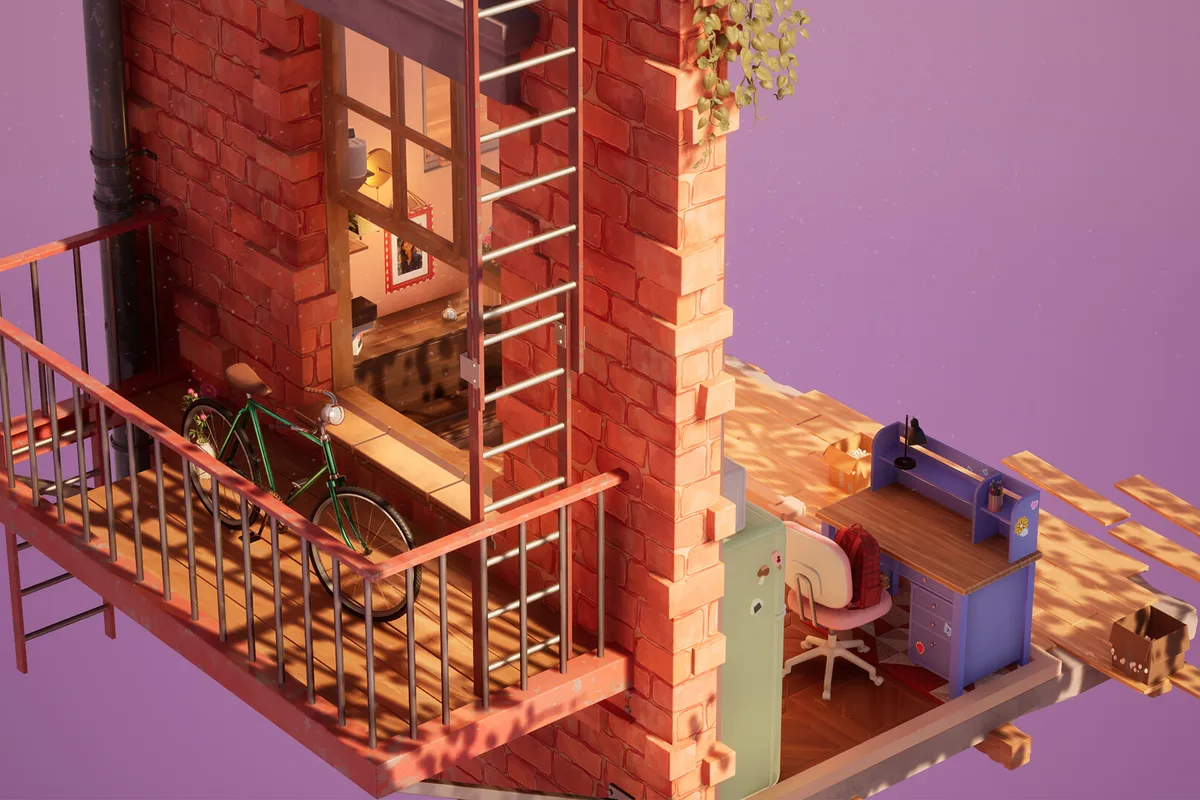
Players can duplicate and combine objects, change wall coverings, alter colors and create more personalized interiors.
This introduces a potentially demanding controller interface problem.
Selecting, positioning and rotating a large number of objects can become slow or frustrating if analog-stick precision and menu navigation are not carefully designed.
The curated main campaign may help players become familiar with the controls before moving into the more flexible creative mode.
However, the publisher's announcement does not provide an independent assessment of object placement precision or the speed of those interactions on PS5.
Accessibility and remote-play support
tinyBuild has outlined several accessibility options for the PlayStation version.
These include adjustable tool movement speed, camera inversion and color display settings.
Such options are particularly relevant to a game where interacting accurately with small objects is a central activity.
Support for PlayStation Portal has also been confirmed.
This refers to remote play through a compatible PS5, not a separate native edition running independently on the handheld device.
The quality of that experience will depend on the normal conditions of remote play, including the console and network connection.
The announcement does not provide Hozy-specific latency or performance benchmarks for Portal.
Those characteristics therefore remain unverified.
What still needs independent testing?
The announced controller features are clear, but their effectiveness has not been quantified.
tinyBuild has not provided a technical comparison between DualSense and ordinary controller input, nor a detailed measurement of haptic accuracy.
The PlayStation presentation also does not establish the game's rendering resolution, frame-rate target or graphics settings on PS5.
Those values should not be inferred from the existing PC version.
At the time of verification, the PlayStation Store listing still lacked independent confirmation that purchasing had opened, despite the publisher's stated November 9 launch date.
That leaves the commercial rollout to be confirmed separately from the announced schedule.
Hozy nevertheless demonstrates a promising use of specialized controller hardware.
Instead of asking haptics to make combat more dramatic, the game uses them to emphasize everyday physical interactions.
The technical question is whether its vibration patterns, adaptive resistance and audio cues remain coherent and comfortable across the full restoration experience.