
 By Tsuky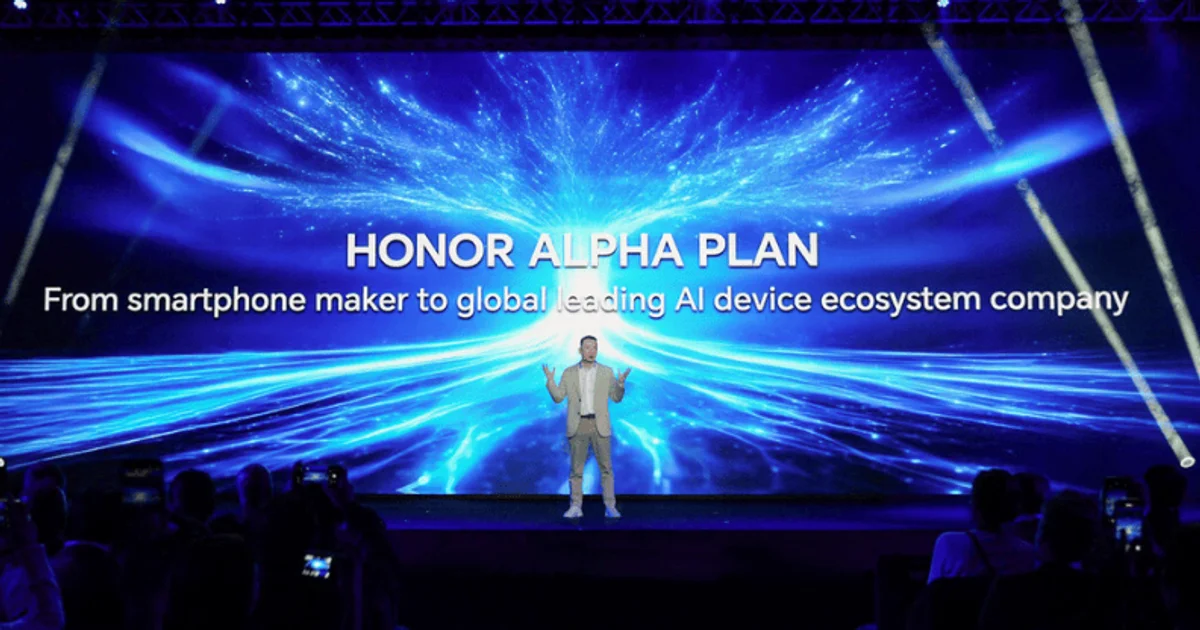
Magic9 is Qwen Intelligence's first major consumer-phone deployment
Alibaba introduced Qwen Intelligence at its Apsara Conference on September 22 as a full-stack AI phone platform for device manufacturers.
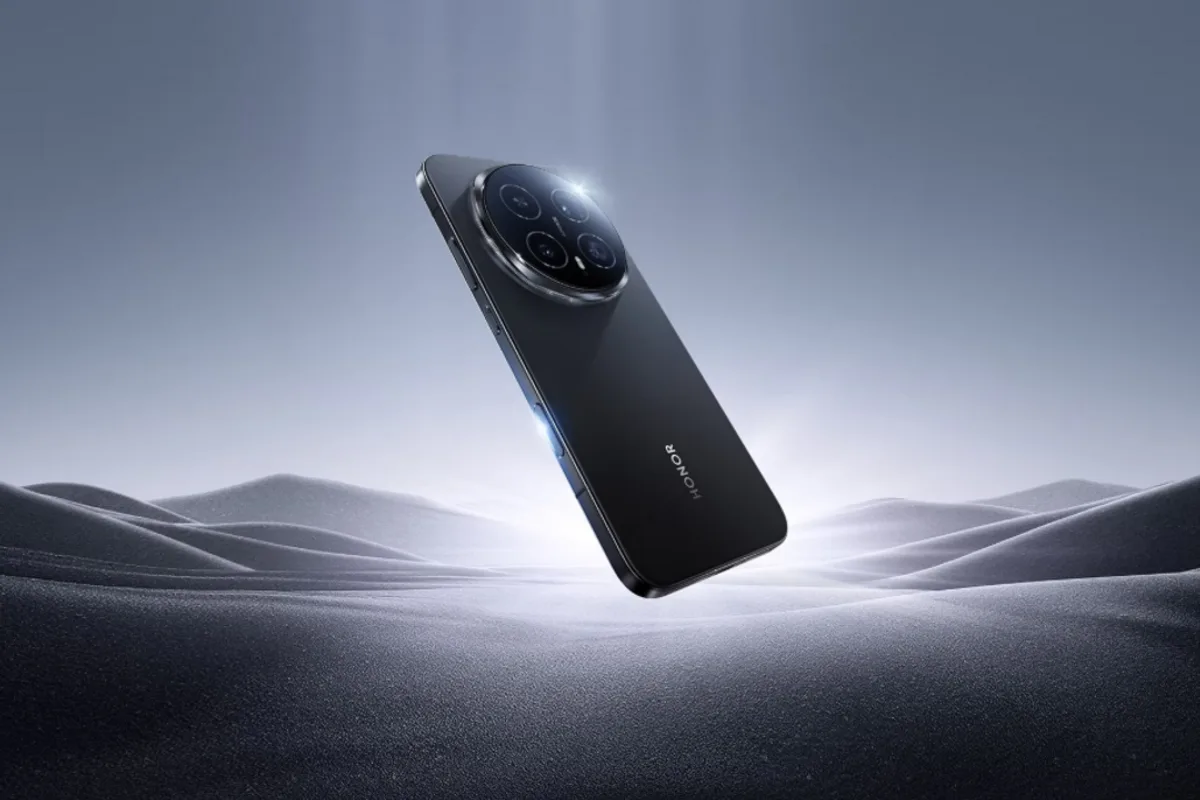
HONOR is one of its first major deployment partners. The Magic9 family launches on September 28 in Beijing with MagicOS 11 and the jointly developed agent system.
HONOR's Robot Phone also supports the platform, but Magic9 is arguably the more consequential test. This is a conventional flagship intended to sit in people's pockets every day rather than a specialized robotics concept.
The important change is from answering to doing
A conventional assistant can explain how to plan a business trip. An agent is supposed to carry out the plan.
Alibaba uses examples such as asking a phone to arrange a Monday trip to Shanghai. That can require resolving the date, comparing transport, remembering preferences and moving through multiple services.
Qwen Intelligence attempts to turn that broad intention into an executable plan and then perform the required operations.
HONOR uses similar language for the new YOYO: AI should move beyond being able to answer and become capable of completing tasks.
A single request can exceed 100 operations
The most revealing specification is not model size. It is workflow length.
HONOR says the latest YOYO can execute long-running tasks containing more than 100 individual steps.
Those steps can include opening apps, collecting information, comparing options, moving to another service, entering information and continuing until the original objective is complete.
Long workflows create a reliability problem that does not exist to the same degree with one-shot assistant commands. An early misunderstanding can propagate through dozens of later actions.
A claimed 91.8% accuracy rate sounds different when money is involved
HONOR and Alibaba report 91.8% overall task accuracy for the system and approximately 90% end-to-end task completion in their testing.
Other figures presented around the platform include 87% accuracy for complex tasks and an average GUI operation time of about 3.6 seconds.
These are company-supplied measurements rather than independently reproduced benchmarks on retail Magic9 hardware.
More importantly, a 90% success rate has very different consequences depending on the task. Failing to find a restaurant one time in ten is irritating. Failing one time in ten while buying a ticket or making a non-refundable reservation is a much more serious reliability problem.
A capable agent also needs to know when to stop
That may be the most important behavior to examine when Magic9 ships.
A useful automation system cannot simply continue whenever it recognizes another button. It needs confidence thresholds and moments where control returns to the user.
Payments, sending messages, irreversible bookings and unexpected app states are obvious candidates for explicit confirmation.
HONOR has not yet publicly documented every confirmation rule and permission boundary for Qwen Intelligence on Magic9. The September 28 launch should provide more detail.
MagicOS 11 is built around a system-level Agent Harness
HONOR had already presented MagicOS 11 on September 15 as a commercial mobile operating system built around a system-level Agent Harness architecture.
In practical terms, the harness acts as an orchestration layer connecting intent recognition, specialized models, software tools, applications and executable actions.
Instead of asking one large model to perform every stage itself, MagicOS can route different parts of a job to different capabilities.
HONOR describes a device-and-cloud model matrix, although it has not yet specified exactly which portions of every Magic9 agent workflow will remain local.
Qwen Intelligence divides the problem into planning, operation and creation
Alibaba describes three major categories within its phone-focused platform.
Planning models interpret complex instructions and break them into smaller tasks.
Operation capabilities handle interaction with interfaces and execution of the resulting plan.
A third area focuses on multimodal creation, including image and content-generation workflows.
The important part is not simply putting Qwen on a phone. It is connecting the model to reliable mechanisms for doing something inside the phone.
YOYO already exposes hundreds of tools and skills
HONOR says the new environment contains roughly 700 built-in tools and supports more than 500 skills.
It also cites more than 40 categories of conditional task triggers.
A user can therefore define actions that should happen when a particular situation occurs instead of repeating the same command manually.
MagicOS 11's YOYO Tasks feature is designed around this idea: remember an instruction and execute it when the specified condition becomes true.
HONOR says more than 10,000 third-party services are connected
HONOR also claims integrations spanning more than 10,000 external AI and service providers.
That breadth matters because an agent without access to real services remains little more than an advanced conversational interface.
Travel, shopping, healthcare, delivery and scheduling all depend on external systems.
The unanswered question is how deep those integrations are. A structured API designed for transactions is generally much more robust than an agent visually clicking through an app whose interface could change next week.
GUI control is the universal fallback — and a source of fragility
Mobile agents can operate through structured tools when an app exposes them.
When those tools do not exist, a model can instead read the screen and manipulate the interface in roughly the same way a person does.
Qwen Intelligence explicitly targets this kind of GUI operation, extending automation to software that was never designed with AI agents in mind.
That broad compatibility comes with a trade-off. A redesigned button, unexpected dialog or changed checkout flow can break an interaction that previously worked.
Personal memory is simultaneously the best feature and the most sensitive one
HONOR says YOYO can retain more user context and learn recurring preferences.
That is what makes requests such as “book it the way I usually do” possible: the system needs some idea of preferred hotels, times, seating or previous choices.
The same memory is extremely sensitive information.
As an agent becomes more useful, it can potentially accumulate context about travel, purchases, appointments, communication and routines. Controls for inspecting, restricting and clearing that information therefore matter as much as the sophistication of the model.
Privacy is more complicated than local model versus cloud model
AI-phone discussions often reduce privacy to whether inference happens on-device.
An agent makes that distinction less complete. Even if intent recognition happens locally, booking a flight or ordering something necessarily requires interaction with an external service.
Users need to understand what context leaves the device, which service receives it and why.
HONOR already emphasizes security throughout MagicOS, but the exact Qwen Intelligence policies around agent history, contextual data and permission scope on Magic9 should be evaluated from the shipping implementation rather than assumed in advance.
Magic9 launches with MagicOS 11 on September 28
HONOR has confirmed that the Magic9 family will debut with MagicOS 11 at its September 28 event.
The company has separately previewed major hardware and imaging features, including ARRI-assisted imaging, new video tools, dual 3D biometric systems and its C3 radio-enhancement chip.
Magic9 is therefore still being positioned as a conventional high-end flagship in display, camera and performance terms.
The software distinction HONOR wants to establish is different: a phone that can receive an intention and convert it into a sequence of operations.
The most useful benchmark will be a messy everyday task
91.8%, 3.6 seconds, 700 tools and 100-plus steps all look good in a presentation.
The more revealing test will be giving Magic9 an awkward real-world request and counting how often the user has to rescue it.
An agent that performs 80 steps correctly and then makes the wrong payment decision has not completed 80 successful operations. It has failed the task.
That is what makes this generation of “AI phones” more interesting than the first wave of generative features.
The question is no longer how many AI buttons a phone has. It is whether the phone can safely be trusted with a piece of responsibility — and whether it knows when to hand that responsibility back.