
 By Tsuky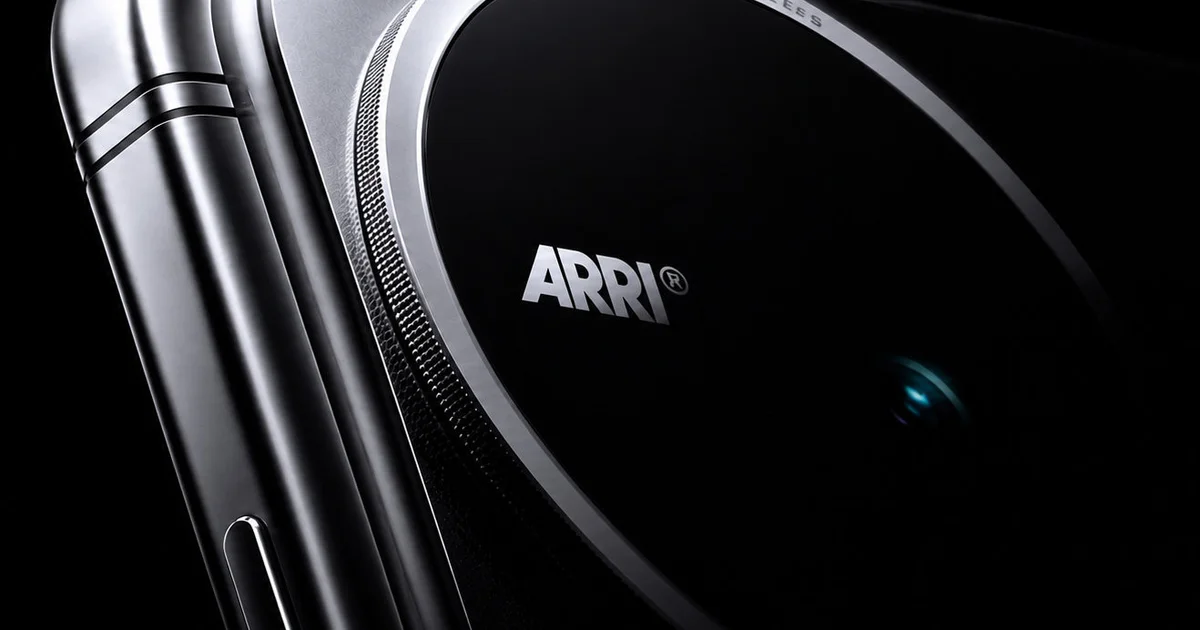
Qwen Intelligence is a phone-maker platform rather than another Qwen app
Alibaba unveiled Qwen Intelligence at its Apsara Conference in Hangzhou on September 22.
The company describes it as a business-facing full-stack agentic solution optimized for smartphones.
Instead of simply supplying a conversational model, Alibaba wants manufacturers to use a Qwen-powered platform for understanding requests, planning tasks, selecting tools and executing actions across applications.
Cross-app execution is the key distinction. The intended output is increasingly an accomplished task rather than another paragraph of generated text.
HONOR Magic9 is the first commercial implementation
HONOR will unveil the Magic9 family in Beijing on September 28, and the devices are set to become the first commercial phones built around Qwen Intelligence.
The two companies have been moving in this direction for much longer. HONOR and Alibaba formally expanded their AI partnership around Qwen models, mobile agents and integrated services.
Their work includes mobile-specific models, device-cloud cooperation and the connection of third-party services to HONOR's assistant layer.
Qwen Intelligence therefore represents a deployment milestone rather than the beginning of the relationship.
MagicOS 11 provides the system-level orchestration layer
Magic9 launches with MagicOS 11, which HONOR introduced on September 15.
The operating system includes what HONOR calls a system-level Agent Harness, effectively an orchestration layer connecting the assistant with available applications and tools.
That distinction matters. A language model can understand “organize my trip tomorrow morning” while having no direct ability to inspect tickets, compare transport, open a mobility service and update the calendar.
The harness exists to turn understanding into controlled sequences of actions.
One request can involve more than 100 steps
HONOR says the new YOYO assistant can execute workflows exceeding 100 steps.
A single instruction can therefore be decomposed into a long series of application and service operations.
Raw workflow length is not an especially useful quality metric by itself. A hundred-step task also creates a hundred places where assumptions can fail.
The important capabilities are state checking, recovery, replanning and knowing when to stop and ask the user for confirmation.
The benchmark numbers are impressive and need context
Figures presented around the launch attribute 91.8% intent-understanding performance to the new system, alongside 87% accuracy on complex tasks and a 90% overall task-closure rate.
These are vendor-provided measurements rather than independent benchmark results.
Without a complete public task set, success definition and evaluation methodology, comparing 91.8% directly against another mobile assistant would be unreliable.
Risk also changes what a good success rate means. Ninety percent may be excellent for organizing notes and unacceptable for payments or destructive account operations.
Hundreds of tools sit behind the assistant
The system described around YOYO includes roughly 700 tools and compatibility with more than 500 skills.
HONOR separately says MagicOS 11 has connected to more than 10,000 third-party AI services and supports proactive assistance across more than 1,000 life scenarios.
Those numbers describe different layers. A tool can be a basic action, a skill may combine multiple actions, while a third-party service provides external capabilities or data.
Separating those categories is more useful than simply adding every integration into one giant ecosystem number.
Planning and operating are treated as different problems
Qwen Intelligence is built around specialized components rather than asking one general model to perform every part of the workflow.
Alibaba describes a planning agent responsible for interpreting a task, decomposing it and coordinating the necessary tools.
Other components handle device operations and creative workloads.
That architecture is sensible. The model deciding which app needs to open does not necessarily need to be the same system interpreting the interface once that app appears.
Apps that were never designed for agents are the difficult part
Agents work cleanly when a service exposes documented APIs and predictable actions.
The rest of a smartphone is messier: third-party interfaces, changing layouts, confirmation screens, captchas, dynamic content and Android permission boundaries.
Alibaba and HONOR are explicitly positioning their system around more reliable cross-app operation.
The important demo will therefore not be YOYO controlling a perfectly prepared HONOR application. It will be how well the agent handles software neither company controls.
YOYO Tasks turns natural language into persistent automation
MagicOS 11 also introduces YOYO Tasks, allowing a user to define an instruction once and let the phone execute it later when matching conditions appear.
It effectively brings natural-language configuration to system automation.
HONOR also describes calendar assistance that can identify the time and location of a newly purchased ticket or appointment and automatically add the relevant event.
That sounds less dramatic than a hundred-step agent workflow, but it may be considerably more useful every day.
Proactive assistants necessarily need personal context
A phone cannot notice that a ticket has been purchased or that a recurring task is due without access to context.
Depending on permissions, that context can involve notifications, calendars, on-screen information, location, habits and data supplied by other applications.
HONOR treats contextual memory and proactive behavior as central MagicOS 11 capabilities.
That also makes privacy part of the product rather than a separate policy page. An assistant that sees nothing cannot be very proactive; an assistant that sees everything needs unusually strong controls.
Local models and cloud models will have to share the workload
HONOR and Alibaba's broader partnership explicitly covers device-cloud AI, including locally deployed and cloud-side models.
The split makes technical sense. Fast, private or lightweight operations can remain on-device, while heavier reasoning may use cloud infrastructure.
For users, it creates a simple but important question: which information leaves the phone during each type of request?
MagicOS 11's transparency around that boundary may matter more than another model-parameter count.
Taking action needs stronger permissions than making suggestions
An assistant recommending the wrong restaurant is inconvenient.
An assistant that can book, pay, send messages or alter accounts is operating with the user's authority.
Agentic phones therefore need clear boundaries between harmless automatic actions, operations that require confirmation and actions that should remain unavailable to autonomous software.
As assistants become more capable, a generic “Allow” dialog becomes a poorer explanation of what they are actually about to do.
Magic9 is not solely an AI launch
HONOR has already revealed substantial parts of the Magic9 story beyond Qwen.
The company is promoting its ARRI imaging partnership, MagicOS 11, new imaging technology and proprietary connectivity hardware ahead of the September 28 event.
Chinese reservations also confirm multiple Magic9 variants, with the full product specification and pricing still scheduled for the launch presentation.
Qwen Intelligence is therefore best understood as an important operating-system layer rather than the entire reason the phone exists.
September 28 needs to show failure handling, not just a successful demo
Alibaba has now explained the architecture and HONOR has supplied plenty of performance figures.
The useful next demonstration is straightforward: give the phone a long, realistic task using ordinary third-party applications and let something go wrong halfway through.
A capable agent is not defined only by how far it can proceed when every step works.
It is also defined by whether it knows when to stop before a mistake becomes the user's problem.