
 By Adri
Rockstar's Extended Look gives Digital Foundry substantially better material than the earlier cinematic-heavy trailers. Rockstar explicitly says the entire presentation was captured from in-game footage running on a PlayStation 5.
Digital Foundry's video analysis points to a roughly 1440p base image and a largely stable 30fps presentation. Those are analyst measurements, not specifications supplied by Rockstar.
There is an even larger qualification attached to the PC discussion: Rockstar has not announced a PC version of GTA VI.
A bigger GPU may solve the easier half of the problem
Graphics workloads are relatively flexible. Resolution can be reduced. Reflections can be simplified. Shadow quality can fall. Reconstruction can trade internal pixels for output quality.
Those compromises can release a great deal of GPU time.
Digital Foundry's concern is that some of GTA VI's most ambitious work appears to sit elsewhere. Vice City is filled with pedestrians, vehicles, animation, physical interactions and systems that need processor time whether the final image is being rendered at 4K or 1080p.

At 30fps the machine has roughly twice the per-frame time available compared with 60fps. Doubling the target therefore asks the CPU to complete its game-world work much more frequently as well.
A Low preset cannot simply remove half of Vice City
This is what could make a future GTA VI port unusually demanding. Conventional graphics settings can scale expensive rendering features without fundamentally altering the game.
Simulation is harder to treat that way.
A PC version could theoretically expose crowd-density or simulation-distance controls, but Rockstar has announced nothing of the sort. Digital Foundry is not describing a hidden PC settings menu; it is extrapolating from the workload visible in the PS5 presentation.
The Ryzen X3D reference is an illustration, not a system requirement
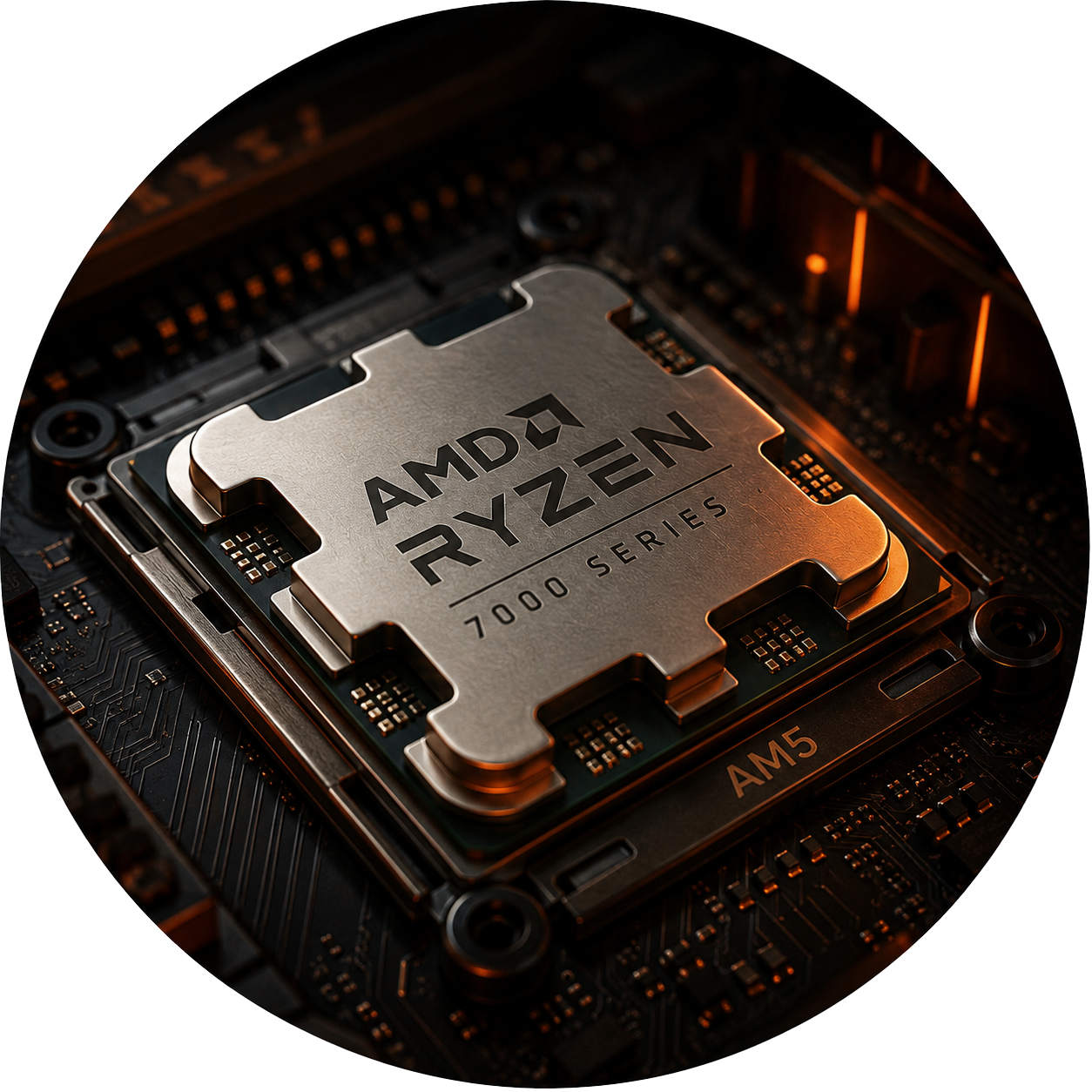
Digital Foundry raises high-end Ryzen X3D-class processors when discussing what might be required to sustain 60fps under such a heavy simulation load.
That should not be confused with a Rockstar recommendation.
There are currently no official GTA VI PC minimum requirements, recommended CPU, graphics card or performance targets because there is currently no announced PC release.
X3D processors are useful to the discussion because their large caches have repeatedly made them exceptionally capable gaming CPUs, especially in workloads where feeding the processor efficiently matters as much as raw clock speed.
Upscaling can reduce rendering cost without reducing simulation cost
A future PC edition could potentially use newer reconstruction technologies to produce high-resolution output while rendering fewer internal pixels.
That is extremely useful when the GPU is saturated.
It becomes much less transformative when the frame rate has already hit a CPU ceiling. Dropping from 4K to 1440p or 1080p can leave performance largely unchanged in a CPU-bound scene.
Frame generation would also need careful interpretation. It can increase displayed frame rate, but generated frames do not make the underlying game simulation execute twice as often. Rockstar has not announced frame-generation support for GTA VI.

The PS5 footage hints at where the CPU budget is going
The Extended Look repeatedly fills the screen with traffic and dense pedestrian populations, particularly around Vice City's nightlife and beach areas.
Recent Rockstar reporting provides some production context: the company has an LA branch almost entirely focused on pedestrians and says it developed new tools and pipelines for its most varied population yet.
None of that tells Digital Foundry exactly how much AI or simulation runs outside the player's view. A video cannot reveal the full CPU profile of an unreleased game.
It does make the 30fps discussion more credible than an argument based purely on ray tracing or image quality.
A future GTA VI benchmark could be more interesting at 1080p than 4K
Flagship PC releases are usually natural GPU benchmarks. Turn on ray tracing, use an Ultra preset, increase resolution and the graphics cards separate quickly.
If GTA VI really carries an unusually heavy CPU workload, the more revealing benchmark could be the opposite: lower resolution, remove the GPU bottleneck as far as possible and measure how many frames different processors can actually feed.
Cache architecture, memory behavior and engine scheduling could then create gaps between CPUs that look much closer in less simulation-heavy games.
That scenario remains hypothetical until a PC version exists.
Rockstar still has not announced the machine this analysis is talking about
GTA VI's official site currently lists PlayStation 5 and Xbox Series X|S, with the console launch scheduled for November 19, 2026.
There is no official PC release date, graphics menu, DLSS announcement, Ultra preset or hardware specification to analyze.
Digital Foundry's argument is therefore narrower than some headlines make it sound. It is not claiming to know how a GTA VI PC port performs. It is pointing at the PS5 workload and arguing that, if the world simulation is already consuming a substantial portion of the available CPU budget at 30fps, reaching a native 60fps may demand an unusually fast processor whenever the PC version eventually arrives.