
 By Kilam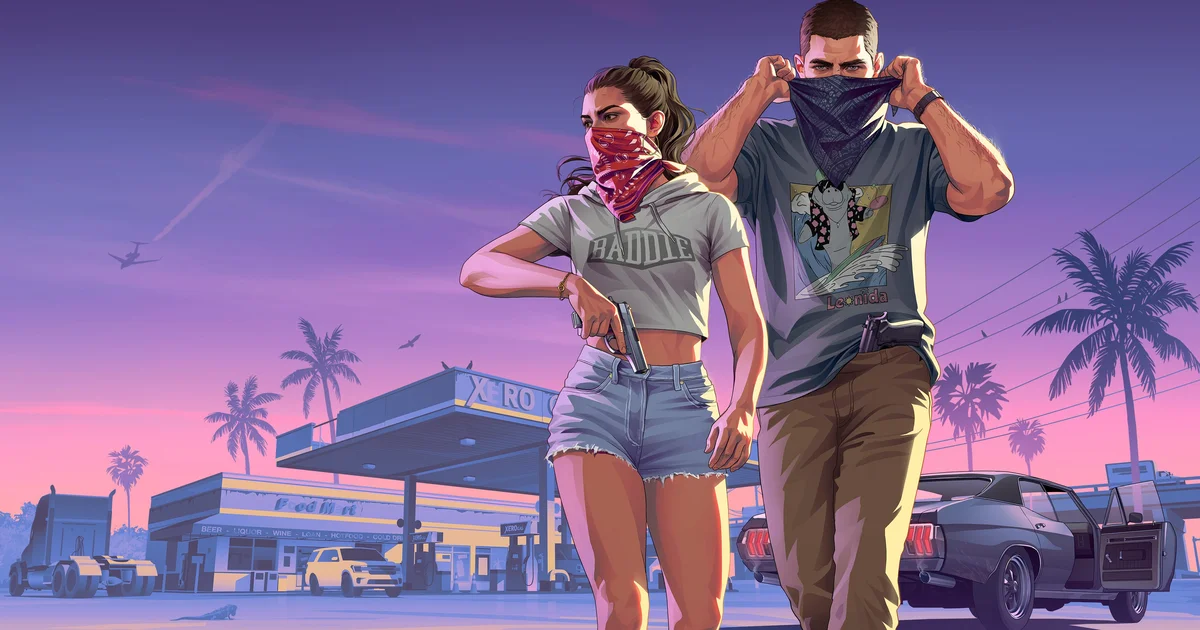
The one rendering fact Rockstar has made explicit is the hardware. Every shot in the August 27 Extended Look was captured from in-game footage running on a standard PlayStation 5.
Rockstar has not published the internal resolution. Digital Foundry derives its figure from the footage and places the image at roughly 2560 × 1440 before a simple upscale to the 4K output shown in the video.
That distinction matters. It is an analyst measurement, not an official Rockstar specification.
A 4K video does not require native 4K rendering
Modern consoles routinely separate internal rendering resolution from display resolution. The game can shade fewer pixels, then enlarge the result to fill a 3840 × 2160 output.
Digital Foundry characterizes GTA VI's presentation as a relatively straightforward upscale based on the footage available. Determining the exact reconstruction method from compressed video is inherently more difficult.
What the analysis supports more confidently is that the source image appears substantially below native 4K.

1440p is already an ambitious target for this particular frame
The more revealing part of the estimate is everything else Rockstar is rendering at the same time.
The Extended Look repeatedly presents dense pedestrian populations, traffic, vegetation, reflections, elaborate materials, interiors, long sightlines and complex lighting.
Digital Foundry also sees a relatively stable and well-paced 30fps output in the material it can inspect, with only occasional single-frame drops. The outlet warns that Rockstar's uploaded video is not sufficient for a definitive full frame-rate analysis.
A roughly 1440p internal image therefore represents a substantial pixel budget rather than an obviously low target.
Resolution is one of the easier compromises to hide
Native 4K would require significantly more GPU work. That time has to come from somewhere.
Rockstar could reduce lighting quality, reflections, shadows or environmental complexity. It could tolerate lower frame rates. Or it can render fewer pixels and spend the saved GPU time on effects that remain visible throughout normal play.
For an open-world game built around movement, the last option can be an efficient trade.
A more reactive pedestrian, another vehicle crossing an intersection or richer lighting can contribute more to the impression of a living city than a native-resolution label.
The image still exposes the trade in places
Digital Foundry identifies fine edges and high-frequency detail as areas where the lower internal resolution can reveal itself.
Video compression makes those observations less clean than a direct capture. Compression can both introduce artifacts and hide reconstruction behavior that would be easier to judge on the console itself.
A final analysis will need direct high-quality output to establish whether resolution varies dynamically and exactly what upscaling technique Rockstar uses.

Ray tracing gives Rockstar another reason not to chase native 4K
Digital Foundry's wider analysis finds evidence of expensive modern rendering work, including ray-traced global illumination and ray-traced reflections in at least some circumstances, alongside more traditional techniques elsewhere.
Those features consume GPU time before native resolution is even considered.
A lower internal pixel count leaves more of that budget available for lighting and reflection quality.
PS5 Pro remains a different question
Rockstar markets GTA VI as playing best on PlayStation 5 and has announced PlayStation-specific benefits, but the Extended Look itself is explicitly base-PS5 footage.
PS5 Pro has more graphics performance and a dedicated reconstruction solution, so improved image quality is plausible. No exact GTA VI Pro resolution, graphics mode or frame-rate target has been announced.
Digital Foundry's separate concern about CPU load also means additional GPU power cannot automatically be translated into a 60fps mode.
The useful definition of 4K is becoming the final image, not the render buffer
Modern console rendering increasingly treats native pixel count as one ingredient rather than the final measure of image quality.
GTA VI appears to be following that model. If Digital Foundry's estimate is correct, Rockstar is working from a comparatively healthy 1440p base, upscaling it to 4K and reserving substantial hardware resources for the systems and effects surrounding those pixels.
The only official resolution-related fact remains the hardware source: the Extended Look runs on a standard PlayStation 5. Grand Theft Auto VI launches November 19, 2026 on PS5 and Xbox Series X|S.