
 By Adri
€13 billion is going into Finland over two years
Google announced on September 9 that it plans to invest at least €13 billion in Finnish digital infrastructure, energy projects and partnerships during 2027 and 2028.
The expansion covers Hamina, Kajaani, Muhos and Vaala and represents Google's largest single investment announced in Europe.
The infrastructure will support services including Search, Maps and Gemini.
AI is therefore not the only workload involved, but its rapidly increasing compute demand is an important reason projects like this are reaching such scale.
The nuclear agreement eventually reaches 50% of Loviisa
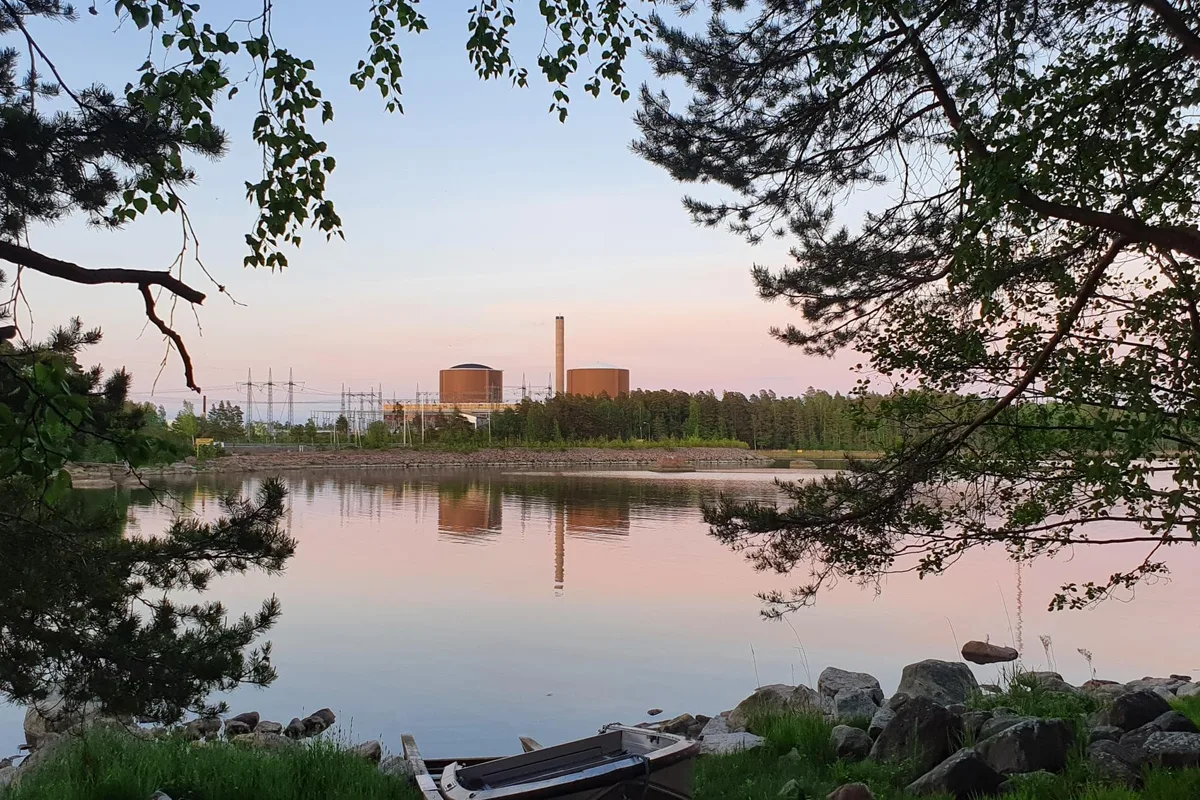
Google and Fortum have signed a 22-year power purchase agreement tied to the life extension of Finland's Loviisa nuclear power plant.
The PPA begins with a smaller contracted amount in 2028 and is scheduled to reach as much as 50% of the plant's capacity from 2030 through 2049.
Loviisa's two pressurized-water reactors are rated at 507 MWe each and together produce approximately 8 TWh of electricity annually.
The plant currently provides around 10% of Finland's electricity.
Google is not buying a reactor or physically isolating half of the plant from Finland's grid.
It is contracting for a large share of long-term generation, giving Fortum predictable revenue while electricity continues to flow through the wider power system.
The deal helps finance the plant's life extension
Fortum is already working through an investment program worth roughly €1 billion to keep Loviisa operating through 2050.
About €700 million of the required capital expenditure was still awaiting individual investment decisions when the Google agreement was announced.
Fortum says the plant could not continue operating beyond 2030 without the lifetime-extension program.
That means the PPA is doing more than purchasing electricity that would exist regardless. It provides economic certainty for investment needed to keep that generation available for another two decades.
The agreement is also expected to enable an additional 10MW power uprate on top of a previously planned 38MW increase expected in 2028.
AI data centers need the kind of electricity nuclear plants are good at supplying
Large AI infrastructure is built around high utilization.
A hyperscale facility cannot simply shut down expensive computing hardware every time renewable generation drops.
It needs large amounts of dependable electricity, with enough long-term certainty to justify billions of euros in servers, networking and buildings.
Nuclear generation offers exactly that combination of high availability and predictable output.
That helps explain why long-term nuclear agreements have become increasingly common in the technology sector as AI power demand grows.
Google is not abandoning wind
The Finnish plan deliberately combines several types of energy infrastructure.
New onshore wind PPAs bring Google's supported new-to-grid wind capacity in Finland to 629MW.
A new 94MW battery system contracted near Google's Kajaani site is expected to start operating in late 2027.
That battery is intended to provide flexibility during cold, low-wind periods and help reduce grid volatility.
Google and Fortum have also signed a memorandum of understanding covering future nuclear generation, renewables and additional flexibility resources.
New reactors at Loviisa are already being discussed
The partnership reaches beyond extending the existing reactors.
Fortum and Google say they will explore business models that could improve the commercial viability of potential new nuclear reactors at Loviisa.
No new reactor has been approved, ordered or given a construction date.
The significant part is that a major AI-infrastructure operator is already participating in the economic conversation around future nuclear generation.
Compute demand is beginning to influence what kinds of power plants may eventually get financed.
The new data centers are being placed closer to energy supply
Google worked with Fingrid, Business Finland and local authorities when identifying sites for the next round of infrastructure.
Kajaani, Muhos and Vaala move much of the new development northward compared with Google's existing Hamina campus.
Google says this allows facilities to use existing grid infrastructure closer to areas with carbon-free generation and room for additional supply.
At hyperscale, data-center siting is increasingly an electricity-system decision as much as a real-estate decision.
Finland's climate also reduces the cooling problem
Cold weather is another reason Finland makes sense for dense computing infrastructure.
Google's existing Hamina facility already uses seawater as part of its cooling design and has developed offsite heat recovery for the surrounding district-heating network.
A colder environment does not eliminate server electricity consumption, but it can reduce how much additional energy is required to remove the heat those servers create.
When thousands of accelerators run continuously, small efficiency improvements quickly become megawatts.
The €13 billion is not a €13 billion Gemini hardware bill
Google's investment figure covers digital infrastructure, data centers, energy projects and economic partnerships.
It would therefore be misleading to describe the entire €13 billion as direct AI-chip spending.
The new facilities also serve traditional Google products.
What AI changes is the amount of computing capacity those facilities increasingly need to provide.
The most revealing AI metric may now be the length of the power contract
The AI race is normally measured in benchmarks, parameters and accelerator counts.
Every one of those numbers ultimately depends on something less fashionable: enough power generation being available every hour that the machines are expected to run.
Google's new Finnish agreement lasts 22 years.
At that horizon, AI strategy stops looking like only a computing roadmap. It starts looking like private energy policy.