
 By Tsuky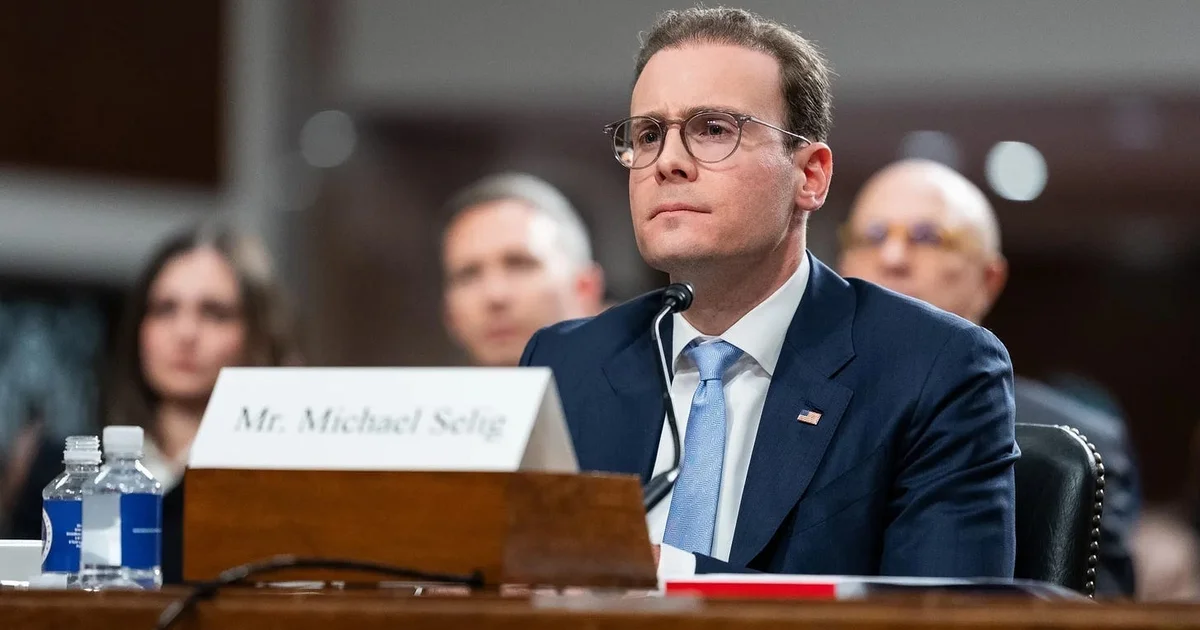
The CFTC used the inaugural meeting of its Innovation Advisory Committee on August 20 to make its fallback position unusually explicit.
Michael S. Selig told the committee that staff have been directed to explore a CFTC crypto market structure using powers the agency already possesses. The instruction comes while broader legislation remains stuck in Congress.
Washington is trying to solve two different problems
The first is jurisdiction. US crypto businesses have spent years arguing over when an asset becomes subject to securities law, when commodity rules apply and which regulator should supervise the trading venue.
The second is durability. A regulator can interpret statutes, issue exemptions and write rules within the authority Congress has already granted it. Only Congress can redraw that authority in a way designed to survive changes in agency leadership.
The CLARITY Act is supposed to tackle that larger market-structure problem. Selig continues to describe legislation as the preferred outcome.
The fallback could reshape crypto exchanges
The chairman's roadmap asks CFTC staff to examine a framework under which existing registrants and some currently unregistered crypto exchanges could potentially become a CFTC-supervised type of Designated Contract Market.
Under the concept described by Selig, those venues could offer leveraged or margined crypto-asset trading under rules designed for the sector.
This is not a newly available licence yet. The chairman has instructed staff to explore and prepare a regulatory approach; the Commission has not completed a final rule creating that regime.
On-chain developers are part of the discussion
Selig also directed staff to engage with developers of on-chain finance protocols about compliant ways to offer their technology in the United States.
That is potentially significant for DeFi because US policy has often struggled to map rules written for companies and intermediaries onto software whose execution may be distributed across smart contracts and users.
The August meeting did not answer where that boundary would sit.
The CFTC and SEC are attempting to reduce regulatory overlap
Selig is working with SEC Chairman Paul Atkins through Project Crypto, an effort that includes developing a clearer taxonomy for digital assets and reducing uncertainty about which assets fall inside securities regulation.
Coordination matters because separate agency initiatives can otherwise produce two definitions of the same market problem. It still cannot guarantee that a future administration will preserve the resulting interpretation.
That is why the stalled bill still matters
Reuters reported before the committee meeting that US regulators were preparing to act as the congressional effort lost momentum. Industry representatives generally welcome faster agency action but remain concerned that regulations could later be challenged in court or rewritten under different political leadership.
That risk is not theoretical. The current administration has already reversed numerous financial and crypto policies inherited from its predecessor.
A framework built primarily through regulatory discretion can travel in both directions.
Industry has a prominent seat at the advisory table
The IAC membership includes Coinbase CEO Brian Armstrong, Uniswap Labs CEO Hayden Adams, BitGo co-founder Mike Belshe, Polymarket CEO Shayne Coplan and a16z crypto managing partner Chris Dixon, alongside traditional market executives and academic representatives.
The CFTC says the structure is intended to bring practical experience directly into policymaking. Committee chair Walt Lukken stressed that the group is not supposed to advocate for any single technology, business model or market participant.
Its advice is nevertheless advisory. The committee does not itself write or approve CFTC regulations.
No new federal crypto framework took effect on August 20
The meeting established direction rather than completed law.
Selig said he intends to give the CLARITY Act room for a congressional vote. If legislation continues to stall, he plans to move the agency more quickly toward formal rule proposals under its existing authority.
Those proposals would still face the ordinary regulatory process, legal scrutiny and the limits of the statutes the CFTC already has.