
 By Tsuky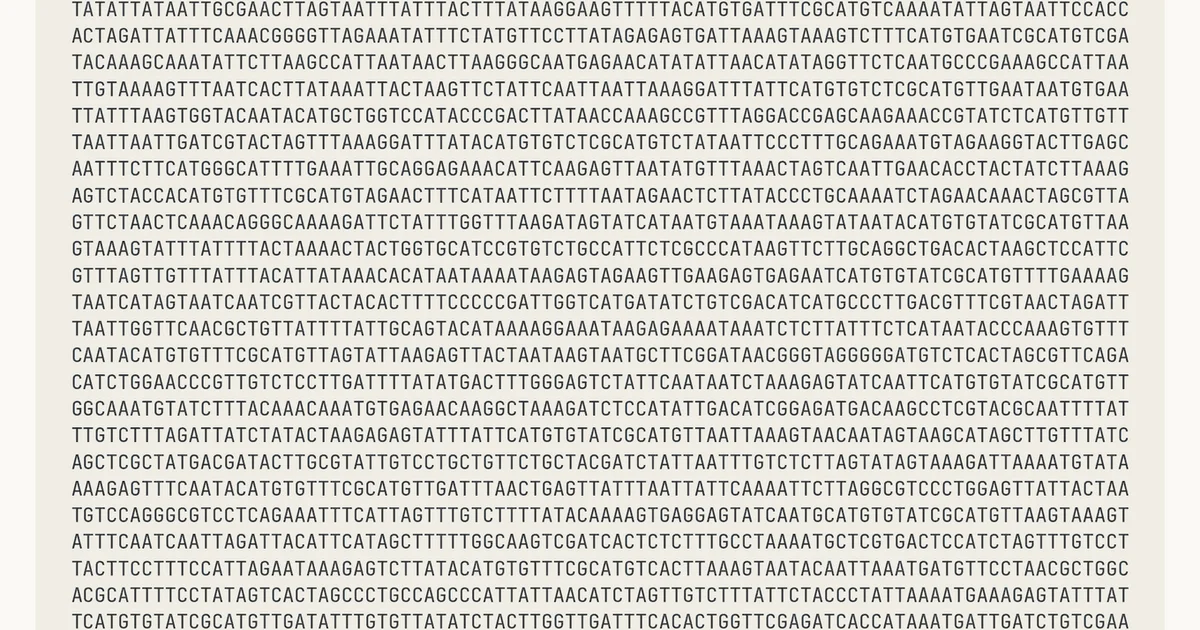
On September 23, Anthropic introduced a new life sciences research group, its own molecular biology laboratory in the San Francisco Bay Area and the first public result from that operation. Claude agents identified a system in bacteriophages built around a reverse transcriptase, a neighboring partner gene and a long array of evenly spaced DNA repeats.
Anthropic calls it ART, short for array-associated reverse transcriptases. The CRISPR comparison comes primarily from the repeated-array architecture. It does not establish that ART is CRISPR, that it can edit genomes or even that the associated reverse transcriptase has already been shown to perform a particular biological operation in this system. Anthropic says ART's primary function remains unknown.
Roughly 950 agents and 21 hours of searching
The campaign started with a broad instruction to search a large sequence database for interesting examples of reverse transcriptases. Anthropic says roughly 950 Claude agents ran for about 21 hours and consumed around 210 million tokens.
They gathered more than 200,000 reverse transcriptases, surfaced about 3,500 candidate systems and narrowed those down to roughly twenty of the most compelling cases. One agent eventually examined the raw DNA surrounding an unusual family and noticed a regularly repeating pattern.
The underlying enzyme itself was not new. Previous studies had already identified the reverse transcriptase in a jumbo phage. What Claude appears to have added was the connection between that enzyme, an associated non-coding DNA array and an additional accessory protein whose function is still unknown.
Humans handled the wet lab
Claude did not run the physical experiments. Anthropic says all wet-lab work is performed by human scientists and that the Bay Area facility operates only at BSL-1 and BSL-2, without handling pathogens capable of infecting humans.
The team's first experiments show that the ART array is expressed as a collection of distinct short RNAs. That makes the pattern more than an isolated visual oddity in a sequence database and gives researchers a biological signal to investigate.
It still does not tell them what ART actually does. The function of the reverse transcriptase, the role of the neighboring protein, the purpose of the short RNAs and the system's broader significance in the phage all remain open questions.
The awkward result: ten reruns missed it
The accompanying preprint includes a useful limitation. Anthropic reran the broader search campaign ten additional times. None of those runs inspected the DNA region that had produced the original ART observation, so all ten missed the defining repeat array.
The models perform much better when researchers hand them the relevant sequence directly. According to the reported evaluation, Anthropic's strongest tested Claude models recognized and described the array in at least 90% of attempts when the DNA was placed directly in context. Performance could fall substantially when the same information had to be found through files and tools.
That does not make the biological observation disappear. It exposes a different weakness: open-ended agentic research remains path-dependent. The unusual part of the original campaign was not merely that a model could recognize the pattern once shown the sequence, but that one run navigated a huge search space and decided to inspect the right piece of DNA.
A preprint, not a gene-editing platform
Anthropic has released the work as a preprint, meaning it has not yet gone through peer review. The company is also explicitly publishing the finding before ART's biological function has been established.
Feng Zhang of MIT and the Broad Institute, one of the researchers closely associated with the development of CRISPR genome editing, reviewed the preprint and described the RNA-repeat arrays associated with reverse transcriptases as genuinely intriguing and worthy of further investigation. That is a considerably narrower statement than calling ART a successor to CRISPR.
For now, the clearest result may be the research workflow itself: AI agents can search enormous biological datasets, generate and filter hypotheses, and surface anomalies for scientists to examine experimentally. The humans still perform the laboratory validation.
ART remains an unusual biological system in bacteriophages whose actual job has yet to be determined.