
 By Camille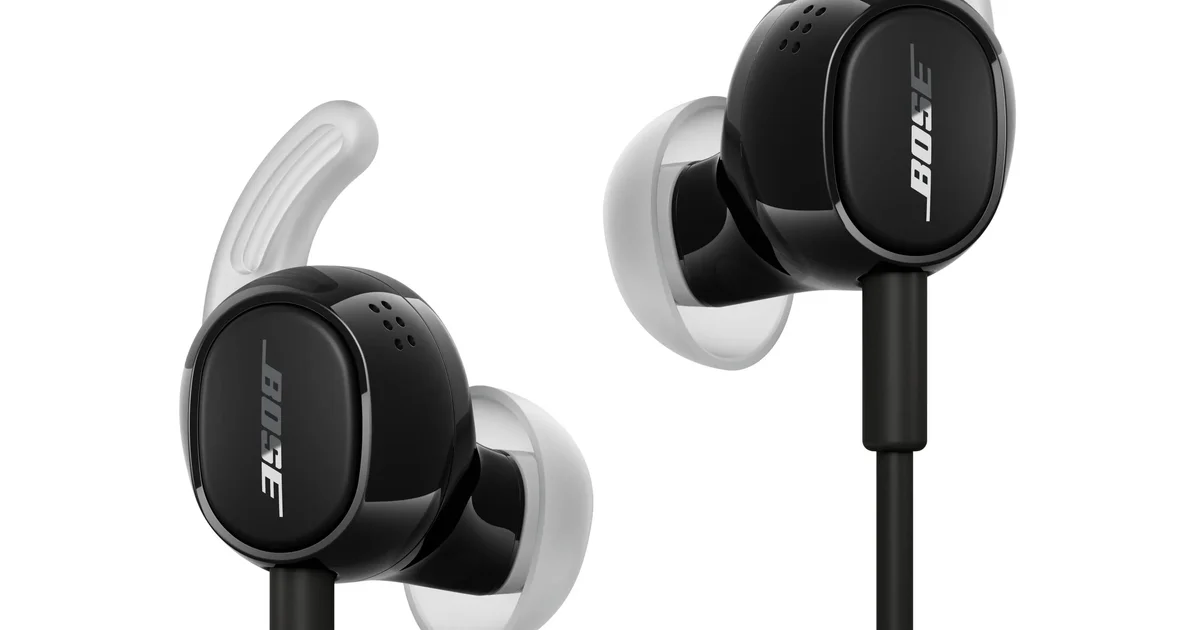
Bose is back in wired earbuds after eleven years
Bose announced Noise Cancelling Wired Earbuds on September 28, 2026, describing them as its return to a category in which it had not introduced a new wired earbud model since 2015.
US pricing is $99. Preorders opened through Bose and Best Buy on announcement day, with shipping scheduled to begin October 15.
Black and White Smoke are the standard finishes, accompanied by a limited-edition Dewdrop Mint option. The earbuds are therefore announced and available to preorder, rather than already in general shipment.
ANC works without an internal battery
Passive wired earbuds need no power source of their own. Active noise cancellation is different: microphones, signal processing and amplification all need electricity. Bose gets that power directly from the USB-C port on the connected phone, tablet or computer.
There is consequently no battery inside the earbuds to recharge. Connecting the USB-C cable supplies the electronics required for the product, including its active noise cancellation.
That removes one familiar wireless-earbud constraint without making the energy consumption disappear. It moves that consumption to the source device. Bose does not provide a figure showing how much running ANC will reduce a connected smartphone's battery life.
No Bluetooth also means no pairing
Bluetooth has been removed entirely. The earbuds plug into compatible USB-C phones, tablets and computers, with no pairing sequence and no app required before listening.
That eliminates reconnection problems, Bluetooth codec negotiation and the routine of separately charging two earbuds and their case. In return, it restores the obvious wired limitation: a 4.2-foot cable physically connects the listener to the source.
This is not a return to a purely analog headphone. USB-C carries digital audio and powers onboard electronics. The cable is back, but the electrical simplicity of a passive 3.5mm earbud is not.
USB-C cannot simply be replaced with any old adapter
Bose explicitly says USB power is required for the earbuds to function. Non-USB adapters that cannot provide the necessary power will not work.
That matters for anyone expecting to attach a basic 3.5mm adapter and use the earbuds with an analog headphone output. The architecture depends on USB-C to power its DSP and ANC functions.
The target is therefore the modern USB-C phone, tablet and computer rather than an older music player whose principal appeal might be its analog headphone jack.
Four microphones feed QuietControl
QuietControl uses four microphones, two in each earbud, to continuously monitor surrounding sound and generate the active cancellation response.
There are three listening modes. Quiet reduces external noise, Aware lets environmental sound through, and ANC Off disables active cancellation for straightforward wired listening.
Bose has not published comparative measurements establishing how this system performs against QuietComfort Ultra Earbuds or its other wireless products. The QuietControl branding identifies the technology being used; it does not by itself establish flagship-equivalent ANC performance.
Physical buttons replace the app
With no app required, controls live on an inline remote. Tactile buttons handle volume, playback, calls and switching among Quiet, Aware and ANC Off.
A separate microphone on the back of that remote handles voice capture. Bose says the placement is intended to provide clear speech while reducing unwanted noise when the control module contacts clothing.
There is a pleasingly mundane advantage here: changing ANC mode does not depend on a touch gesture being recognized or an app being opened. Finding the correct button by feel is a feature again.
Internal output is fixed at 24-bit/48kHz
The digital path uses Bose SoundDesign DSP and USB Audio Class 2. Bose says the earbuds can accept source input at any sample rate and bit depth supported by the system, while playback output from their processing is fixed at 24-bit/48kHz.
Bose describes the product as supporting lossless listening. That does not mean a 24-bit/192kHz source travels through the complete processing chain at 192kHz: the earbuds' output stage remains fixed at 48kHz.
That is more informative than a generic high-resolution badge. With losslessly distributed music, USB can avoid a lossy Bluetooth codec. Material above 48kHz still encounters the stated limit of Bose's processing pipeline.
A wire removes the radio latency problem
Bose also highlights low latency for video, gaming and content creation. There is no Bluetooth codec or wireless transport adding its own buffering between source and earbuds.
Digital processing inside the earbuds still exists, particularly when ANC is active. Bose has not published a numerical latency measurement, so assigning a specific delay would go beyond the available specification.
For mobile games or video editing, however, eliminating the variability of a Bluetooth link is a structural advantage of the wired connection.
IPX4 and nine possible fit combinations
The earbuds carry an IPX4 rating for resistance to sweat and splashes. They are not intended for immersion.
Bose supplies small, medium and large silicone eartips plus medium and large stability wings. Those components can be mixed, matched or used without the wings to adjust the fit.
A zippered carrying case is included too. It obviously does not charge anything; its job is simply to store the cable and prevent a product designed around simplicity from beginning every listening session as a knot.
Younger listeners helped pull Bose back toward wires
Bose explicitly connects the launch to renewed interest in wired listening. Raza Haider, president of Bose Premium Consumer Audio, describes wired earbuds as undergoing a cultural renaissance.
WIRED reports that wired-headphone sales returned to growth after years of decline, increasing 10% in the second half of 2025 and 20% at the start of 2026. It also reports that Bose observed the trend among teenagers and during visits to college campuses.
The engineering itself is not particularly nostalgic. A conventional analog earbud from the 2000s needed little beyond a driver and headphone plug. Bose's 2026 design contains microphones, DSP, digital conversion and ANC. What disappeared is primarily the radio and rechargeable battery.
Removing the battery also removes one wear component
An internal battery inevitably loses capacity after enough charge cycles in true wireless earbuds. These wired Bose earbuds store no energy of their own, so there is no earbud battery capacity to degrade with age.
Mechanical compromises return instead. A cable can snag, tangle or eventually fail, and USB-C occupies the source device's physical port while listening. This design exchanges one category of inconvenience for another rather than eliminating all of them.
At $99, Bose's proposition is consequently less retro than it first appears: keep ANC, digital processing, calls and modern USB audio, then remove Bluetooth, batteries and charging. Eleven years after leaving this category, Bose is not really recreating its old wired earbuds. It is testing what wired earbuds look like after a decade of technology developed for wireless ones.