
 By Camille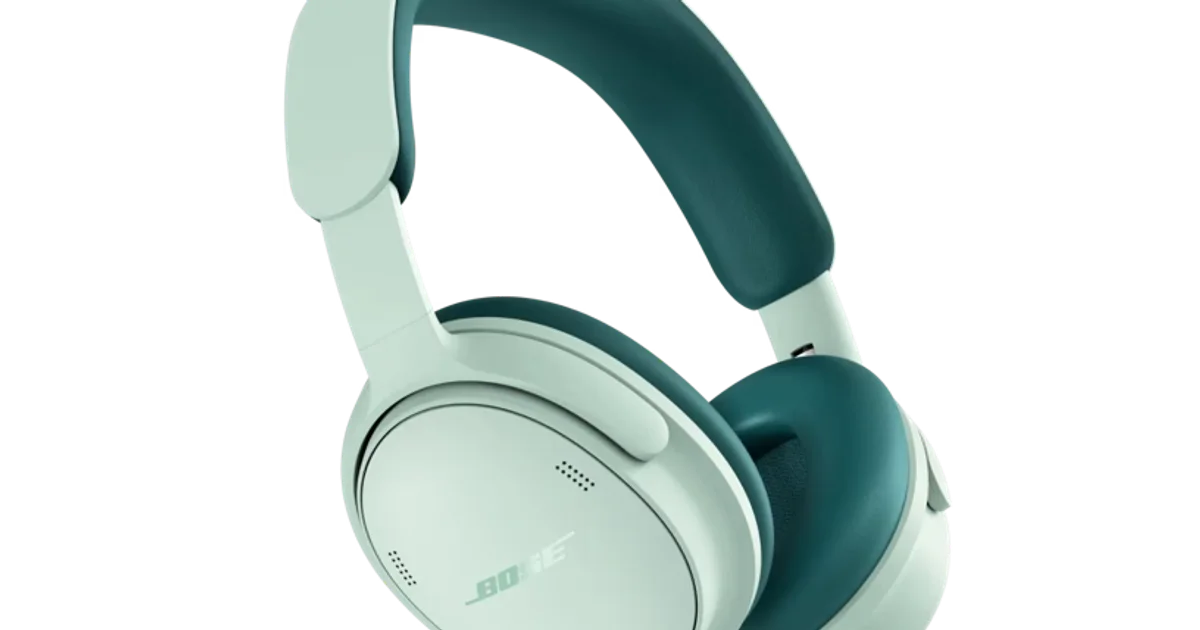
QuietComfort Headphones 2nd Gen was announced August 6 and began shipping August 13 for $359. The basic formula remains familiar: a lightweight folding over-ear design, physical controls and active noise cancellation built primarily around travel and everyday comfort.
What has changed is the amount of Ultra technology Bose is willing to put into the standard model.
TrueSpatial now works without buying the Ultra
Bose TrueSpatial Technology brings Immersive Audio to the regular QuietComfort for the first time. It can virtualize ordinary stereo rather than depending on source material produced in a dedicated spatial format.
Still mode anchors the virtual soundstage in front of the listener so turning the head changes its apparent position. Motion allows the stage to travel with the wearer and is intended for listening while moving.
Cinema mode is tuned around screen content. It widens background information and effects while attempting to keep dialogue centered in front of the viewer.
This processing has a measurable battery cost. Bose rates the headphones for up to 24 hours normally and 18 hours with Immersive Audio enabled.
TrueSpatial should also not be confused with receiving a native multichannel mix. Bose can generate its immersive presentation from a conventional stereo source.
The ANC is learning to work around glasses
Bose still uses a six-microphone system, but its new adaptive feedforward controls are designed to compensate more effectively when the earcup seal is imperfect.
Eyeglass arms are one obvious reason for a leak. Hair and hats can create similar gaps, changing the acoustic conditions the cancellation algorithm has to handle.
The updated QuietControl system attempts to maintain more consistent cancellation rather than assuming every listener has a perfect seal.
ActiveSense in Aware mode has also been revised. Short bursts of loud environmental noise can trigger temporary cancellation without turning the transparency setting into a fully isolated listening mode.
Independent testing suggests Bose no longer owns the ANC crown by default
Bose built the QuietComfort name around noise cancellation, but the market around it has changed. Early testing of the second-generation model describes its ANC as strong rather than uniquely dominant.
The Verge found the QC below Bose's own Ultra Gen 2 and also behind Sony's WH-1000XM6 and Apple's AirPods Max 2 for cancellation performance. SoundGuys was more enthusiastic about the generational improvement and still lists ANC as a major strength.
The difference in assessments is useful context for a launch built around Bose's historical reputation. This is a capable noise-cancelling headphone, not evidence that the brand has automatically reclaimed every category benchmark.
USB-C is finally doing more than charging
The USB-C port now provides two-way digital audio. Bose supports lossless input up to 24-bit/48kHz through a USB-C connection.
Voice can travel in the opposite direction at up to 24-bit/16kHz, allowing the headset microphone to work over USB for calls and videoconferencing.
A USB-C-to-3.5mm cable is included for analog sources such as airline entertainment systems.
Bose also allows listening while charging. If the battery is fully depleted, passive playback can continue, but active noise cancellation and Active EQ are unavailable.
Wired audio is now more ambitious than wireless audio
Bluetooth moves to version 5.4 with multipoint pairing between two devices and Google Fast Pair support on Android.
The standard QC still lacks major high-resolution wireless codecs such as LDAC and aptX Lossless. The latter remains available on the more expensive QuietComfort Ultra 2nd Gen with compatible hardware.
That creates a slightly strange hierarchy. Bose now advertises a straightforward 24-bit digital path over USB while keeping wireless codec support comparatively conservative.
For ordinary streaming that distinction may not matter much. It does matter to buyers specifically looking for a high-resolution or lossless wireless signal chain at this price.
The redesign remains recognizably QuietComfort
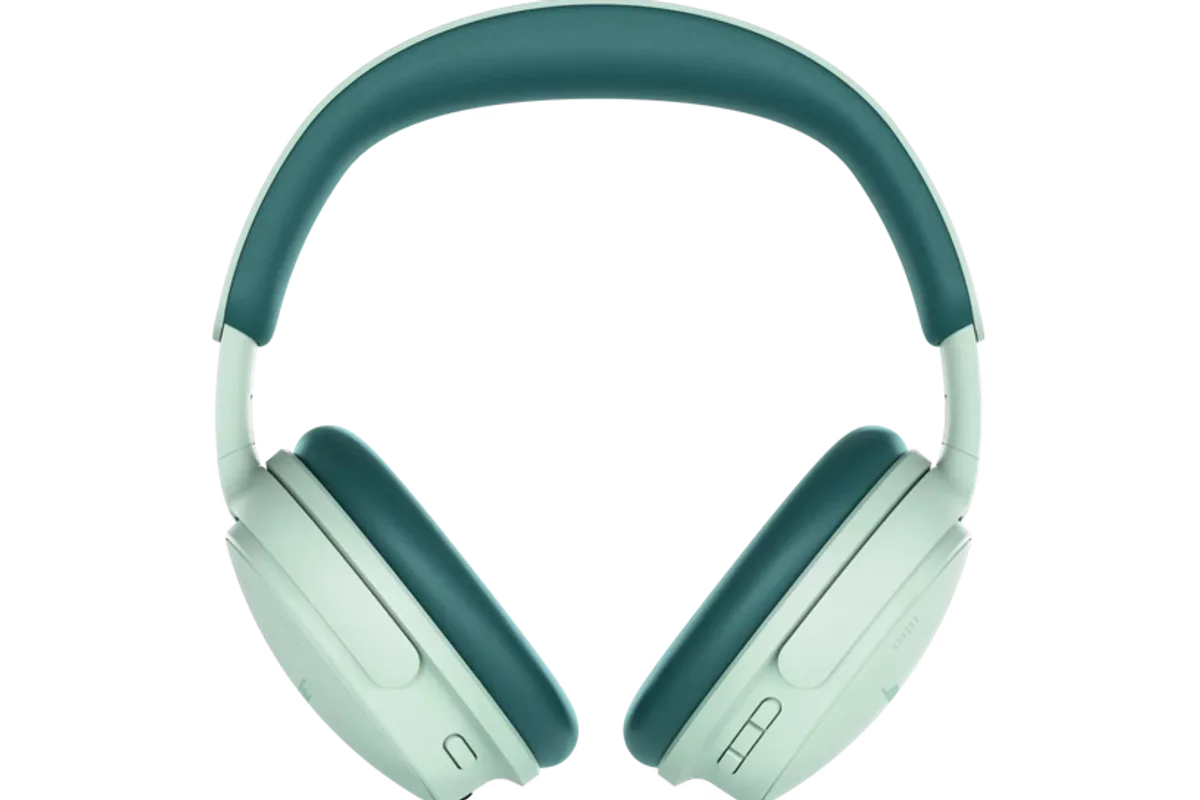
The earcups have become more pill-shaped, the adjustable headband uses smoother sliders and the cushioning has been revised. Bose continues to rely primarily on plastic construction and synthetic leather rather than copying the metal accents of the Ultra.
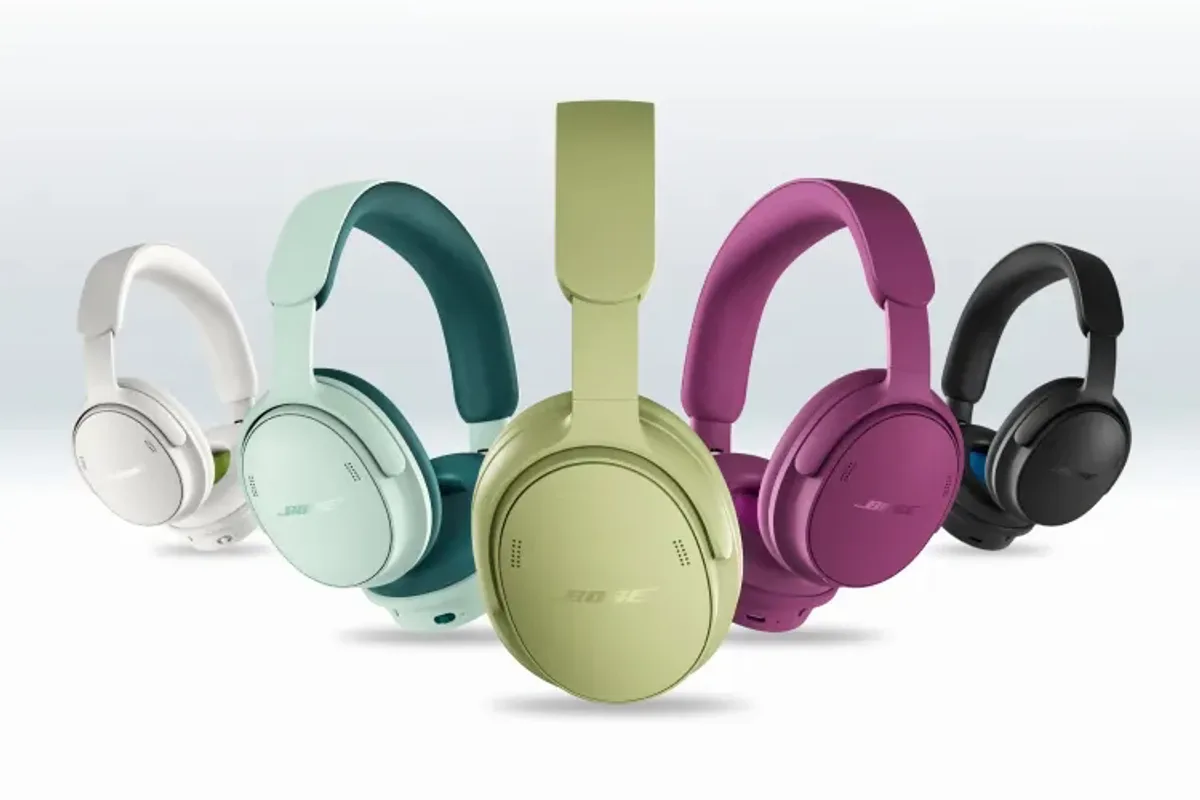
Black and White Smoke are joined by limited-edition Eucalyptus Green, Dewdrop Mint and Rosewood Mauve.
Physical controls remain central to the design. Playback, volume and calls are handled on the right earcup, while the left-side action button cycles listening modes and can trigger shortcuts.
Battery charging takes roughly three hours. A 15-minute quick charge provides up to 2.5 hours of playback.
The Ultra now has to justify its $90 premium with a smaller list of advantages
QuietComfort Ultra Headphones 2nd Gen costs $449 and still offers several upgrades, including more premium construction, up to 30 hours of battery life and aptX Lossless support.
The functional gap is narrower now that the $359 QC also has Immersive Audio, Cinema mode and USB-C lossless playback.
The cheaper model still carries compromises. Wireless high-resolution codec support is limited, its maximum battery life has not increased over the previous QC and early independent testing continues to identify call quality as an area where competitors can perform better.
The second-generation QuietComfort is therefore less a reinvention than a redistribution of Bose's feature stack. Technology that used to define Ultra is becoming standard QuietComfort equipment.