
 By Tsuky
The IMF has drawn a line between accumulation and public spending
IMF staff reached an agreement with Salvadoran authorities on the combined second and third reviews of the country’s 40-month Extended Fund Facility on September 3.
One part of the statement deals directly with a long-running source of confusion around the country's Bitcoin reserve.
The IMF says documentation provided by El Salvador verifies that Bitcoin accumulated since the first review came from private donations and that no public resources were used.
It also says no further accumulation is expected beyond documented donations.
That does not mean the published Bitcoin balance stopped moving
El Salvador continued to report higher holdings after the IMF had called for public-sector Bitcoin exposure to remain unchanged.
A particularly large increase appeared in November 2025, when the reported reserve rose by 1,090 BTC to roughly 7,474 BTC.
At the time, that jump looked very much like another government accumulation event from the outside.
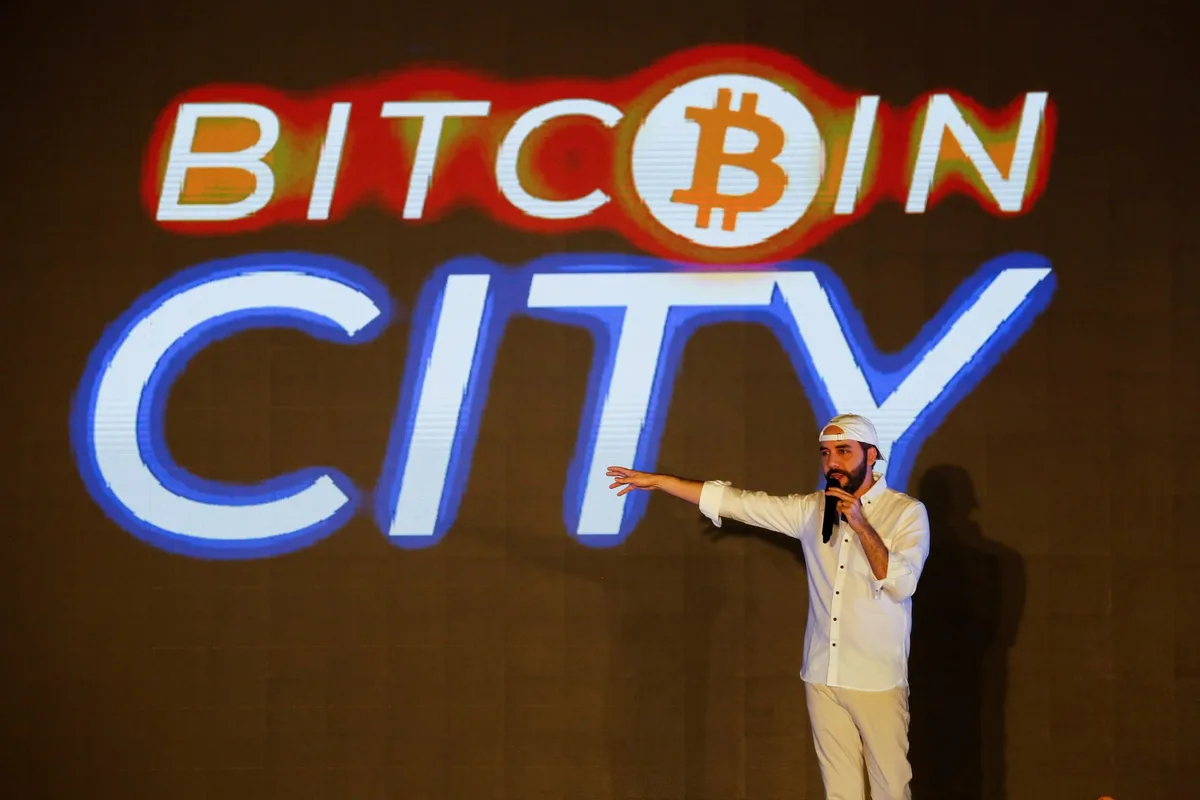
The IMF's new statement changes the accounting interpretation. According to the documentation it received, post-review additions were private donations rather than Bitcoin purchased with government funds.
The public still does not have a donor-by-donor breakdown
The IMF release does not identify individual donors, provide a complete transfer schedule or state the exact cumulative amount of Bitcoin received through private donations.
Transparency remains part of the program for exactly that reason.
El Salvador is continuing work on disclosure across the various wallets holding public-sector Bitcoin, alongside new governance and risk-management rules for state-controlled crypto assets.
Chivo is becoming a mostly private operation
The government is also retreating from another major part of its original Bitcoin infrastructure.
Public participation in the Chivo wallet has been substantially unwound, according to the IMF.
Majority ownership and operational control have moved to a private operator. The government retains a minority stake and custodial responsibilities for customer assets.
That is a very different structure from the state-backed wallet introduced alongside Bitcoin's legal-tender rollout in 2021.
The Bitcoin disclosure sits inside a $1.4 billion IMF program
El Salvador's Extended Fund Facility was approved in February 2025 with total access of roughly $1.4 billion.
Its first review concluded on June 27, 2025, and the IMF says SDR 172.32 million had already been disbursed before the latest agreement.
Completion of the combined second and third reviews could unlock another approximately $140 million.
That money is not automatic. The IMF Executive Board still has to approve the reviews and El Salvador must complete the agreed prior actions.
The original IMF deal was already designed to contain Bitcoin exposure
The 2025 program required the government to stop adding new Bitcoin to its public portfolio, unwind its participation in Chivo and improve disclosure around public crypto holdings.
It also restricted the creation of new public Bitcoin liabilities and called for a stronger framework governing state-held digital assets.
The latest agreement keeps moving in the same direction rather than reversing it.
The headline reserve number now tells only part of the story
El Salvador still owns a substantial Bitcoin position and still treats the asset as part of its international identity.
The mechanics underneath that position have changed.
Public purchases are constrained by the IMF arrangement, Chivo has largely moved out of government control, and increases since June 2025 are now being attributed to private donations.
For anyone trying to track the strategy from outside, wallet-level transparency has become considerably more important than the simple national Bitcoin counter.