
 By Camille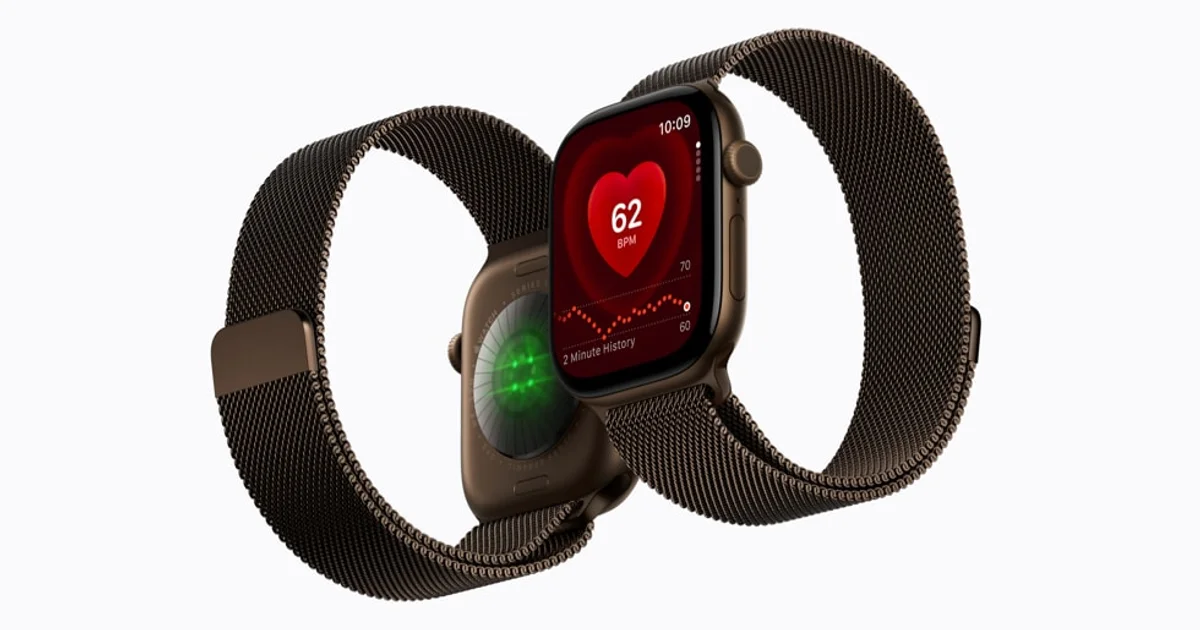
Heart rate is now sampled every five seconds
Apple introduced Apple Watch Series 12 and Apple Watch Ultra 4 on September 9, with both models shipping September 18.
Series 12 starts at €449 in France, while Ultra 4 starts at €899.
There is no new Apple Watch SE this year, leaving SE 3 in the lineup.
The central hardware upgrade is what Apple calls the Health Sensing System.
It combines redesigned optical and electrical heart sensors with the new S11 chip.
Larger, more power-efficient green LEDs allow passive heart-rate measurements every five seconds throughout the day.
A denser stream of readings means the watch has fewer gaps between observations when it evaluates fitness, activity and physiological trends.
Apple claims the most accurate heart-rate sensing in a wearable
Apple describes the new system as delivering the most accurate heart-rate sensing available in a wearable.
The company points to a study involving more than 1,000 participants comparing the new Apple Watch sensing system with leading wearable devices.
That should not be confused with turning a consumer smartwatch into a medical diagnosis tool.
The practical improvement is higher-quality longitudinal data for features users already rely on for exercise, sleep and cardiovascular trends.
HRV is measured up to 24 times more often
Heart-rate variability receives an even larger increase in measurement frequency.
Apple says HRV can now be measured up to 24 times more often.
The system separates Recovery HRV, intended to highlight day-to-day stress and recovery signals, from overall HRV for broader trends.
Overnight vitals can compare Recovery HRV against an individual's established baseline.
A new daytime vitals view can expose changes before the next night's sleep data arrives.
Readiness turns all of that data into a score from zero to ten
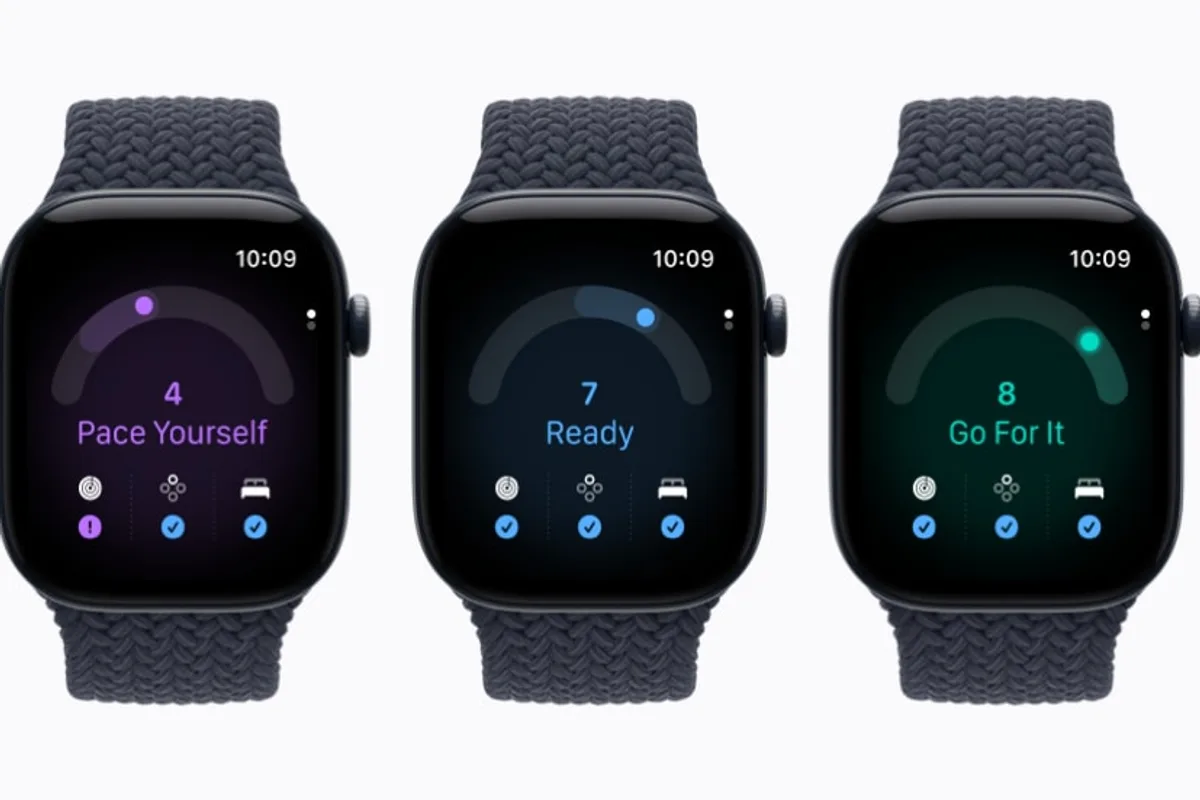
The new Readiness feature combines recent activity, training load, vitals and sleep score.
It produces a daily score between zero and ten together with one of four recommendations: Recover, Pace Yourself, Ready or Go For It.
The score can also change as the day progresses.
A hard workout or a meaningful shift in daytime vitals can cause the recommendation to update.
Apple says the algorithm was developed with data from the Apple Heart and Movement Study alongside exercise scientists and physicians.
Apple is finally answering a question Garmin, Oura and Whoop have addressed for years
A daily recovery or readiness indicator is not a new idea in wearables.
Sports watches, smart rings and specialized fitness bands have long combined HRV, sleep, stress and training load into simplified recovery guidance.
What changes for Apple Watch is that this logic is now built directly into Apple's own health system.
Users no longer have to interpret several separate charts just to decide whether today's training should be hard or easy.
Series 12 still has a 24-hour everyday battery rating
Series 12 does not gain headline everyday battery life.
Apple continues to rate it for up to 24 hours of normal use.
Workout endurance improves instead.
Outdoor workout tracking can now run for up to 10 hours, 25% longer than the previous model according to Apple.
That covers ordinary running and cycling comfortably, while very long races and expeditions remain the Ultra's territory.
Fifteen minutes of charging adds up to twelve hours
Charging becomes substantially more convenient.
Apple says a 15-minute charge can provide up to 12 additional hours on Series 12.
That is particularly useful for a watch expected to be worn overnight.
A short charge during a shower or breakfast can restore enough battery without sacrificing an entire night of sleep data.
Ultra 4 stretches everyday use to 50 hours
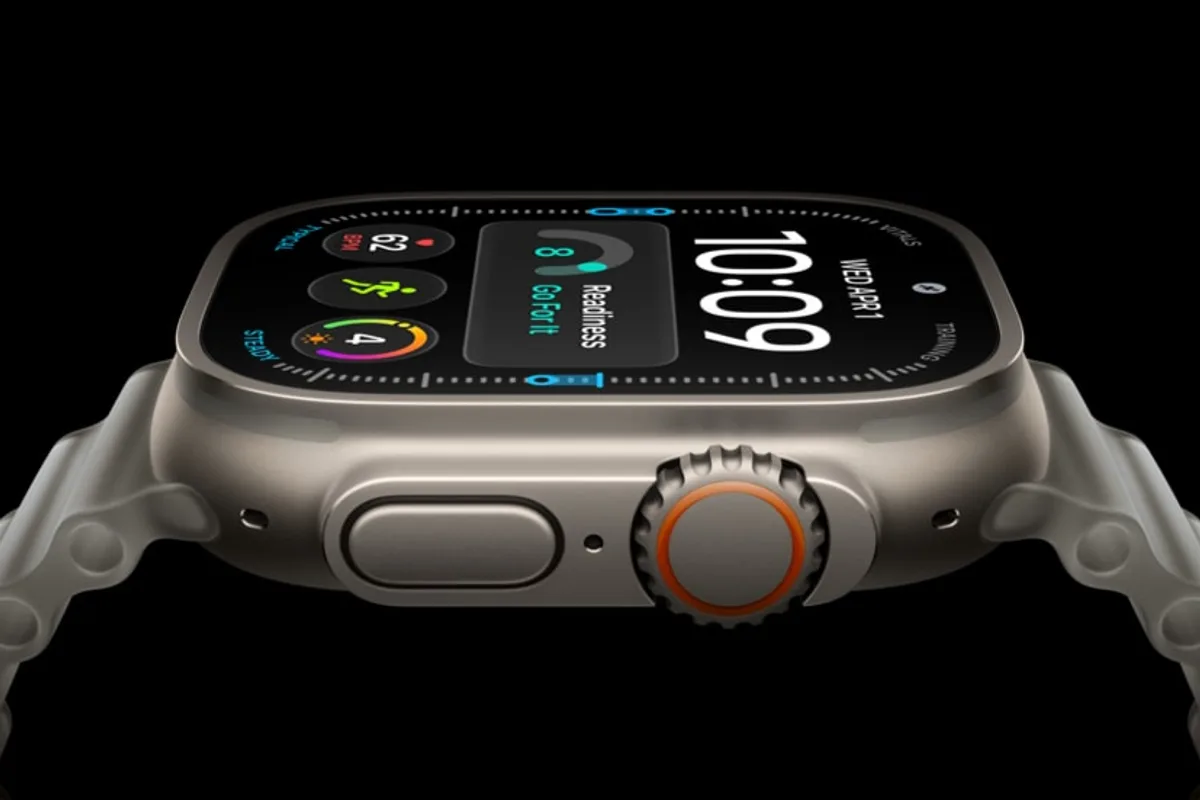
The larger battery improvement belongs to Apple Watch Ultra 4.
Apple rates it for up to 50 hours of everyday use, compared with 42 hours for the previous generation.
Low Power Mode extends the figure to 84 hours.
A 15-minute charge can add up to 18 hours.
For a €899 watch built around long outdoor activities, those extra hours matter more than a minor processor benchmark gain.
Outdoor tracking can continue for as long as 45 hours
Ultra 4 adds two extended workout modes.
Extended Workout provides up to 25 hours of tracking with full GPS and heart-rate readings.
Max Extended Workout can track outdoor runs, walks and hikes for as long as 45 hours while continuing to take GPS readings every second.
Apple says that is typically enough to finish a 100-mile race.
The difference between Series 12 and Ultra 4 is therefore less about what kinds of data they can collect and more about how long Ultra can keep collecting them.
S11 also turns the watch into a more active listening device
The S11 chip does more than process health sensors.
Apple is using it for a new family of features called Audio Intelligence.
Sound Recognition can listen for important environmental sounds such as sirens, alarms, doorbells or a crying baby and alert the wearer.
The feature is especially intended to support deaf and hard-of-hearing users and can operate without the paired iPhone nearby.
Live Rewind can show the previous 15 seconds of a conversation
Live Rewind is the more unusual feature.
A double press of the Digital Crown can display the previous 15 seconds of spoken conversation as text.
The wearer can reread something they missed or ask Siri about the text.
Apple says raw audio is not stored.
S11 includes a Secure Exclave that processes the audio in a hardware-isolated environment before immediately deleting it.
Activating Live Rewind also triggers an audible chime, full-screen animation and microphone indicator so people nearby know the feature is being used.
Siri Recap summarizes conversations without keeping the recording
Siri Recap uses the same broader system to generate a title and high-level key points after a conversation.
Apple says it does not create a full transcript and does not identify individual speakers.
Saved snippets and summaries synchronized through iCloud are end-to-end encrypted.
There is an important launch caveat: Siri Recap and Live Rewind arrive in beta later this year rather than on the September 18 hardware release date.
Siri AI comes to the wrist with watchOS 27
watchOS 27 also brings Apple's new Siri AI experience to compatible watches.
The assistant can use authorized personal context and broader world knowledge supplied through Apple Intelligence.
Some capabilities depend on a compatible Apple Intelligence device and Apple's supporting services rather than running entirely inside the watch.
A new Siri Modular watch face gives the assistant a permanent place on the wrist.
The Health app is preparing to calculate a Health Age
Apple is also redesigning the Health app on iPhone later in 2026.
A new Longevity tab analyzes long-term health data.
Health Age compares selected metrics with the user's chronological age.
An Insights area is designed to surface meaningful changes across heart health, sleep, readiness, activity, vitals and cycle tracking.
The redesigned experience begins in US English, so availability will not be identical in every country from day one.
Series 12 brings ceramic back
Series 12 remains available in 42mm and 46mm sizes.
Aluminum cases come in dark bronze, black, light gold and space gray.
Titanium is offered in radiant gold and natural finishes.
Apple is also bringing ceramic back in pearl white and night blue.
The aluminum models use Ceramic Shield 2, which Apple claims is 60% tougher than the Ion-X glass used on previous aluminum watches.
Ultra 4 keeps its familiar 49mm titanium body
The outdoor model changes even less visually.
Ultra 4 remains a 49mm titanium watch offered in natural and black finishes.
The Action button and large rugged enclosure remain part of the design.
New Trail Loop, Alpine Loop and Ocean Band options mostly add colors and materials rather than changing the basic watch.
Ultra 4 does not try to make Ultra 3 look old from across the room.
Its upgrade is what happens after the first day of use, when the older watch is closer to a charger and the new one is still collecting data.
At €449 versus €899, endurance is now the clearest dividing line
Series 12 and Ultra 4 share the S11 chip, denser heart sensing, readiness, higher-frequency HRV and Apple's new intelligence features.
For most users, Series 12 therefore contains the core 2026 upgrade at €449.
Ultra 4 asks €899 for a tougher chassis, outdoor specialization, GPS capabilities and dramatically longer endurance.
This is not the year Apple Watch gets a radically new face.
It is the year the watch starts observing the body much more frequently and Apple finally turns more of those measurements into a direct answer to a very ordinary question: should I push today, or recover?