
 By Camille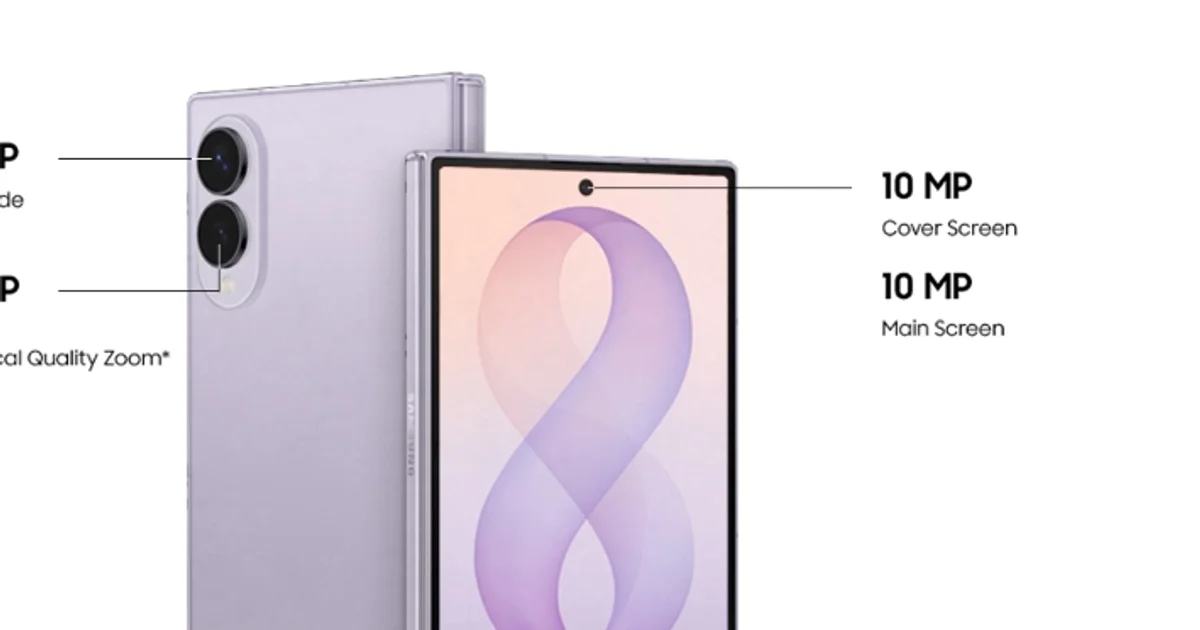
Apple entering foldables creates an unusual problem for Samsung. It is unquestionably Samsung's most important new competitor in the category, but it also validates the market Samsung has spent years trying to build.
The iPhone Duo starts at $1,999. Galaxy Z Fold8 starts at $1,899 in the US.
A $100 difference is not enormous when both phones are approaching two thousand dollars, but Samsung has more than price to use in the comparison.
Samsung has eight generations of receipts
Reuters reports that Samsung launched a global foldables campaign following Apple's announcement, emphasizing its long history with the category and the hardware engineering behind its latest models.
Samsung has also been less restrained on social media, making fun of Apple's late arrival after years of poking at the iPhone for remaining rigid.
There is another layer to the rivalry. Samsung Display has helped mature the foldable display supply chain itself. Apple's arrival therefore threatens Samsung Electronics while simultaneously validating technology in which the wider Samsung group has invested for years.
The Fold8's most convincing number may be 201 grams
Samsung published a detailed engineering breakdown this week explaining how Galaxy Z Fold8 reached 201 grams. The original Galaxy Fold weighed 276 grams in 2019, while Galaxy Z Fold5 still weighed 253 grams.
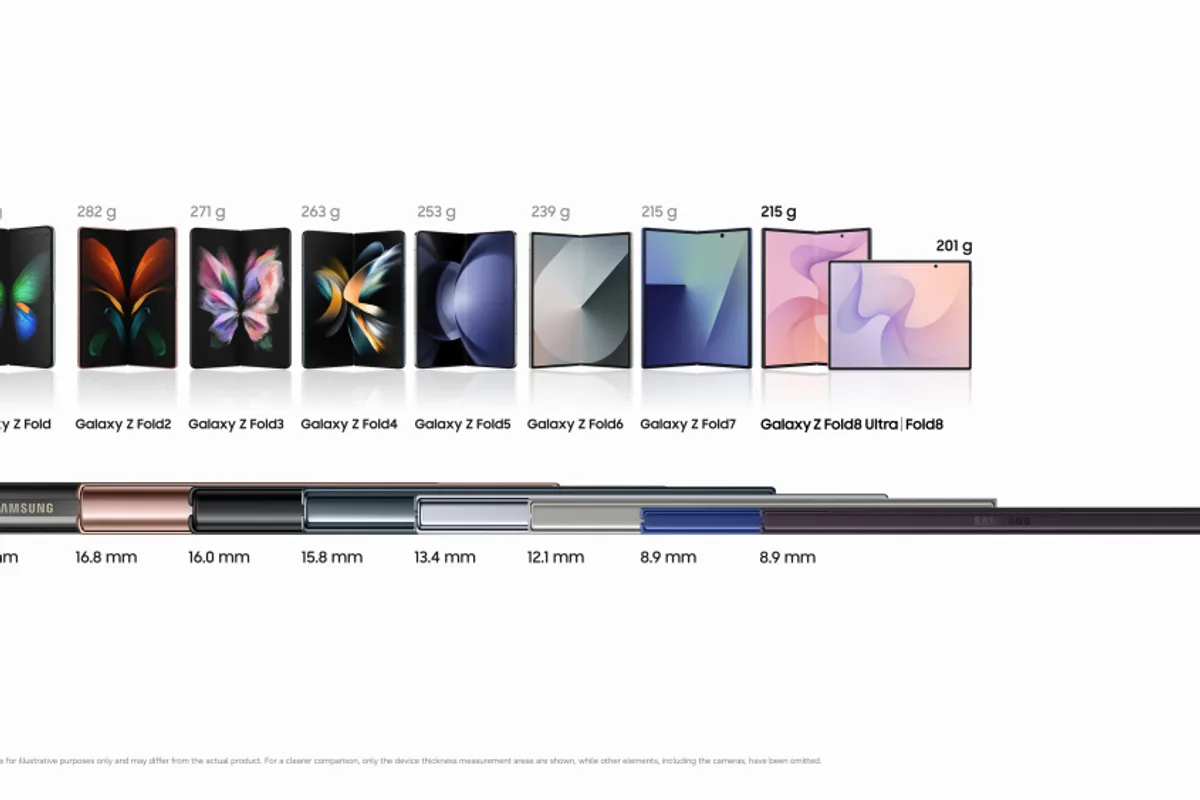
The company says engineers reviewed approximately 270 components and more than 180 types of auxiliary parts. Some individual savings were measured in increments as small as 0.001 grams.
Flex Titanium is part of the result. The foldable display structure uses a titanium-alloy film only tens of micrometers thick, while some supporting metal sections are machined down to about 0.15 mm.
None of that sounds as exciting as a new AI feature. Fifty-two grams disappearing from a device that spends hours in your hand is easier to appreciate.
Samsung also changed the shape of the Fold
Galaxy Z Fold8 is shorter and wider than Samsung's older book-style foldables. Its 5.5-inch cover screen uses a 10:16 ratio, while the 7.6-inch inner display opens into a 4:3 canvas.
The goal is to make the phone feel more conventional when closed and more useful for video, reading and multitasking when opened.
Apple has arrived with a similar basic idea. The iPhone Duo also uses a 7.6-inch internal display and a wider passport-style body rather than the tall, narrow proportions associated with early Galaxy Fold models.
There are meaningful hardware differences
Galaxy Z Fold8 combines Snapdragon 8 Elite Gen 5 for Galaxy with a 4,800 mAh battery and dual 50MP rear cameras covering wide and ultra-wide perspectives.
It weighs 201 grams and starts $100 below iPhone Duo at comparable entry-level storage.
Apple answers with stronger IP68 water and dust protection, Apple Pencil USB-C support and storage configurations reaching 2TB. Samsung's Fold8 does not support the S Pen.
That leaves buyers with actual trade-offs rather than a simple Android-versus-iOS argument.
Apple may be the best thing that has happened to Samsung's foldable business
Foldable phones remain a niche part of the overall smartphone industry. They still account for only a single-digit share of global shipments despite years of launches from Samsung, Huawei, Honor, Google and others.
Samsung nevertheless leads the category. Counterpoint estimates that it could hold around 38% of the foldable market as Apple enters, with Apple potentially taking roughly 25%.
That sounds painful for Samsung until the size of the market changes. Analysts expect Apple's participation to accelerate foldable adoption significantly, potentially expanding the overall category while Samsung gives up some percentage share.
A smaller slice of a much larger market can still be worth considerably more.
Samsung no longer has to sell the idea alone
For years, Samsung was trying to convince buyers that a phone should fold in the first place. Apple entering the category changes that conversation almost overnight.
The next phase is less philosophical. Battery life, software scaling, durability, cameras, crease visibility, weight and price are now the things that matter.
Samsung has eight generations of experience. Apple has an enormous installed base and an ecosystem capable of moving entire accessory and software markets.
The foldable phone fight is finally starting to look like a mainstream smartphone fight.