 By Tsuky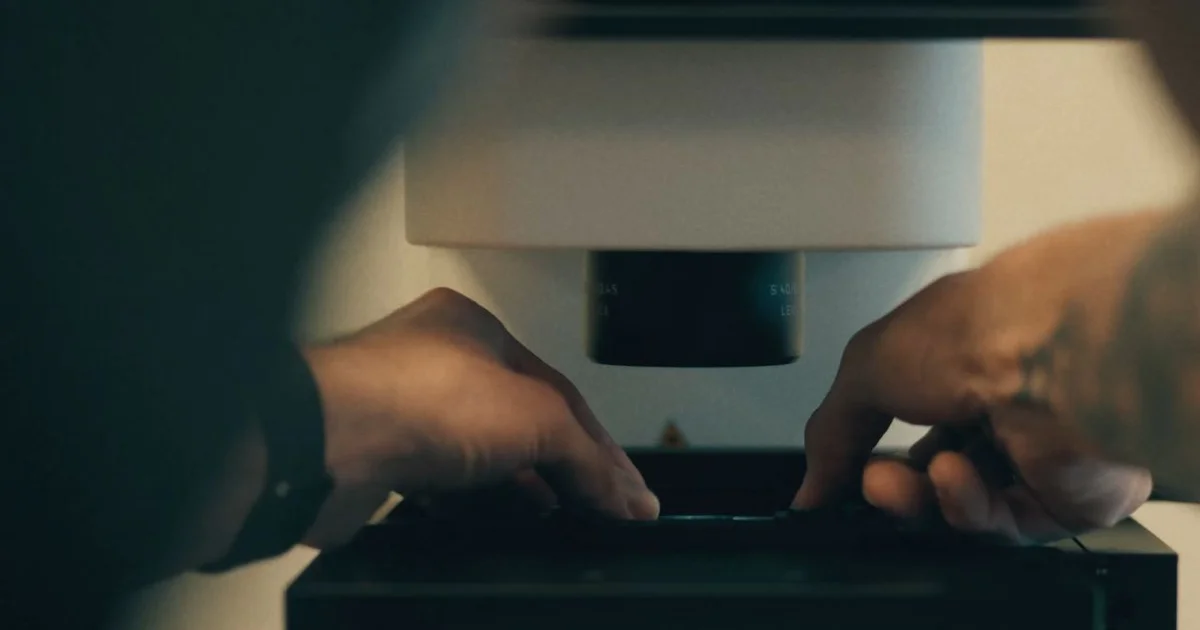
Anthropic opened the Model Hardware Standard research preview on August 27 to an initial group of scientific laboratories and advanced manufacturers. MHS is not yet an open standard. The company says it wants to use this stage to develop safety evaluations and deployment practices before releasing it as open source.
MHS tries to make hardware look predictable to an agent
The core idea is a standardized driver sitting between software and a physical device. Instead of requiring an agent to understand every vendor-specific interface, the driver exposes common primitives for operations such as reading a temperature or writing a new target value.
It also carries information that code alone may not reveal. Users can describe physical characteristics, available measurements, adjustable parameters and enforced limits in natural language. MHS then produces a reference describing how the device can be used.
Devices can be discovered over a network, while control is available through MCP, a command-line interface and code-based APIs. Multiple pieces of equipment can then be orchestrated without building a separate translation layer for every connection.
The early experiments are already fairly physical
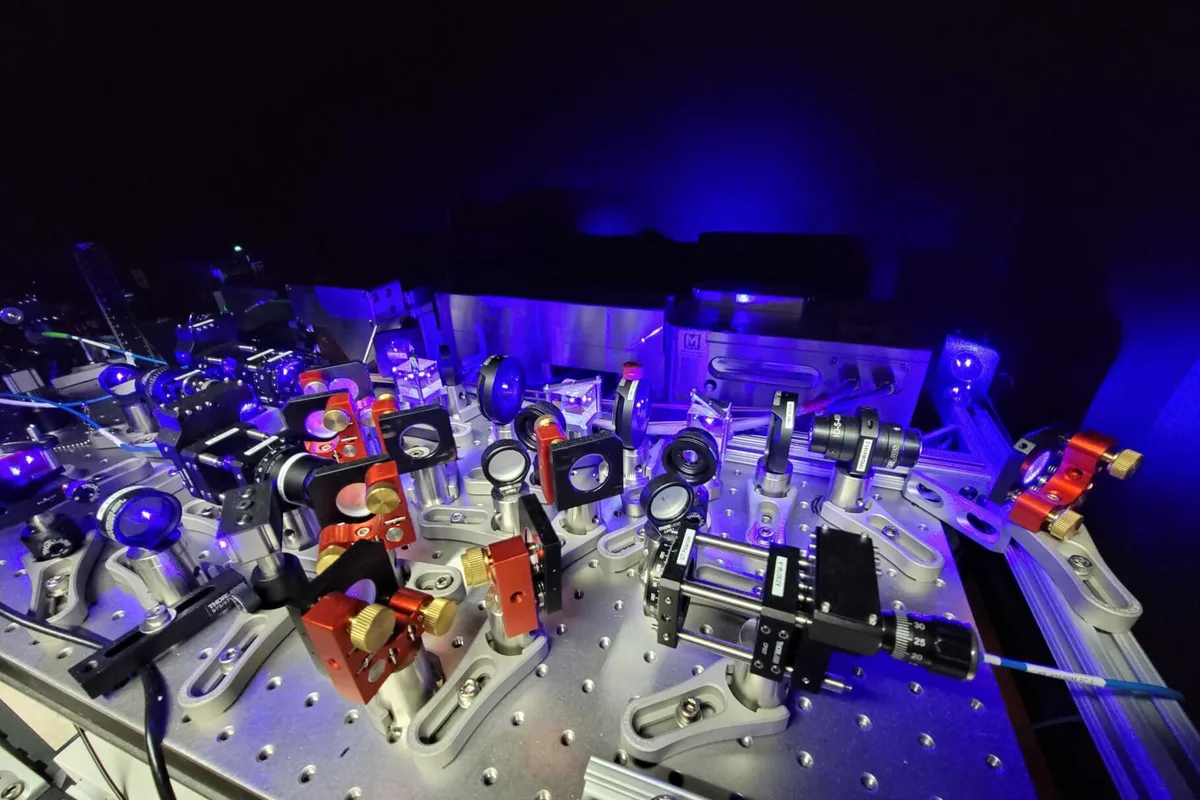
At HHMI Janelia, researchers used MHS on a microscopy setup that previously depended on seven separate vendor applications. Anthropic says adding a new laser-beam camera went from a multi-day integration job to a matter of minutes after the shared interface was in place.
Quantum-computing company QuEra connected an agent to part of its laser-control system. In the reported pilot, the resulting controller eventually recovered the laser lock 99.3% of the time without human intervention.
University of Washington researchers have used the same approach to coordinate a robotic arm with a liquid handler and to supervise qPCR equipment, allowing an agent to monitor amplification curves and stop a procedure at the appropriate point.
Physical reasoning remains the awkward part
Anthropic's own case studies show why connecting an LLM to machinery is not equivalent to adding another software tool. During work with Genentech, bubbles in a liquid caused runtime errors. Claude initially treated the failure as something it could solve by retrying the operation with different parameters in the same well.
That made the physical problem worse. Researchers had to explain that the error came from foaming and required gentler handling and a clean well. Claude retained that context afterward, but the correction came from human domain knowledge.
Anthropic explicitly says current models still have limited spatial and physical reasoning. In other experiments, Claude could fail to diagnose a real hardware fault or stop and wait for human approval when it considered an operation even mildly risky.
Safety cannot be an afterthought once the tool can move hardware
MHS therefore includes a way to expose operating limits to the agent rather than merely describing available commands. Anthropic is also using the preview to study when human approval should be required for higher-risk actions and says it is developing a broader physical-safety roadmap.
There is a practical limitation too. MHS currently depends on hardware having a programmable interface. Equipment without one still needs support from manufacturers or developers before it can participate.
The ecosystem is already larger than Anthropic's own labs
AWS plans to support MHS through Strands Robots during the preview. Doosan Robotics is testing it with robotic arms, Tecan is working on support for its Fluent liquid-handling systems, and Universal Robots intends to add the standard to its robotics platform.
Raspberry Pi is enabling integrations across several products after testing a Camera MHS Driver, while Hugging Face is adding support to its LeRobot robotics library.
Anthropic says the specification itself is model-agnostic, so MHS is not intended to be a Claude-only hardware layer. For now, however, it remains an early-access system being tested with selected partners while the company works on safety evaluations and prepares the eventual open-source release.