
 By Tsuky
Android 17 QPR2 Beta 4 contains a new Data logging entry for Private Compute Core inside the Privacy Dashboard.
The beta began reaching Pixel testers on August 28. Android Authority subsequently documented the new controls; Google has not separately announced this particular interface.
That distinction matters because this remains beta behavior, not a guarantee for every Android 17 phone or even necessarily the final QPR2 build.
The setting is explicitly about data leaving Private Compute Core
Private Compute Core isolates on-device processing for features that may need access to personal or ambient information. Google has historically used it for functions including Live Caption, Now Playing and Smart Reply.
The new Android screen describes its purpose unusually plainly: users can log and review data leaving Private Compute Core.
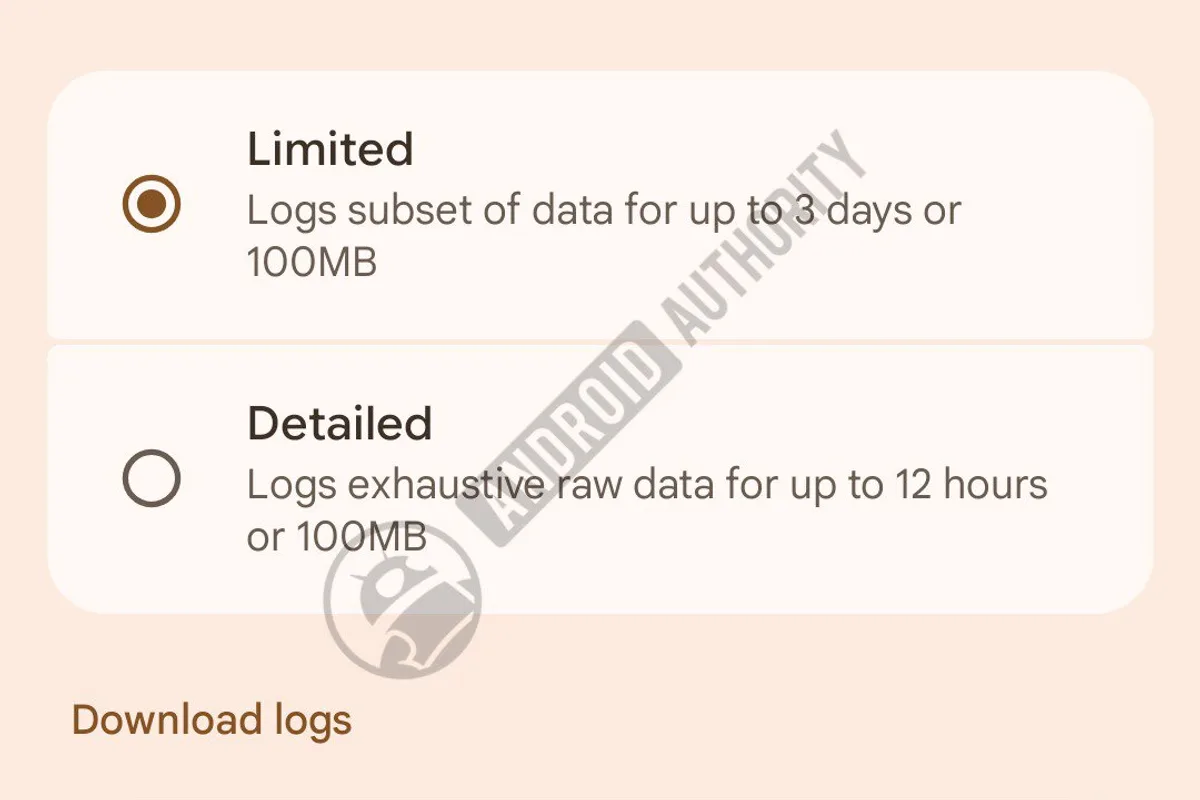
Logging can be disabled entirely. When enabled, there are two collection levels rather than one generic diagnostic mode.
Limited and Detailed create very different records
Limited logging records a subset of data and retains it for up to three days or until the log reaches 100MB.
Detailed mode instead captures what Android describes as exhaustive raw data. Its window is much shorter: up to 12 hours, again with a 100MB ceiling.
Selecting Detailed produces an additional warning.
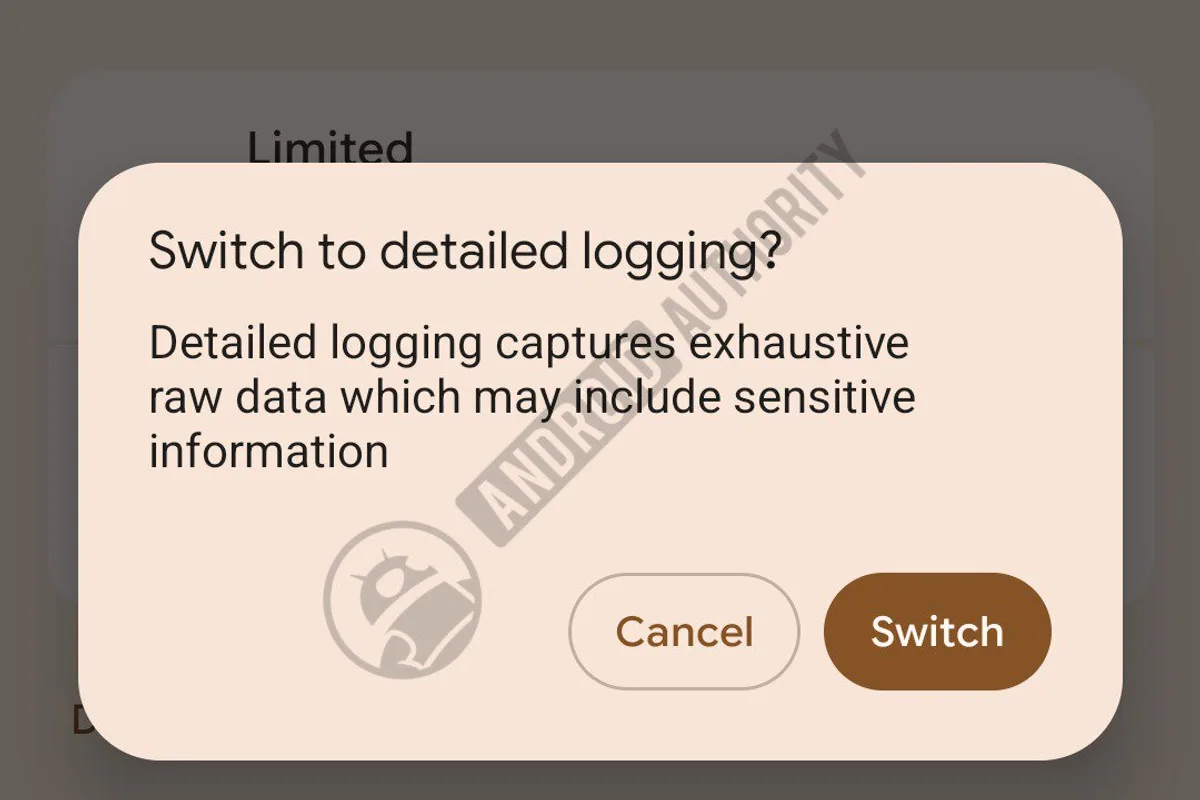
Android tells the user that exhaustive raw logging may include sensitive personal information.
That warning is not cosmetic. An auditing feature designed to reveal what a protected environment is doing can create a highly sensitive artifact of its own.
Users can take the logs with them
The interface exposes direct Download and Delete controls and shows how much log data has been collected.
There is also a separate Summary logs area. In the build examined by Android Authority, Proactive Assistance already appears as a feature with its own summary view.
This gives Android two layers of inspection: a relatively readable summary for understanding activity and a rawer diagnostic record for deeper investigation.
Logging outbound data does not prove more data is being sent out
The wording can sound alarming if read without the architectural context.
A control for observing data leaving Private Compute Core does not by itself demonstrate that Google has increased how much information the environment sends to the cloud. It exposes activity around an existing boundary.
Google continues to describe Private Compute Core and Private AI Compute as privacy mechanisms for sensitive AI processing.
Android 17 also introduces AISeal with pKVM on supported hardware, which Google says adds verifiable hardware-backed isolation for ambient data processing.
Android is building visibility around AI from several directions
QPR2 Beta 4 also exposes a new Agents page in privacy settings. Its description refers to agents that can access information or take actions inside apps.
Google had already previewed a broader AI-focused Privacy Dashboard and a background-agent status indicator at I/O 2026.
Those controls solve different visibility problems. Agent monitoring is about which software is acting. Private Compute Core logging is about information crossing the boundary of an isolated processing environment.
Together they suggest that Android's next privacy challenge is no longer limited to familiar camera, microphone and location permissions.
Detailed logs create a security trade-off of their own
Raw diagnostic data is useful because summaries can hide exactly the detail somebody needs during an audit or investigation.
The same completeness can make the resulting file unusually sensitive.
The current beta does not yet provide enough public documentation to establish exactly which fields appear in every log, how consistently they map to individual AI features or what a user should expect to find during ordinary use.
Google has also not confirmed through a dedicated announcement which devices will ultimately expose these controls.
This is still a QPR2 experiment
Android 17's main platform release is already stable. Private Compute Core Data logging belongs to the later QPR2 development branch.
In its current form, the control is surprisingly specific: logging can be switched off, Limited mode lasts up to three days or 100MB, Detailed lasts up to 12 hours or 100MB, and the resulting files can be downloaded or deleted.
The more consequential question comes later. If the feature survives into stable QPR2, Google will have given ordinary users a rare mechanism for inspecting part of the data boundary surrounding Android's private on-device AI infrastructure.