
 By Adri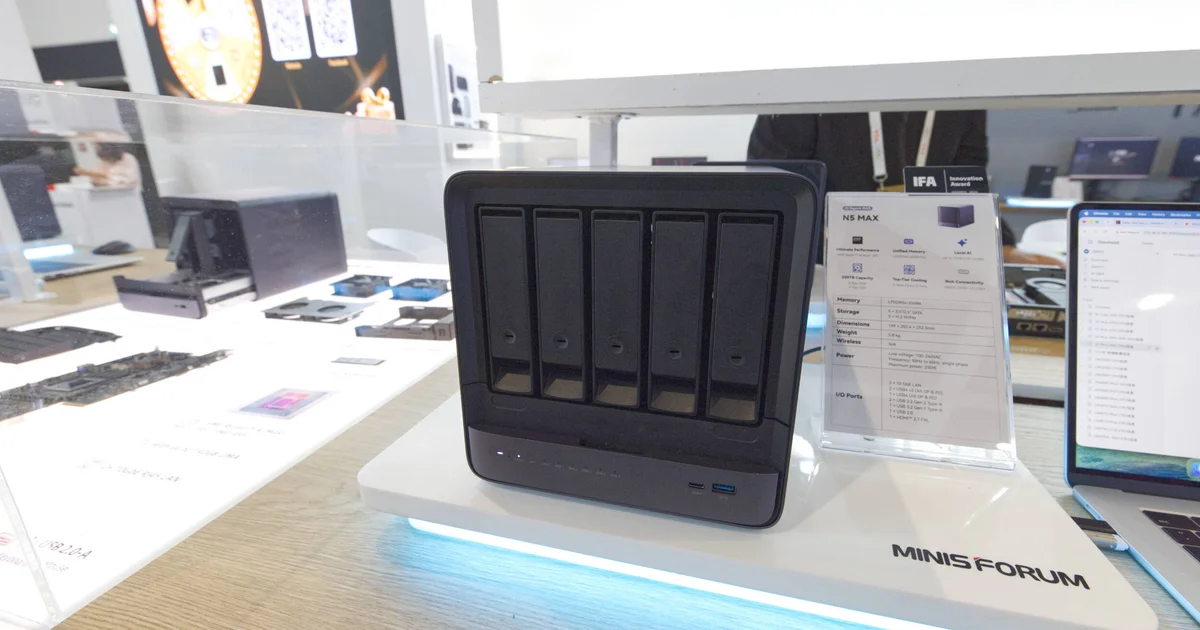
The important number is 192GB
MINISFORUM unveiled the N5 MAX-P495 at IFA on September 4 alongside its MS-S1 MAX-P495 workstation.
Both use AMD's Ryzen AI Max+ PRO 495 and support up to 192GB of LPDDR5X running at 8,533 MT/s.
MINISFORUM says as much as 160GB can be allocated as graphics memory.
That does not mean the machine contains a discrete GPU with 160GB of dedicated VRAM next to 192GB of normal system memory.
The Radeon 8065S shares the system's unified memory pool. Software can reserve a very large portion of that pool for graphics and AI workloads.
For local inference, capacity can matter more than a peak compute headline. A model that does not fit into memory is difficult to accelerate no matter how fast the processor looks on paper.
Ryzen AI Max+ PRO 495 still packs a serious GPU
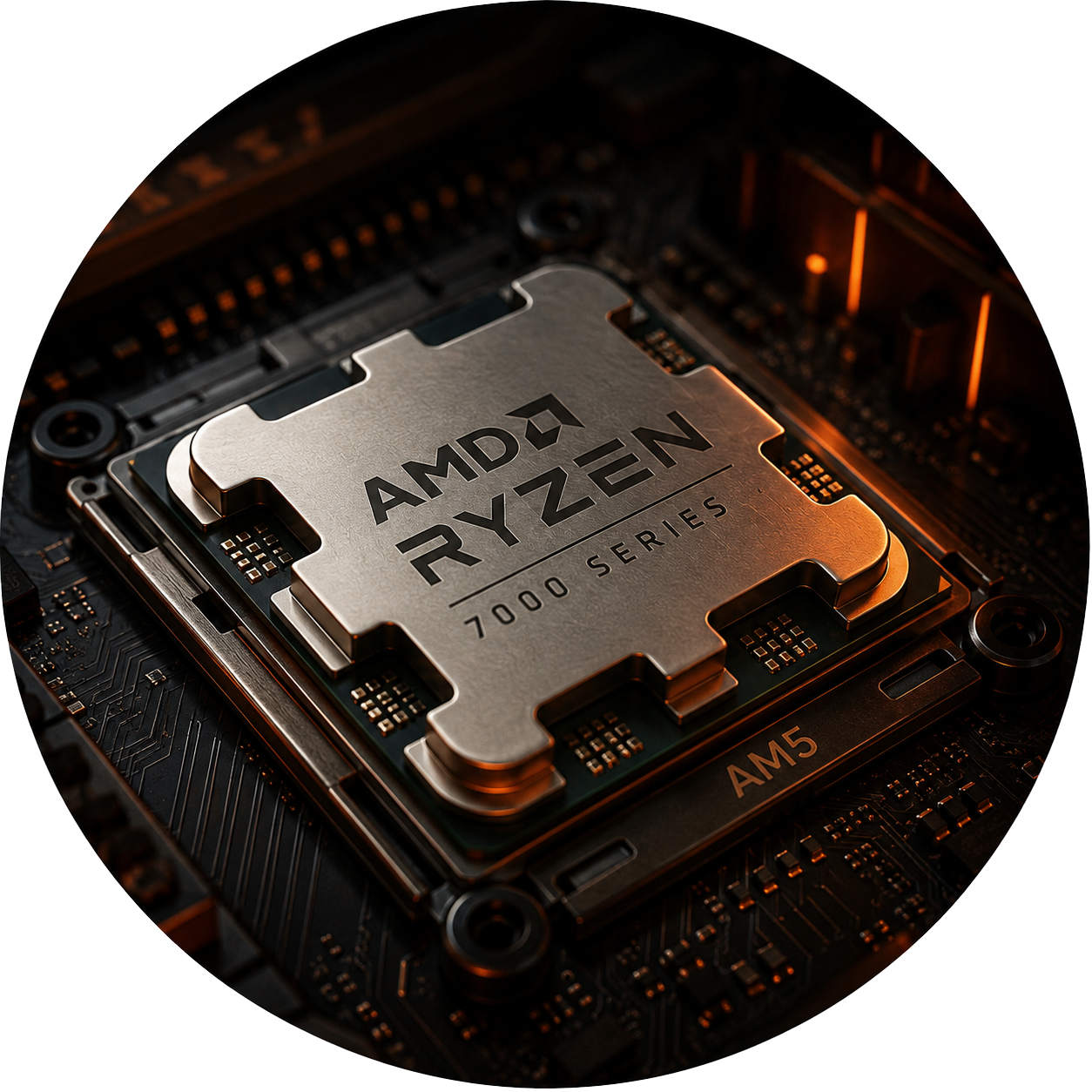
MINISFORUM's documented implementations of the Ryzen AI Max+ PRO 495 provide 16 CPU cores, 32 threads and boost clocks reaching 5.2GHz.
The integrated Radeon 8065S has 40 RDNA 3.5 compute units.
Its NPU is rated at up to 55 TOPS, while MINISFORUM advertises up to 131 TOPS for the complete platform across its available AI engines.
Those figures describe different things. The NPU itself is not a 131-TOPS processor.
Neither number directly tells us how many tokens per second a particular language model will produce. Model size, quantization, backend efficiency, context length and memory bandwidth all matter.
There is still room for as much as 200TB
The other half of the machine has not disappeared underneath the AI branding.
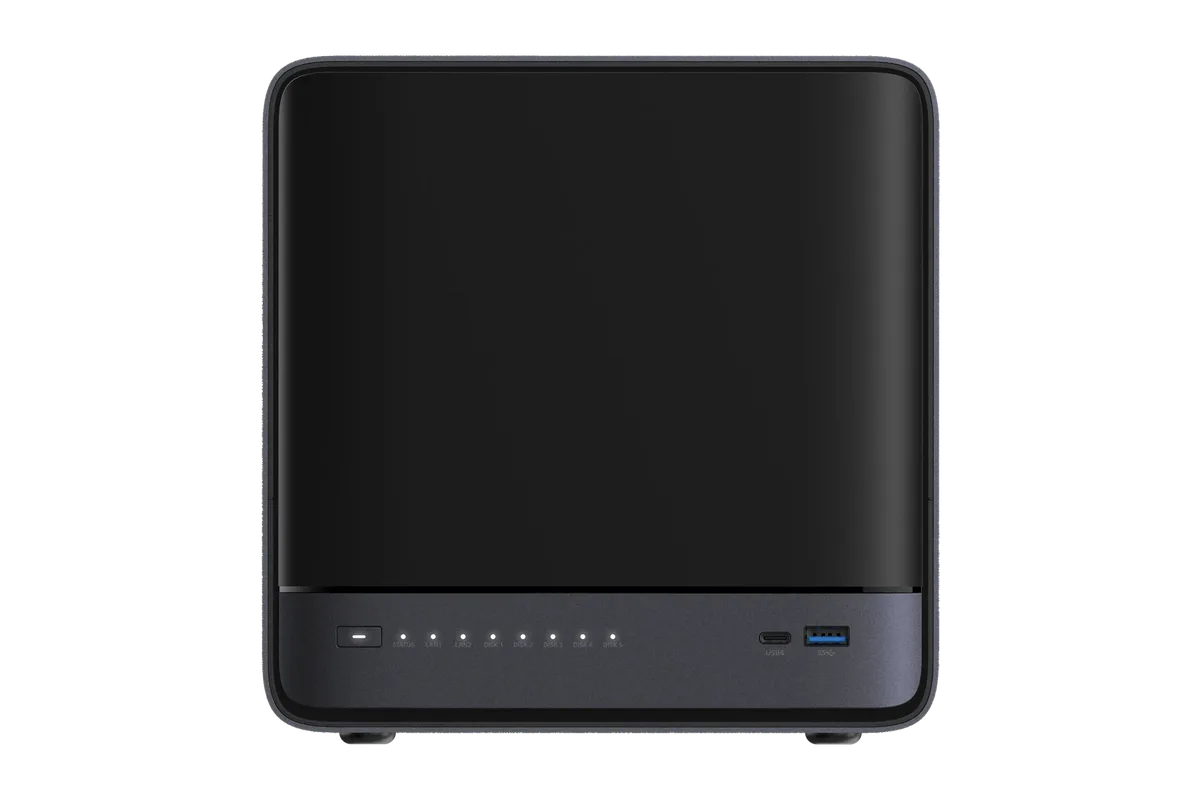
The N5 MAX platform provides five 3.5-inch or 2.5-inch SATA bays and five M.2 NVMe slots, with MINISFORUM advertising total storage capacity of up to 200TB depending on the drives installed.
The current platform also includes dual 10GbE networking and two 80Gbps USB4 v2 ports.
Those interfaces make increasing sense when the NAS is expected to feed large local models, vector databases and several client machines rather than simply archive photos overnight.
Persistent AI is the actual pitch
MINISFORUM describes the N5 MAX-P495 as a backend for persistent AI workloads.
That means models, embeddings, RAG databases and agent data can live on the same machine and remain available instead of being loaded only when someone launches a desktop AI app.
The company specifically references agents such as OpenClaw and Hermes.
Keeping those workloads local can reduce the amount of private data sent to external cloud services and eliminate some per-token inference charges for frequently used workflows.
It does not make AI free. Hardware depreciation, disks, electricity and local administration replace part of the cloud bill.
192GB does not make an integrated GPU faster than every discrete card
The enormous memory pool solves capacity more directly than it solves raw performance.
High-end discrete GPUs normally offer much greater memory bandwidth and compute throughput than an integrated graphics processor.
The N5 MAX-P495 has a different advantage: it can potentially load models that simply do not fit inside the 24GB or 32GB VRAM limits common on powerful consumer GPUs.
If a model fits comfortably on one fast discrete GPU, that GPU may still deliver substantially higher throughput.
If the model needs 80GB or 120GB, the comparison starts involving several discrete accelerators and becomes much more expensive and power hungry.
The existing N5 MAX gives us some price context, but not the P495 price
MINISFORUM already sells the N5 MAX with Ryzen AI Max+ 395 and as much as 128GB of unified memory.
Its European store currently lists the 64GB configuration from €2,519 and the 128GB version at €3,839 at the time of writing.
Those are prices for the existing Ryzen AI Max+ 395 system.
MINISFORUM has not announced pricing or a precise shipping date for the new 192GB P495 configuration.
Any higher price estimates circulating from the IFA show floor remain speculation until the company publishes the retail configuration.
The NAS is changing jobs
NAS vendors have spent years adding containers, virtual machines and increasingly powerful processors to what used to be simple storage appliances.
Local AI gives that evolution a very obvious destination.
A NAS already contains the documents, photos, project files and databases that a private AI assistant would need to search.
Putting enough unified memory and compute in the same chassis removes the requirement for a second server simply to analyze the data stored in the first one.
MINISFORUM has already given the N5 MAX-P495 server-like specifications. The unanswered question is whether its eventual price will still make sense to anyone who thinks of it as a NAS.