Splatoon Raiders' most important technical achievement is not a texture or lighting effect.
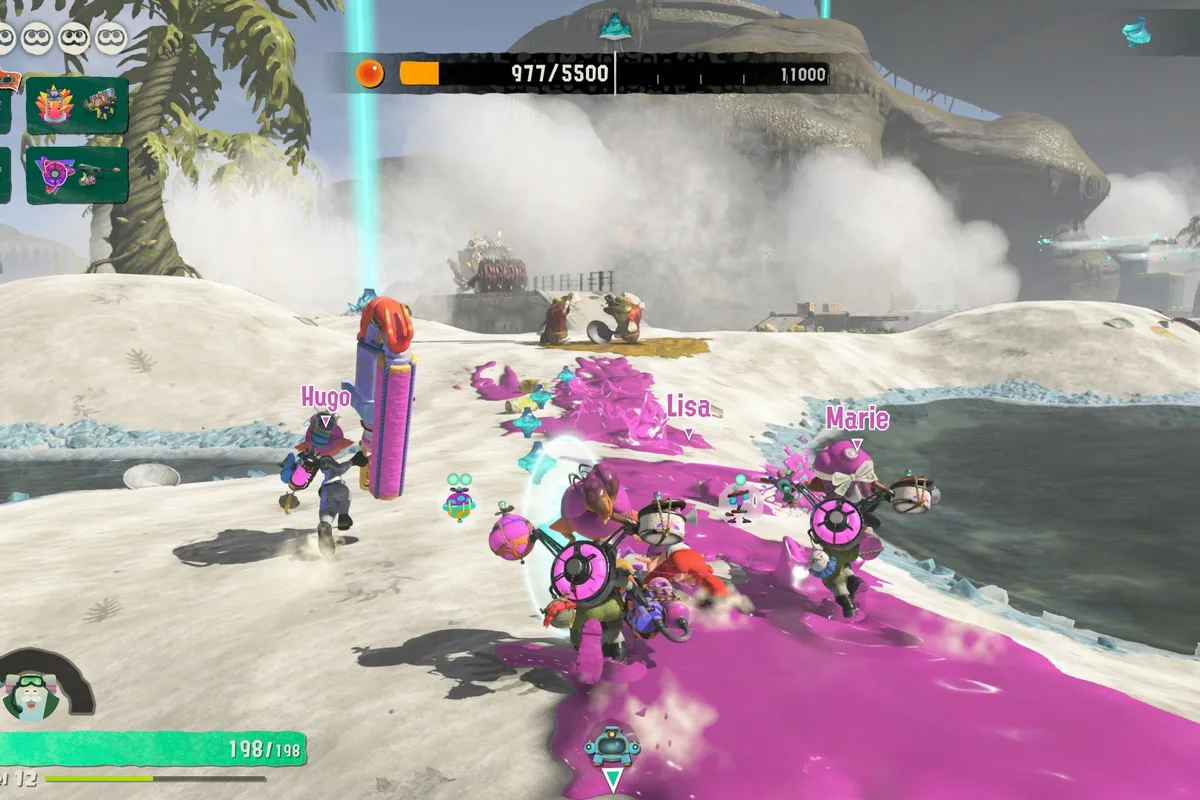
It is the moment the screen fills with Salmonids, turrets, projectiles, gadgets and multiple colours of ink while movement remains immediately readable.
Switch 2 performance changed the design
Nintendo's own developer interview makes the connection explicit. The team began experimenting with much larger Salmonid populations because Switch 2 provided the performance headroom to do so.
That created another problem: Salmon Run enemies had been designed to pressure four people, not one.
Trap and gadget experiments emerged partly as a solution. Hardware capacity therefore led directly to new game mechanics.
60fps is the important specification
Tom's Guide reports rock-solid 60fps performance across roughly twenty hours of play. My Nintendo News similarly praises the game for sustaining 60fps while rendering large numbers of enemies.
For Splatoon, response time matters more than chasing a static maximum resolution. Swimming through ink, changing direction and reading attacks all benefit directly from frame-rate consistency.
Dynamic resolution protects that target
My Nintendo News reports dynamic resolution, an unsurprising choice for encounters whose rendering load can increase dramatically within seconds.
The presentation remains clear enough to distinguish player ink, hostile ink, enemy silhouettes and overlapping gadget effects.
The graphical leap itself is conservative
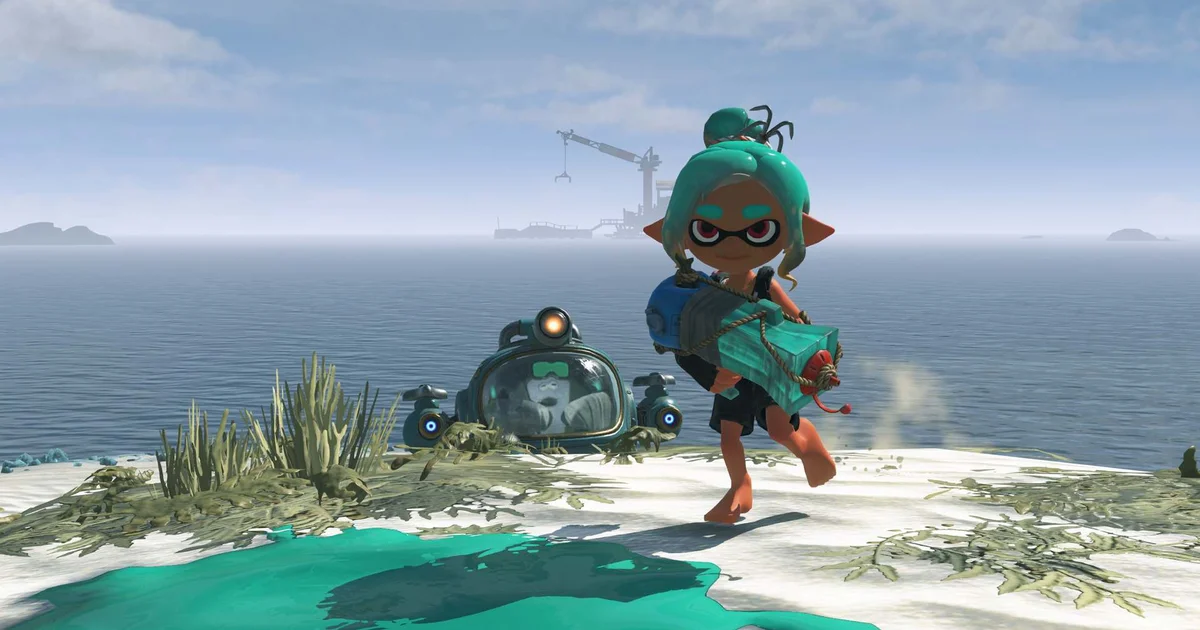
Creative Bloq argues that Raiders does not look dramatically beyond Splatoon 3 running through its Switch 2 enhancements.
That criticism makes sense in still images. Character art, materials and much of the visual vocabulary remain closely related to the previous game.
The hardware difference is easier to see in density than in isolated asset quality.
The current installation is 13.1GB
Nintendo's US store currently lists a 13.1GB file size, lower than the 20GB estimate shown during the preorder period.
That is relatively compact for a campaign with numerous weapons, large combat spaces and online cooperative support.
Networking also has to reconcile different progression levels
Two to four players can cooperate online or through local wireless. Nintendo automatically scales player power when characters at very different stages of progression join the same activity.
Game Informer reports smooth pre-release multiplayer sessions. Online play requires a Nintendo Switch Online membership.
The August patch targeted edge cases
Version 1.1.1 fixes a movement lock involving the Splatchet, a Fish Stick that could become embedded in terrain, an Exploration Bot behaviour problem and a specific touchscreen-triggered crash.
The list reflects isolated systemic bugs rather than broad performance instability.
Clarity is the useful luxury
Nintendo could have used Switch 2 exclusivity primarily to chase more visually obvious effects.
Instead Raiders spends much of that budget on enemy density and maintaining responsive 60fps action. For this particular shooter, that is the more valuable technical upgrade.