
 By Kilam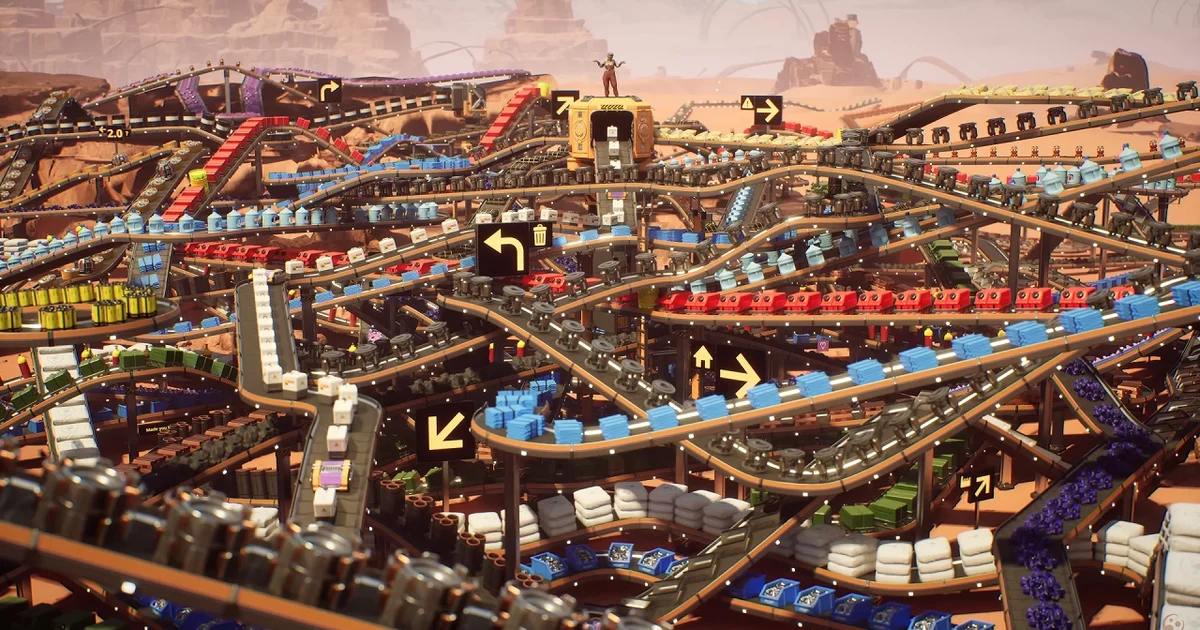
Satisfactory has a benchmark Coffee Stain can never fully standardise.
It is your save file after two hundred hours.
A game that allows players to place thousands of machines, belts, pipes, lights, trains and buildings inevitably creates workloads far beyond its opening hours.
Unreal Engine 5 mainly serves scale
Coffee Stain migrated Satisfactory to Unreal Engine 5 before the 1.0 release.
Its rendering stack makes use of technologies including Nanite, Lumen and Temporal Super Resolution.
The point is less to create a fixed visual showcase than to maintain a detailed world around structures whose eventual complexity cannot be predicted by the developer.
DLSS, XeSS, FSR and TSR provide multiple reconstruction paths
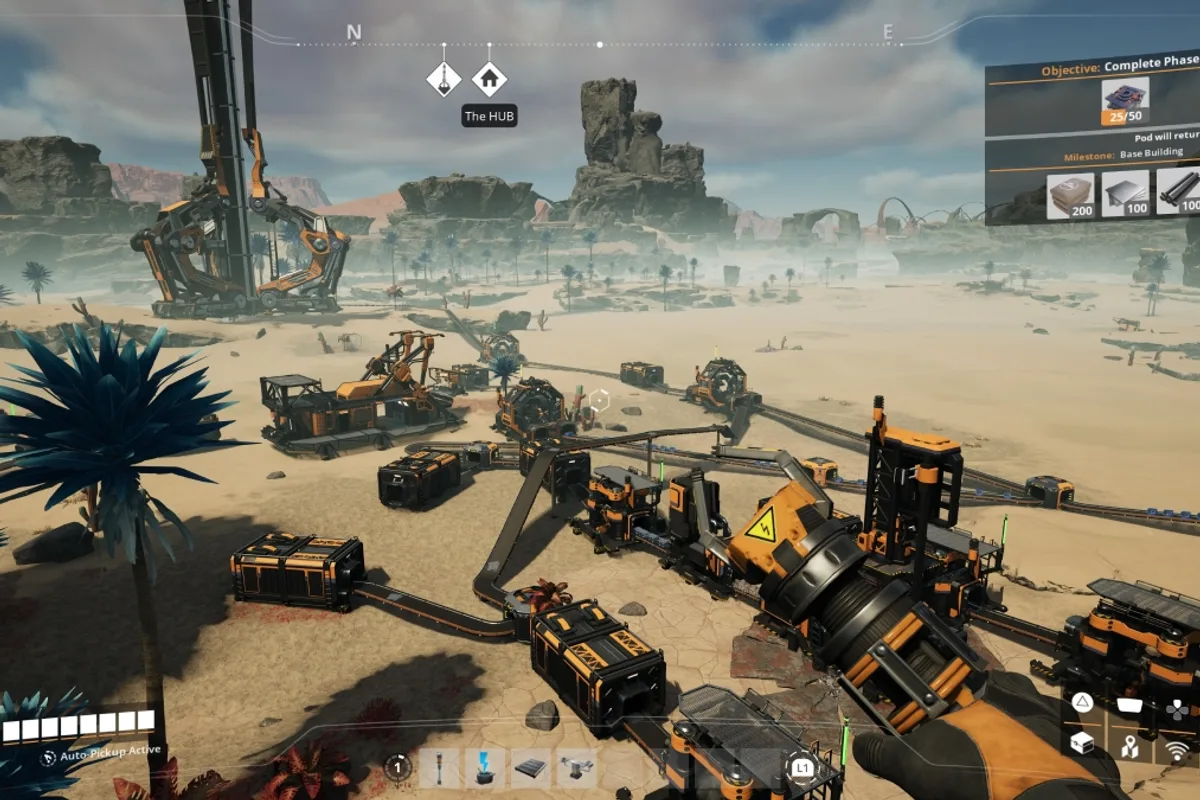
The game has accumulated support for Nvidia DLSS, Intel XeSS and AMD FSR alongside Unreal's own TSR.
That flexibility matters because performance can change radically between an untouched biome and a gigantic late-game industrial complex.
Patch 1.2.3.1 on June 24, 2026 added FSR 4 support for compatible GPUs.
GPU load is only half the story
Lowering resolution can help when rendering is the bottleneck. It cannot eliminate the simulation cost of thousands of active logistical objects.
Huge factories naturally move more pressure toward CPU processing.
A late-game slowdown therefore does not necessarily mean the graphics have become too demanding.
World partitioning remains an important optimisation area
Official technical documentation describes ongoing work around dividing the map into more efficient chunks.
This kind of optimisation is much less visible than a new rendering effect but more relevant to a persistent construction sandbox.
Console development forced serious controller work
Satisfactory launched on PS5 and Xbox Series X|S on November 4, 2025.
Mapping such a mouse-heavy building interface onto a controller required more than button substitution.
Update 1.1 had already introduced full controller support and broad user-interface improvements in preparation for the transition.
PS5 Pro is officially enhanced
Sony currently lists Satisfactory as PS5 Pro Enhanced and supports up to four online players.
Xbox similarly lists two-to-four-player online co-op and 4K Ultra HD support.
Storefront feature labels should not, however, be confused with detailed independent measurements of internal resolution or frame-rate consistency.
Version 1.2 unified the platform schedule
Update 1.2 launched across supported platforms on June 2, 2026.
Patch 1.2.3.0 on June 11 was the first update to carry exactly the same build number and content across PC, PlayStation and Xbox.
That makes future maintenance considerably cleaner.
Complexity still creates edge cases
The 1.2 patch cycle continued fixing crashes, memory issues and interactions between large systems. Patch 1.2.3.0, for example, addressed a drone-related memory leak.
Version 1.2.4.0 followed on August 11 with additional fixes left over from the broader update.
That is less a sign of fundamentally weak technology than the maintenance reality of a sandbox whose systems can be multiplied to extreme scales.
Visual quality has to survive user-created absurdity
Dynamic lighting, long views and dense biomes remain impressive.
But Satisfactory cannot spend its entire GPU budget on a controlled cinematic scene because the player may decide to construct a massive factory across that same view.
A new save and a heavily industrialised save are effectively different performance scenarios.
The engine is solving the same problem as the player
Satisfactory asks players to optimise flows while its technology simultaneously tries to optimise the simulation and rendering of those flows.
Its achievement is not perfect performance under every possible construction. The achievement is letting players build factories absurd enough to meaningfully test the limits in the first place.