
 By Kilam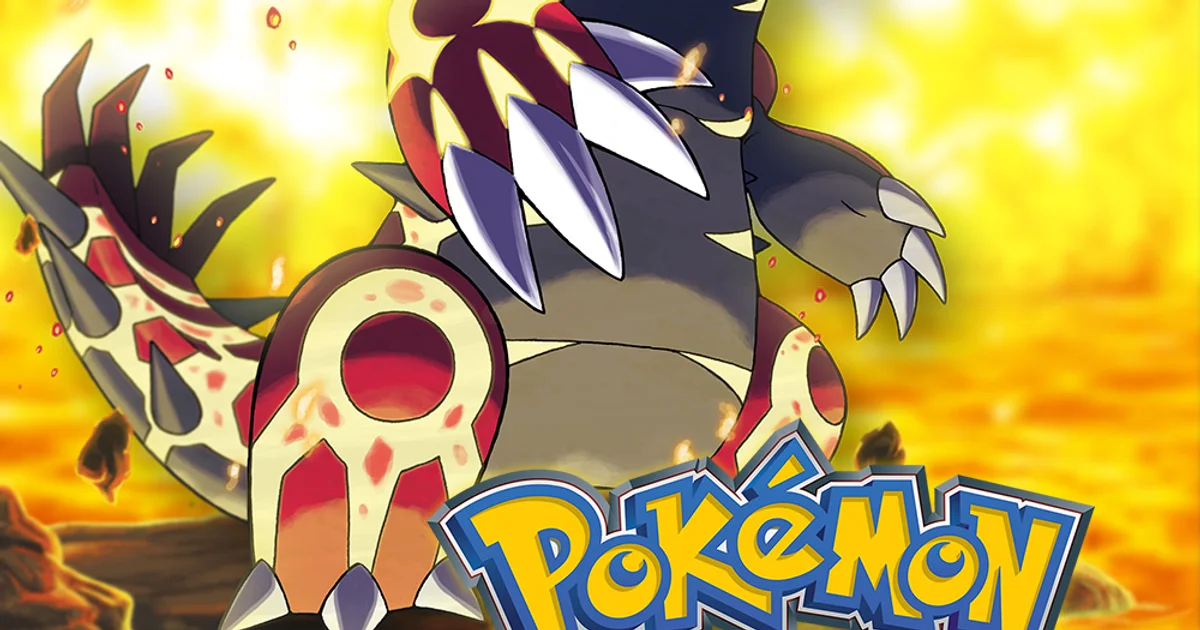
Omega Ruby's technical leap is easiest to appreciate beside the 2003 original. Fixed GBA sprites become polygonal environments, cameras shift around important spaces and Pokémon occupy actual depth during battles.
Game Freak built the remake on the X and Y engine. That gives Hoenn the advantages of the series' move into 3D and carries several of the engine's weaknesses with it.
The 3D reconstruction gives Hoenn substantially more spatial character
Nintendo Insider praised the region's colorful reconstruction and changing camera angles, while Nintendo Life highlighted how well animated the Pokémon models are considering the limitations of the hardware.
Gyms can stage battles in distinctive environments. Towns no longer share exactly the same fixed visual logic. Primal Groudon has a scale and weight the GBA sprite could only imply.
The transition is not completely consistent. RPG Site noted the visual disconnect between important characters receiving fuller 3D treatment and many other trainers remaining more static.
Stereoscopic 3D is where the hardware starts pushing back
A remarkably broad set of contemporary reviews reported the same issue. RPGFan, Nintendo Insider, TheSixthAxis, Vooks and Nintendo World Report all observed frame-rate drops with stereoscopic 3D enabled or during more demanding battles.
The severity was disputed. Expert Reviews considered battles smoother than X and Y, while other outlets still found the slowdown distracting. The sensible conclusion sits between those reports: 2D play is generally stable, but 3D and scenes involving multiple models can visibly strain the system.
Horde Battles are an obvious stress case because several Pokémon must be animated simultaneously.
Game Freak avoids part of the cost by restricting the feature. Large portions of exploration do not use stereoscopic 3D, and several multi-Pokémon battle types disable it.
The touchscreen matters far more than the depth slider
PokéNav Plus turns the lower display into persistent game information rather than a spare menu screen.
DexNav is the standout component. It tracks species found on a route, reveals whether the local collection is complete and supports special encounters that can be approached directly in the environment.
French outlet Les Numériques specifically praised how useful the touchscreen became, while Game Informer and Destructoid likewise treated DexNav as a substantial improvement to the collection loop.
It is less visually impressive than stereoscopic battles and far more important to actually playing Omega Ruby.
Soaring cheats elegantly around open-world scale
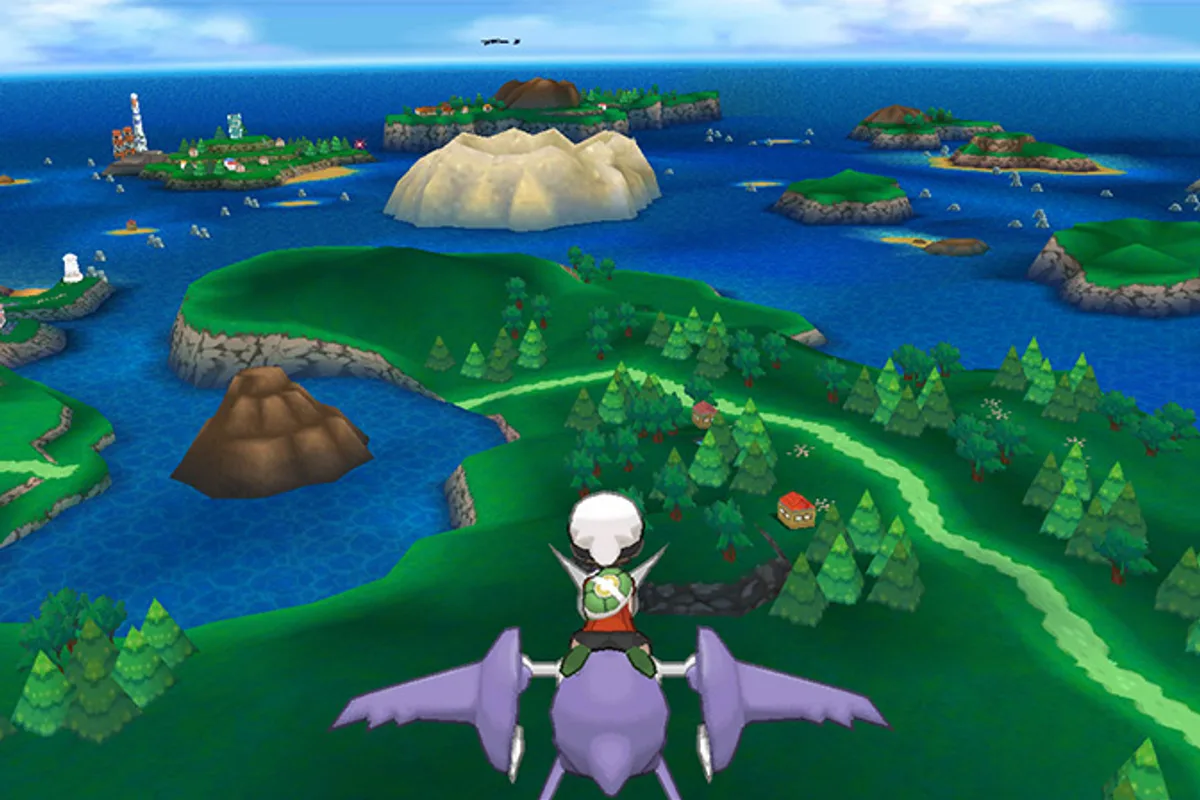
Latios flight turns Hoenn into a navigable miniature viewed from above. The player can steer, accelerate, identify landmarks and descend onto previously visited locations or special Mirage Spots.
The region is not physically simulated at route scale from the sky. It does not need to be. The feature creates the perception of a connected geographical space without requiring the 3DS to render an open world continuously.
Nintendo Life regarded Soaring as the remake's most impressive addition. Technically, it is also one of the smartest.
Part of the original network architecture is now gone
In 2014, the Player Search System kept trading and battling close at hand on the second screen. That persistent network layer was one of the better design inheritances from X and Y.
It is no longer part of the official 2026 experience.
Nintendo ended online play and other Internet-based communication for Nintendo 3DS software on April 8, 2024. Offline modes remain playable and StreetPass uses local communication, but Internet battles and exchanges can no longer be treated as current features of an unmodified retail copy.
Its smartest technology was never the flashy part
Omega Ruby can look ambitious enough to expose the 3DS's weaknesses. That is most obvious when multiple animated models and stereoscopic rendering collide.
The systems that age best are quieter: persistent information on the lower screen, better capture feedback and a sky view that makes a route-based RPG feel geographically connected.
The depth slider was the console's headline. Omega Ruby's better ideas mostly happen without it.