
 By Adri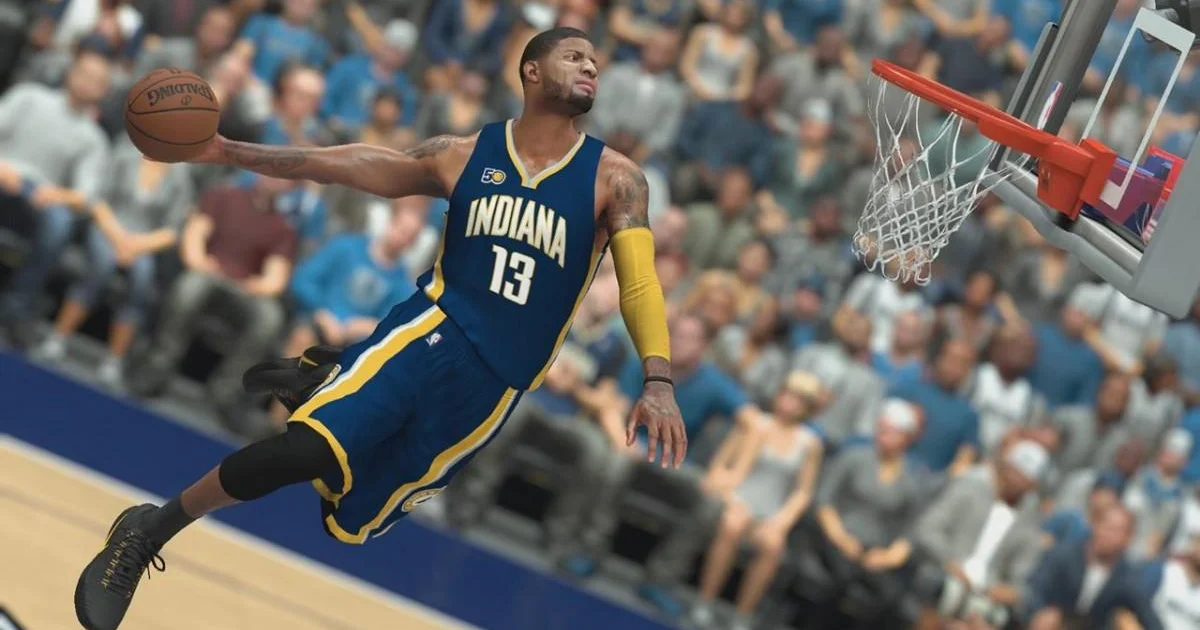
The animation workload is the real technical achievement
A still image undersells what NBA 2K17 was doing. Ten athletes, ball physics, officials, benches, crowds and contextual interactions all have to remain coherent while the player expects immediate control.
Forbes highlighted the improved contact system before release, while GameSpot and Game Informer praised the fluidity of movement. Collisions and changes of direction produce more contextual outcomes than the more obviously canned behavior associated with earlier entries.
The system was not perfect. Later patches corrected incorrect dribble moves, unrealistic acceleration bursts and several overly long ball-loss animations.
Arenas behave almost like individual rendering profiles
Visual Concepts worked to reproduce lighting and sound differences across the NBA arenas used at the time. A venue is therefore more than a floor texture and a set of logos.
Crowds respond to major plays, benches remain active and presentation elements constantly occupy peripheral parts of the frame.
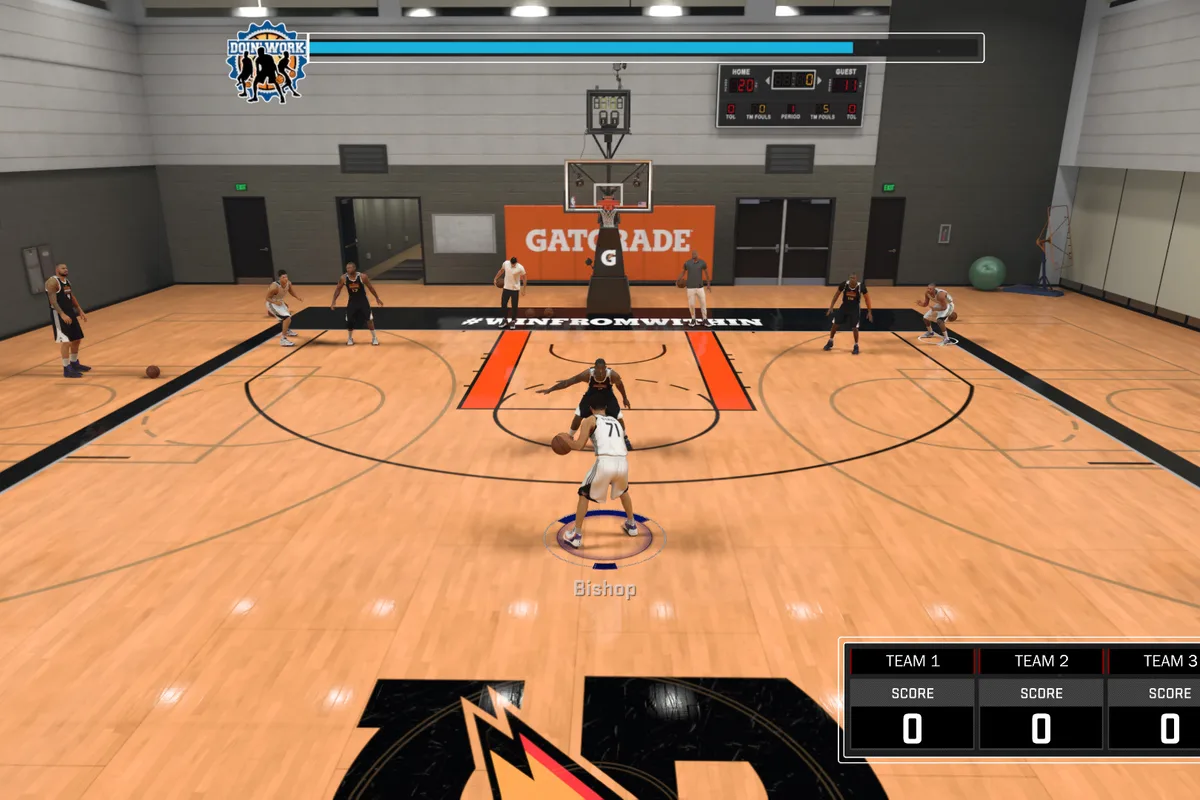
A substantial amount of rendering work is being spent on things the player is rarely supposed to stare at. That is exactly why the broadcast illusion works.
The PC version exposes a serious graphics menu
PC Invasion's technical review, now hosted by Prima Games, documented a broad range of graphics settings. Anti-aliasing, texture detail, crowd quality, shader options and other visual parameters allow the PC build to scale beyond a fixed console profile.
High resolution and upper settings could be demanding on 2016 hardware, but PC received the modern visual foundation used by PS4 and Xbox One rather than the reduced legacy presentation of PS3 and Xbox 360.
PS4 Pro turned NBA 2K17 into an unusual 2016 showcase
Patch 1.05 introduced PS4 Pro support, with 2K specifying native 4K output at 60 frames per second. HDR support was also added on PlayStation 4.
Digital Foundry later included NBA 2K17 in its testing of native-4K 60fps PS4 Pro titles. Maintaining that output for a sports game built around constant motion made it one of the more technically interesting early Pro releases.
The rollout was not flawless. A later update corrected an issue where passing icons failed to appear for some users playing in 4K.
Faces expose the engine more than basketball does
Player reproduction varies. Some star faces are convincing; others show weaker proportions, hair or facial animation. Contemporary criticism occasionally saw this as evidence that the underlying technology was beginning to show its age.
Studio hosts are the clearest example. GameSpot praised the audio work while describing the virtual Ernie Johnson, Shaquille O'Neal and Kenny Smith as stiff compared with the athletes.
Fast basketball hides an imperfect facial animation rather well. A studio close-up does not.
Post-launch patches finished work that release day had not
2K delivered several substantial updates after launch. October patches addressed hangs, scoring-display errors, uniform conflicts and online issues.
Later patches continued fixing dribbling, CPU behavior, MyPark and Pro-Am performance. TheSixthAxis also criticized slow loading on PS4.
NBA 2K17 therefore earns four stars for technical ambition and results rather than perfect polish. In 2016 its best moments were genuinely showcase material; the seams were simply visible whenever the camera stopped admiring the court.