 By Kilam
Video game compatibility becomes increasingly complicated as hardware platforms multiply.
A program developed for one architecture cannot necessarily execute directly on another.
The difficulties involve processor instructions, graphics interfaces, software libraries and sometimes hardware-specific functions.
Xbox Labs was created to examine techniques capable of overcoming some of these barriers.
Decompilation, Recompilation and Emulation Are Different
Decompilation involves analyzing compiled software to reconstruct a representation that can be examined or modified.
It does not guarantee recovery of the original source code exactly as developers wrote it.
Recompilation involves producing an executable suited to another platform or operating environment.
Depending on the project, this can also require recreating system functions, replacing dependencies and adapting graphics interfaces.
Emulation follows a different approach. It attempts to reproduce relevant behavior of the original platform so that software can execute without being ported in the same way.
These methods can complement one another, but they have different costs, limitations and performance characteristics.
Microsoft has not announced that Xbox Labs will use one exclusive method. Its official statement instead emphasizes exploring several technological directions.
Why Apple Silicon Is Relevant
Asha Sharma specifically mentions Windows applications adapted to Apple Silicon processors.
This example illustrates a highly visible architectural transition.
Traditional Windows games have frequently targeted x86-64 processors and Microsoft's operating-system interfaces.
Modern Macs use ARM-based Apple processors and a different graphics software environment.
Running a Windows game on such hardware may therefore require instruction translation, system-interface adaptation and graphics API conversion.
Existing compatibility technologies already address some of these tasks, but results vary significantly by game.
Xbox Labs does not establish that Microsoft is preparing an official application capable of running every Xbox game on Mac.
WebAssembly and WebGPU Turn Browsers Into Execution Platforms
The other major example concerns web technologies.
WebAssembly provides an executable format for running compiled programs in compatible browser environments.
WebGPU exposes modern graphics capabilities through an interface designed for the web.
Together, these technologies can support games and other interactive programs that previously required a traditionally installed application.
Browser execution introduces its own constraints, however.
File access, available hardware capabilities, system interfaces and networking behavior differ from those of conventional desktop applications.
A successful port may therefore need substantial adaptation beyond simply recompiling the original program.
This approach should also be distinguished from cloud gaming. In a locally executed browser port, the browser performs the relevant computations, while cloud gaming depends on remote execution.
How This Differs From Xbox Cloud Gaming
That distinction is essential to understanding Xbox Labs.
Xbox Cloud Gaming runs software on remote infrastructure and streams the resulting video to the user.
The local device does not have to render the complete game, but the experience depends on network connectivity.
A WebAssembly adaptation or a recompiled executable targets a different outcome: running the program on the destination device itself.
That can remove certain streaming-related constraints while increasing local performance and compatibility requirements.
Microsoft has not announced that Xbox Labs will replace Xbox Cloud Gaming. These are different methods of providing access to software.
Xbox Already Has a PC Backward Compatibility Program
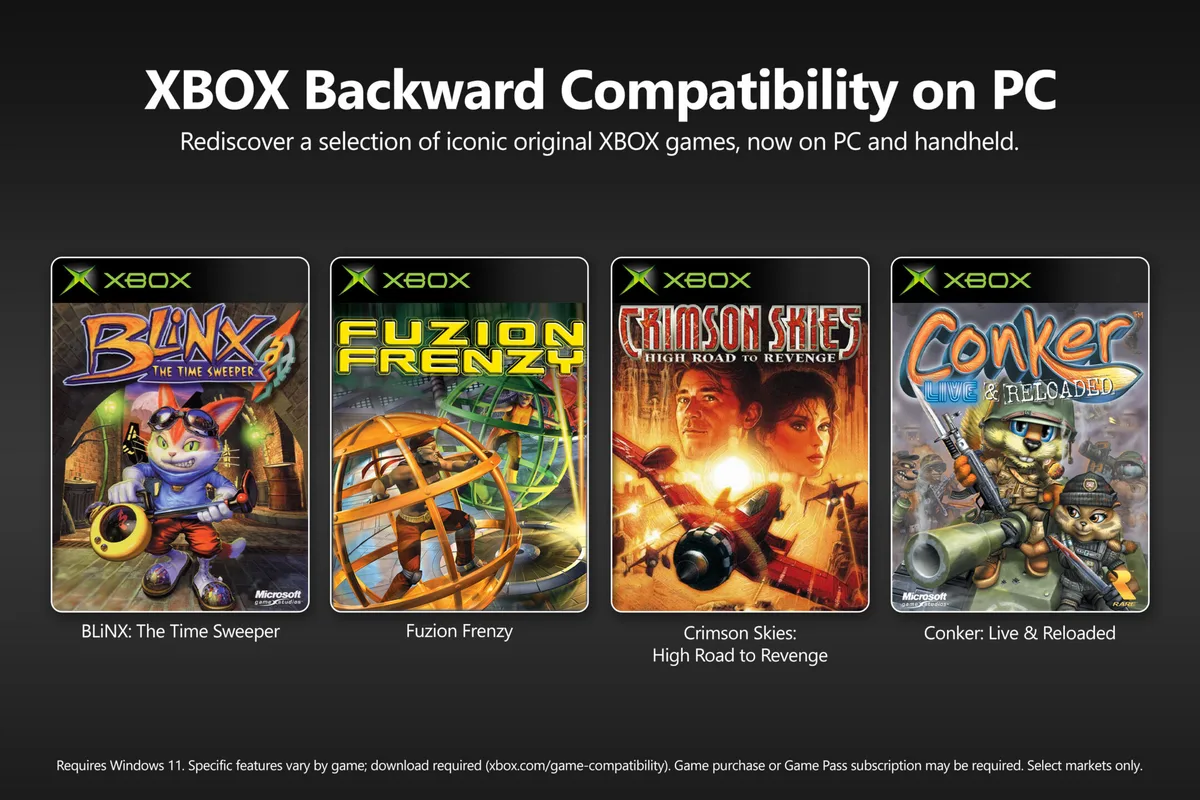
Microsoft separately introduced a concrete backward-compatibility initiative on July 22, 2026.
Xbox Backward Compatibility on PC launched in early release with four original Xbox titles playable on compatible Windows PCs and handheld devices.
The starting lineup includes BLiNX: The Time Sweeper, Conker: Live & Reloaded, Crimson Skies: High Road to Revenge and Fuzion Frenzy.
Microsoft also introduced graphics settings intended to improve the presentation of these games.
Options include resolution upscaling of up to four times under supported conditions, vertical synchronization, anisotropic filtering and customizable display modes.
These are features of an existing backward-compatibility program, not products announced as outcomes of Xbox Labs.
Handheld PCs Demonstrate the Practical Opportunity
Microsoft identifies the ROG Xbox Ally and Xbox Ally X among the devices supporting its initial backward-compatible PC lineup.
These Windows-based handhelds demonstrate how selected historical Xbox titles can reach users beyond traditional consoles.
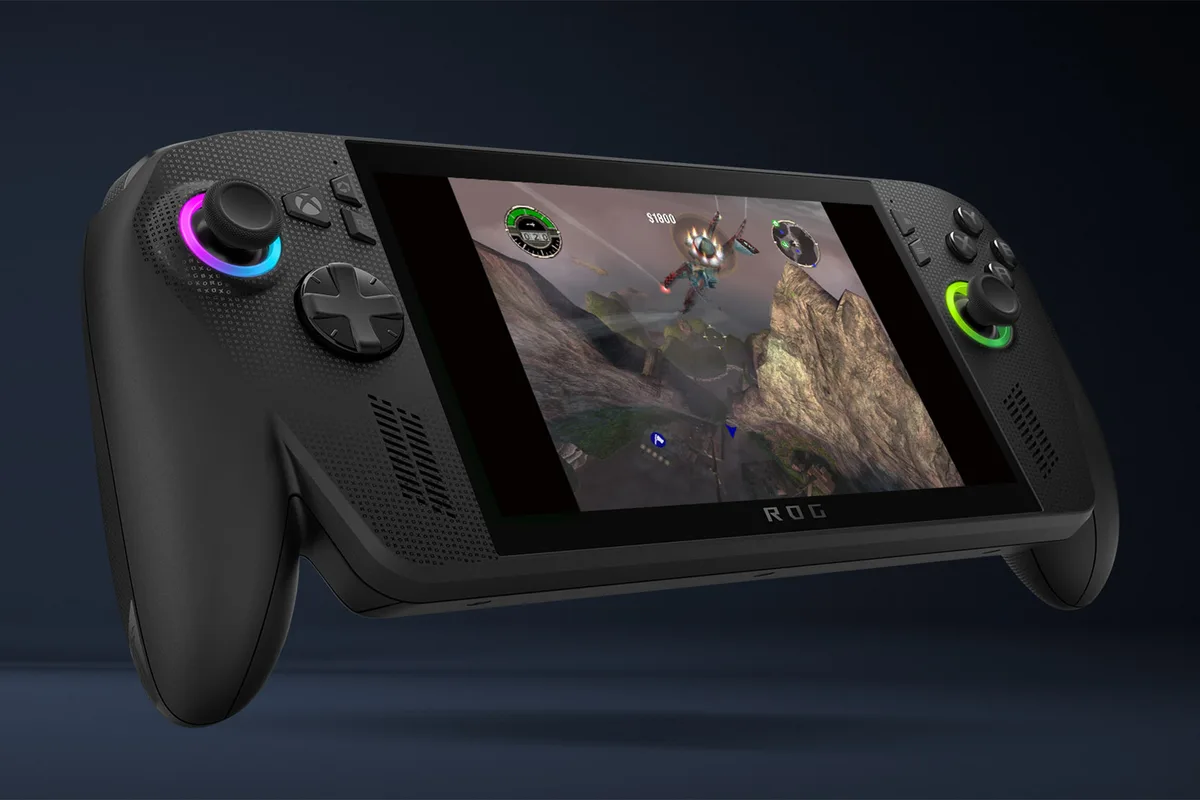
They also illustrate the limitations of compatibility programs.
Older games still require appropriate support, and every original Xbox title does not automatically become playable on every Windows device.
Compatibility remains tied to selected games and specified hardware requirements.
Artificial Intelligence Can Assist Without Solving Everything
Recent recompilation projects sometimes use artificial intelligence tools to assist with code generation and software analysis.
These tools can accelerate repetitive tasks or help developers identify software structures.
However, they do not guarantee that recompiled software will operate correctly.
Memory management, timing, graphics interfaces and gameplay logic can still create difficult problems.
Developers also need to verify that adaptations preserve the original game's intended behavior.
Automation can support this process without necessarily replacing technical and functional validation.
Xbox Labs currently provides no success rates, productivity measurements or public benchmarks establishing the performance of its future tools.
What Technical Problems Remain?
Several challenges must be addressed before research of this kind can produce reliable products.
The first is functional compatibility. A game must operate correctly throughout its content, including demanding and unusual scenarios.
The second is performance. A port may technically run while consuming too many resources to provide a satisfactory experience.
The third is dependency management. Older titles sometimes rely on online services, libraries or components that are no longer available.
Finally, the rights associated with source code and game content must permit whatever distribution is intended.
These challenges do not disappear merely because emerging tools make software recompilation more accessible.
A Promising Laboratory, Not Yet a Measurable Revolution
Microsoft plans to work openly and share selected research tools with the wider development industry.
However, no Xbox Labs game-port catalog, hardware requirements or release schedule has been confirmed.
The new group is therefore a technological signal rather than a demonstration of universal compatibility.
Its potential is substantial: reducing barriers between hardware architectures, improving access to historical games and exploring new creation interfaces.
Those possibilities still need to be tested through concrete examples, independently verifiable performance and clearly defined distribution conditions.
For now, Xbox Labs primarily represents Microsoft's intention to investigate technologies that could extend the useful life of games beyond their original hardware. It is a meaningful direction, provided that experimental possibilities are not mistaken for ports that have already been released.