
 By Camille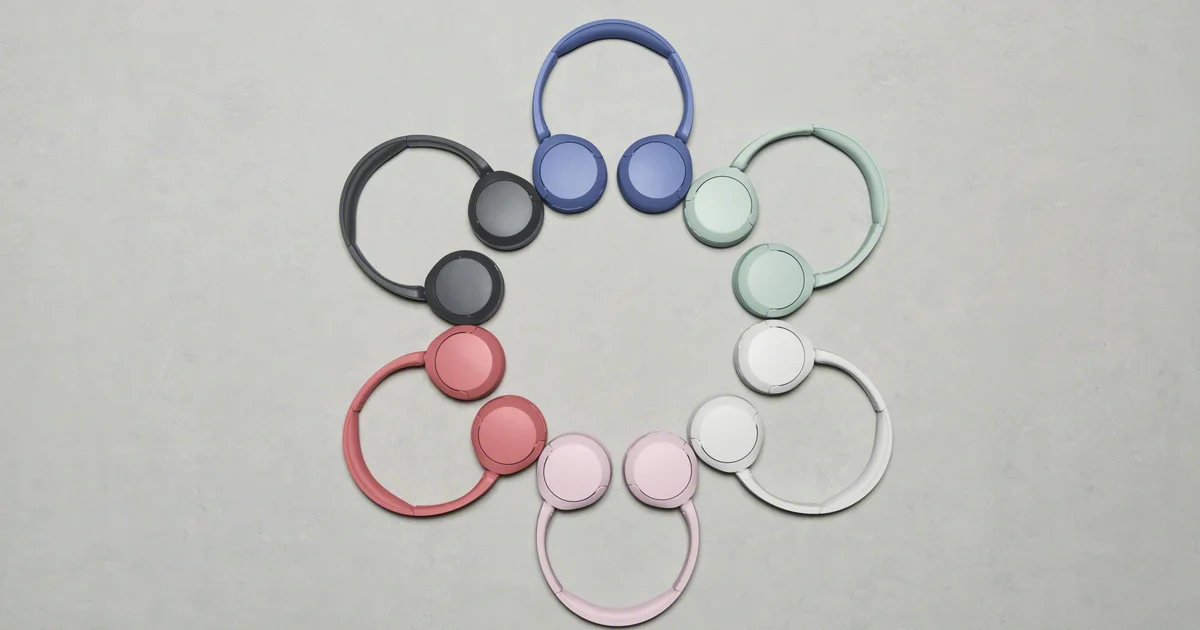
Sony is replacing two of the more affordable wireless headphones in its lineup with the WH-CH730N and WH-CH530.
In Germany, they are available from September 7 at €119.99 and €59.99 respectively, with pricing varying across European markets.
The division between them is straightforward. WH-CH730N is an over-ear active-noise-cancelling model. WH-CH530 is a much cheaper on-ear headset without listening ANC, built primarily around low weight and battery life.
WH-CH730N makes its clearest jump from 35 to 50 hours with ANC
Battery life is the easiest generational improvement to quantify.
Sony rates WH-CH730N for up to 50 hours of playback with active noise cancellation enabled. Its WH-CH720N predecessor was rated for up to 35 hours under comparable use.
That meaningfully changes how often an affordable ANC headset needs to be charged. Even with several hours of daily listening, a full working week becomes a realistic target.
A three-minute quick charge provides up to one additional hour of playback.

Sony also fixed a very physical problem: the headset now folds
WH-CH720N was light, but its structure was not especially compact for travel.
Sony has introduced a folding design for WH-CH730N while continuing to emphasize low weight and long-session comfort.
That sounds less impressive than a new audio processor, but it may be more useful inside a backpack or suitcase.
The product remains an everyday mid-range headset rather than a stripped-down version of Sony's premium 1000X series.
Dual Noise Sensor handles the active cancellation
WH-CH730N uses Sony's Dual Noise Sensor approach.
Two microphones monitor surrounding sound and feed the active noise-cancellation system.
Sony does not claim that this necessarily equals the performance of its flagship WH-1000X products, which remain positioned at a much higher price.
The more significant shift is that affordable ANC no longer arrives with such obvious compromises in battery life and connectivity.
AI processing is mostly working when you speak
Sony also uses AI-based processing to improve calls.
On WH-CH730N, voice pickup combines beamforming microphones, revised microphone positioning and AI-assisted noise reduction to separate speech from environmental noise.
This is not generative AI running inside the headset.
It is a more conventional machine-learning application designed to classify and suppress unwanted sound during calls.
WH-CH530 receives AI-assisted call-noise reduction as well, despite lacking active noise cancellation for music playback.
WH-CH530 chooses 55 hours instead of ANC
Sony rates the cheaper model for up to 55 hours of listening.
A three-minute charge is claimed to provide as much as 90 minutes of additional playback.
At €59.99 in Germany, the proposition is deliberately simpler: no ANC, but a lightweight wireless headset for music, streaming, online classes and calls.
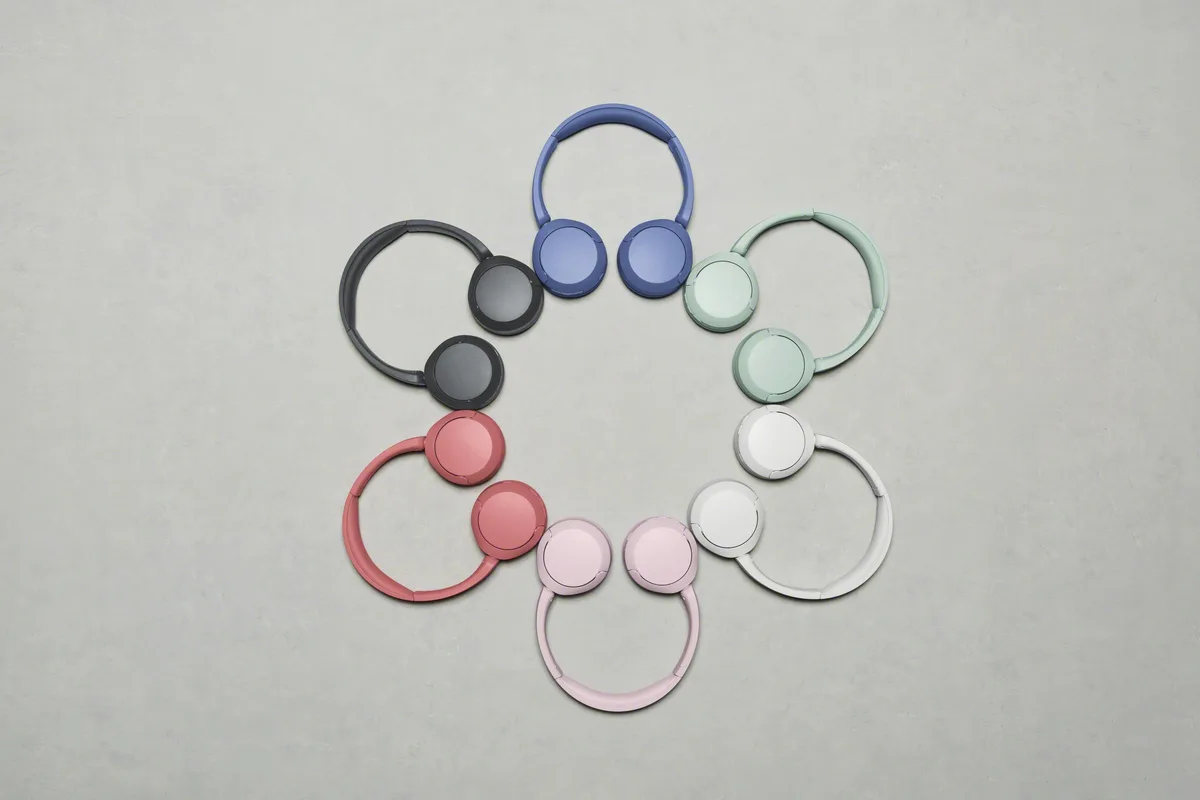
It is an on-ear design, meaning the pads sit directly on the ears rather than enclosing them as the WH-CH730N does.
That helps keep the headset compact, although long-session comfort will depend more heavily on clamping pressure and individual fit.
LE Audio has reached a €60 Sony headset
Both models support Bluetooth LE Audio.
LE Audio is more than another optional codec. The newer Bluetooth audio architecture introduces LC3 and is designed around improved efficiency and additional audio use cases.
The practical benefit still depends on the source device and operating system. Owning compatible headphones does not automatically force every phone or PC to use the newer Bluetooth path.
Its presence on WH-CH530 is nevertheless notable because Sony is moving the feature into a very inexpensive product.
Multipoint may matter more every day than another audio format
Both headphones also support Bluetooth Multipoint.
They can remain connected to two devices at once, typically a laptop and smartphone.
A user can watch something on a computer and then take an incoming phone call without going through another manual pairing process.
It is the kind of feature that looks minor on a specification sheet but materially changes a headset used across work and personal devices all day.
Google Fast Pair and Microsoft Swift Pair further reduce setup friction.
That still does not make WH-CH730N a cheap audiophile flagship
The CH range remains firmly centered on functionality, battery life and price.
Sony talks about improved digital processing and customizable sound through the Sound Connect app, but neither model is positioned as a replacement for the company's premium lineup.
That distinction matters in a market where long feature lists can make products appear more similar than they really are.
ANC, Multipoint and LE Audio alone reveal very little about driver accuracy, distortion, frequency response or the real-world effectiveness of the noise cancelling.
Those still require independent testing.
WH-CH530 is also leaning much harder into color
Sony offers WH-CH530 in black, white and pink alongside cobalt, coral and mint.
WH-CH730N comes in black, white, pink, blue and beige.
The broader palette on the cheaper headset says something about its role. Sony is treating it partly as an everyday personal accessory rather than only as a piece of audio equipment.
At this price level, the target user may not be shopping for a “premium audio” experience at all. They may simply want a reliable headset that can remain charged for days.
The interesting part is what Sony now considers baseline
A few years ago, Multipoint, sophisticated call-noise reduction and fifty-hour battery life were meaningful differentiators on expensive wireless headphones.
WH-CH730N now combines those features at €119.99, while WH-CH530 keeps Multipoint and LE Audio at €59.99.
That pushes premium headphones to justify their price elsewhere: stronger ANC, better microphones, materials, drivers, comfort, spatial processing and ultimately sound quality.
The affordable end of the market is becoming less dramatic.
Its job is increasingly to remove enough small annoyances that a cheap headset stops constantly reminding its owner that it was cheap.