
 By Camille
Mid-range smartphones are generally built around compromises. Some manufacturers prioritize processor performance. Others emphasize enormous batteries or exceptionally fast charging. With the Galaxy F70 5G, Samsung is taking a more conventional approach: including several practical features without trying to break performance records. The phone joins the Galaxy F70 family in India alongside the F70e and F70 Pro. Its launch was scheduled for October 18, with pricing and specifications receiving wider coverage on October 19. Sales begin on October 20 through Flipkart. The official starting price is ₹19,999 for 4GB of RAM and 128GB of storage. A second version with 6GB of RAM and the same storage capacity costs ₹22,999. Certain bank promotions can temporarily lower the price, but those offers are not the standard retail prices. The Galaxy F70's appeal therefore goes beyond its headline cost. Samsung has included a Full HD+ Super AMOLED display, Gorilla Glass Victus protection and a primary camera with optical stabilization. Those choices may appeal to buyers who place greater value on photography and display quality than raw computing power.
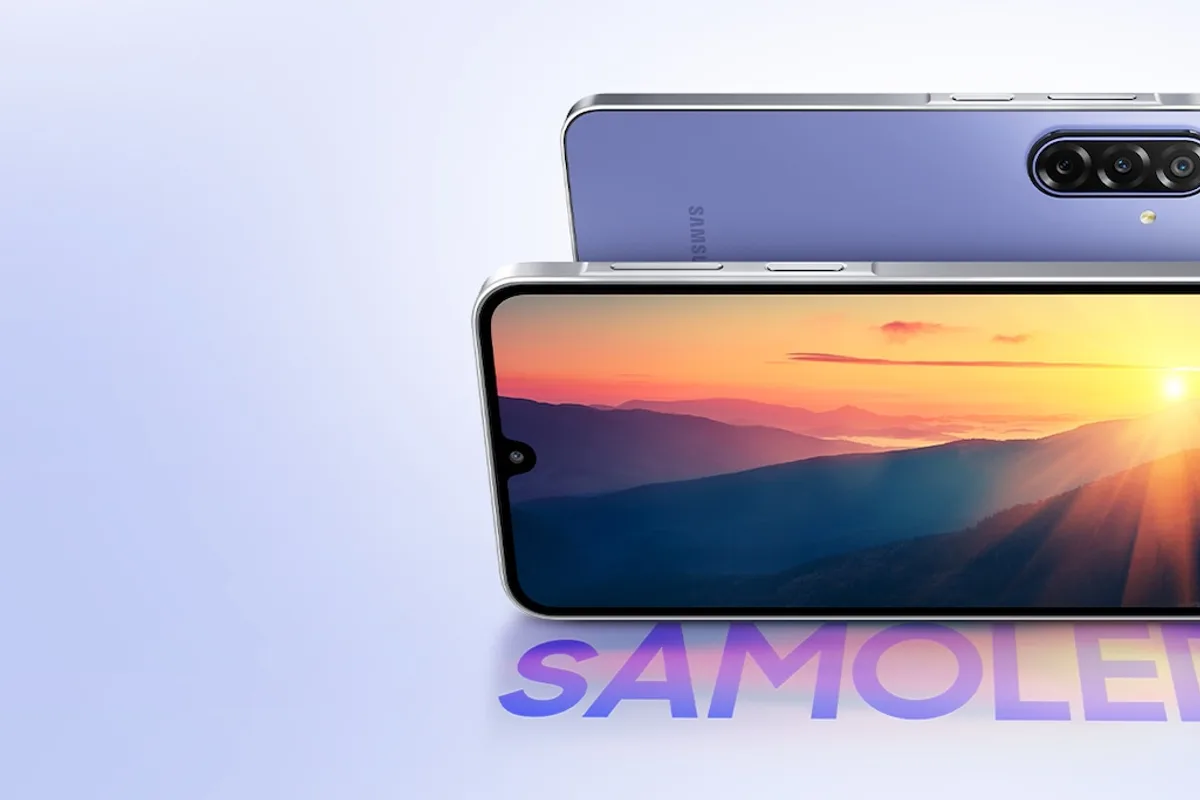
A 6.7-inch Super AMOLED display with a 90Hz refresh rate
The Galaxy F70 5G features a 6.7-inch Super AMOLED display with a resolution of 1,080 × 2,340 pixels. Its maximum refresh rate is 90Hz. When supported by the operating system and applications, this enables smoother animation than a conventional 60Hz display. Scrolling, menu transitions and some games can feel more responsive. However, a 90Hz display does not mean every application continuously produces ninety frames per second. Software behavior, processor performance and power settings also matter. Samsung's bigger selling point is the AMOLED technology. Unlike a conventional LCD, individual OLED pixels generate their own light. Black regions can therefore be displayed without a shared backlight, allowing strong contrast. The company describes the F70 as offering one of the brightest AMOLED displays in its price segment. That comparison is based on Samsung's own research. Independent brightness measurements and outdoor visibility testing are still needed to establish how the screen compares with rival phones.
Gorilla Glass Victus is an interesting addition at this price
Corning Gorilla Glass Victus protection is another notable feature. The glass family is designed to resist certain scratches and impacts better than less advanced protective materials. That is an attractive specification for a phone priced near ₹20,000. Smartphones are carried in pockets and bags, placed on various surfaces and used repeatedly throughout the day. Drops and scratches are common risks. However, the protection should not be overstated. Gorilla Glass Victus is not unbreakable. Actual resistance depends on the impact angle, surface material, force and condition of the glass. A protected display can still crack. Samsung's announcement is not a substitute for durability testing on a finished retail device. The Galaxy F70 also retains a waterdrop-shaped Infinity-U notch for its front camera. That design is more traditional than the centered punch-hole cutouts found on many recent phones. It may not materially affect everyday use, but it reflects the handset's positioning.
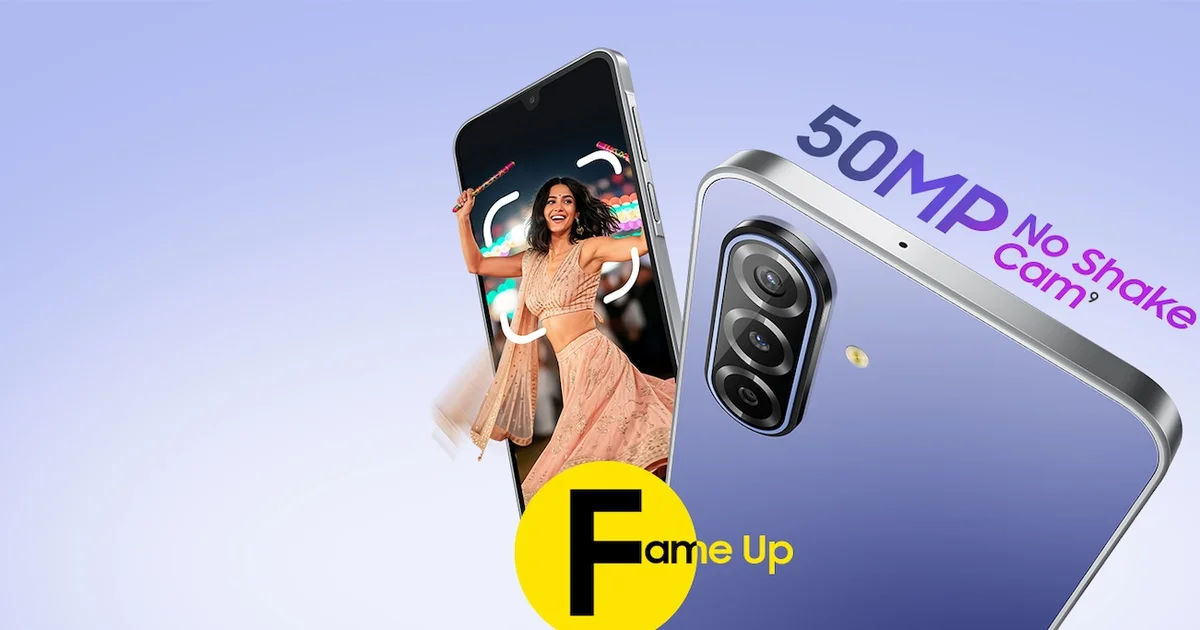
A 50MP camera with optical image stabilization
Samsung has made photography one of the central themes of the Galaxy F70. The primary rear camera features a 50-megapixel sensor and an f/1.8 aperture. More importantly, it includes optical image stabilization, or OIS. The mechanism compensates for certain small movements of the camera during capture. It can be useful in lower light, when longer exposure times make unwanted movement more noticeable. It can also help reduce some shakiness during video recording. Samsung markets the feature as No Shake Cam. The phrase is easy to understand, but it does not guarantee perfectly sharp results. OIS cannot eliminate every movement, particularly when the subject itself moves rapidly. Image processing, sensor dimensions and lens quality are also important. A 50MP specification alone does not establish the camera's real detail or dynamic range. Independent testing will need to examine texture, exposure and image noise, especially in challenging lighting conditions.
A 5MP ultrawide and 2MP macro complete the camera system
Samsung adds two secondary rear cameras. The first is a 5MP ultrawide with an advertised f/2.2 aperture. It captures a wider field of view, potentially useful for landscapes, groups and interiors. The second is a 2MP macro camera designed for close-up photography. These modules add versatility. However, their much lower resolutions suggest compromises compared with the main sensor. A 5MP ultrawide may offer limited detail when an image is enlarged or cropped. A 2MP macro leaves even less room for substantial cropping. Low-light performance will also need testing. The Galaxy F70 therefore has three rear cameras, but it would be misleading to assume they all deliver similar image quality. For many buyers, the stabilized primary camera is likely to be the most important. On the front, Samsung provides a 13MP camera for selfies and video calls. As always, photographic quality depends on more than the number of cameras listed on the box.
Exynos 1330 targets everyday performance
Samsung has selected its Exynos 1330 processor. The chip uses an eight-core configuration with two performance cores reaching up to 2.4GHz and six efficiency cores operating at up to 2.0GHz. Graphics processing is handled by the Mali-G68 MP2. This hardware needs to be considered within its price segment. The Exynos 1330 is not intended to compete with the latest flagship processors. It targets phones balancing cost, performance and energy consumption. Ordinary tasks such as messaging, browsing and video playback fit that positioning. Demanding games and sustained workloads will depend on software optimization and thermal management. Processor specifications alone cannot establish how a finished smartphone performs. Testing is required to measure sustained speed, responsiveness and heat. Samsung is emphasizing the overall user experience rather than presenting the F70 as a premium gaming device.
Why the choice between 4GB and 6GB of RAM matters
The Galaxy F70 is offered in two memory configurations. The base version includes 4GB of RAM and 128GB of storage. The more expensive model increases RAM to 6GB while retaining 128GB of storage. Memory capacity affects how well the phone can keep several applications open and handle background activity. Four gigabytes may be sufficient for relatively straightforward use. However, modern applications, browsers and certain AI-related features can require substantial memory. Six gigabytes provides additional headroom. That does not automatically make every task much faster. Both versions use the same processor. The difference is more likely to become noticeable when several applications compete for memory. The 128GB storage capacity is consistent with the segment. Expandable microSD storage is also reported, with support described as reaching up to 2TB. Buyers should check whether using a memory card affects their ability to install a second physical SIM. For someone hoping to keep the phone for several years, RAM may be an important part of the purchasing decision.
A 5,000mAh battery with relatively modest 25W charging
Samsung equips the Galaxy F70 with a battery rated at 5,000mAh. That is a familiar capacity among mid-range Android smartphones. It provides a reasonable foundation for daily use, but it does not guarantee a specific number of hours between charges. The display, mobile connectivity, processor and applications all influence consumption. A user streaming video may have a different experience from someone spending hours using GPS navigation. The phone supports 25W wired charging. That is modest compared with some competing devices advertising much higher charging power. It does not necessarily mean the Galaxy F70 will be inconvenient to recharge. Real charging time depends on the power curve and temperature management. Still, shoppers who prioritize extremely fast charging should note the limitation. Samsung also specifies that the compatible 25W power adapter is sold separately. If a buyer does not already own one, the charger may represent an additional expense.
A 7.5mm body and IP54 protection
According to published specifications, the Galaxy F70 measures 7.5mm thick. Its weight is 192 grams. Samsung emphasizes the relatively slim design as a comfort feature. However, those numbers alone cannot determine how convenient the phone will be to hold. Its width, nearly 78mm, also matters for one-handed use. Large 6.7-inch phones do not suit every user equally. The device carries an IP54 protection rating. That indicates a defined level of resistance to dust ingress and splashing water under standardized conditions. It may provide some reassurance during ordinary use. However, IP54 should not be confused with protection against immersion. The Galaxy F70 must not be described as waterproof in the same way as a device carrying an IP68 rating. Samsung also warns that dust and water resistance may diminish with normal wear. The rating is useful, but it does not eliminate the need for careful handling.
Several years of software updates are promised
Software support can significantly affect the value of a mid-range smartphone. According to Moneycontrol and 91mobiles, Samsung is promising four generations of major Android upgrades and five years of security updates for the Galaxy F70. That is relevant for buyers who intend to keep their phones for a long time. Security patches address vulnerabilities and help protect personal information. Major operating system updates can introduce features and maintain compatibility with newer applications. However, a support commitment should be distinguished from the actual release schedule. Security patches may not arrive simultaneously in every country. There is also some inconsistency in the reporting of the precise One UI version preinstalled at launch. Moneycontrol lists Android 15 with One UI 7, while Gadgets 360 does not specify a version in its initial launch article. The detail deserves confirmation from Samsung's full product specifications or a retail device. In any case, a long update commitment is attractive only if the hardware remains comfortable to use throughout that period.
Circle to Search and Gemini reach the F70 as well
Samsung highlights several software features that have become familiar across its smartphone ecosystem. The Galaxy F70 supports Google's Circle to Search feature. It allows users to search for content visible on the screen within compatible applications. The manufacturer also promotes Google Gemini for selected AI-assisted requests and interactions. These capabilities do not mean all AI computation takes place locally on the Exynos 1330. Some features require an internet connection, an eligible account or remote processing services. Availability may differ by country, language and software version. Samsung also offers its Knox security environment and Samsung Wallet capabilities in supported markets. These services can make the experience more convenient, particularly for existing Samsung customers. However, their presence does not establish that the phone has every AI capability available on premium Galaxy models. Hardware specifications, software compatibility and regional terms still matter.
The growing Galaxy F70 family gives buyers more choices
Samsung had already introduced the Galaxy F70e and F70 Pro. The standard F70 now occupies the space between them. That gives Indian consumers another choice within the same family. The F70e is the more affordable entry point. The standard F70 introduces features including a Full HD+ Super AMOLED screen, a stabilized primary camera and an ultrawide lens. The F70 Pro sits in a higher price category. For context, several specialist publications list the F70e from approximately ₹18,499 and the F70 Pro from ₹37,999. Those prices can change with configurations and promotions. The gap helps explain the purpose of the standard model. Samsung is trying to offer certain desirable features without charging Pro-level prices. However, a larger family of similarly named devices can also confuse customers. The meaningful differences are found in the camera systems, displays, processors and software policies. The product name alone is not enough to determine the best option.
How much does the phone actually cost with launch offers?
The official Galaxy F70 price starts at ₹19,999. The 6GB model costs ₹22,999. Samsung and participating sellers are also promoting discounts tied to selected bank cards. Gadgets 360 and 91mobiles report an effective entry price of ₹17,999 under certain launch conditions. SamMobile describes additional discounts associated with particular payment methods. Those differences do not necessarily indicate contradictory official prices. Promotions can vary according to the bank, seller and offer period. Buyers comparing the F70 with competing phones should look at the amount they can actually pay. A conditional discount is not a permanent reduction available to every customer. The same caution applies to exchange bonuses and financing offers. The final cost may differ significantly from the price displayed in an advertisement. The Galaxy F70 is a product confirmed for India, with official prices stated in rupees. No French retail price has been established.
No confirmed European release
Samsung is selling the Galaxy F70 5G in India, including through Flipkart. The phone comes in two official colors: Bold Black and Vivid Violet. Samsung's marketing shows a conventional black finish alongside a more expressive purple option. Those names are the ones used on the company's Indian product page. There has been no confirmed announcement of a French release. It would therefore be misleading to convert the Indian rupee price into euros and present the result as an official European retail price. Taxes, distribution channels and warranty conditions would differ. Some Galaxy models designed for India are also sold under different names elsewhere, while others remain specific to particular markets. It is too early to assume the F70 will follow either route. For European readers, the handset is primarily an illustration of Samsung's approach to a highly competitive Indian market. Its Indian availability does not make it a product currently sold by European retailers.
What independent reviews still need to establish
The Galaxy F70 has a coherent specification sheet. However, specifications alone cannot establish the complete experience. The first important test concerns low-light photography. Optical stabilization can help, but image processing remains decisive. The ultrawide and macro cameras should be evaluated separately from the primary sensor. Performance is another question. The Exynos 1330 and the base model's 4GB of RAM need to deliver comfortable operation with modern applications. Multitasking tests should reveal how much the 6GB configuration helps. Battery endurance and charging also require measurements. A 5,000mAh capacity does not guarantee two full days of use. Finally, the AMOLED display needs testing for brightness, calibration and outdoor visibility. Samsung claims several advantages within its price segment, but some of those comparisons rely on internal research. Independent testing will be needed to confirm or qualify them.
Samsung is focusing on useful fundamentals rather than record-breaking specs
The Galaxy F70 5G does not attempt to impress with an enormous battery, ultra-high charging wattage or a flagship processor. Its strategy is more restrained. Samsung combines an AMOLED display, Gorilla Glass Victus protection, a stabilized primary camera and several years of promised software support. These are practical features. A readable, high-contrast display matters every day. Optical stabilization can help with quickly captured photographs. Security updates can extend a device's useful life beyond the initial purchase. But the trade-offs remain visible. Charging is limited to 25W, the secondary cameras have modest resolutions and the base model's RAM could feel restrictive under heavier workloads. At ₹19,999, the Galaxy F70 therefore looks like a measured mid-range offering rather than a revolutionary smartphone. Whether it is the right choice depends on the buyer's priorities. Someone who mainly wants a stabilized camera and an AMOLED display may find the package appealing. A demanding mobile gamer or a person who prioritizes fast charging may prefer alternatives. Samsung has confirmed the hardware and pricing. Independent reviews will determine how well the pieces work together.