
 By Tsuky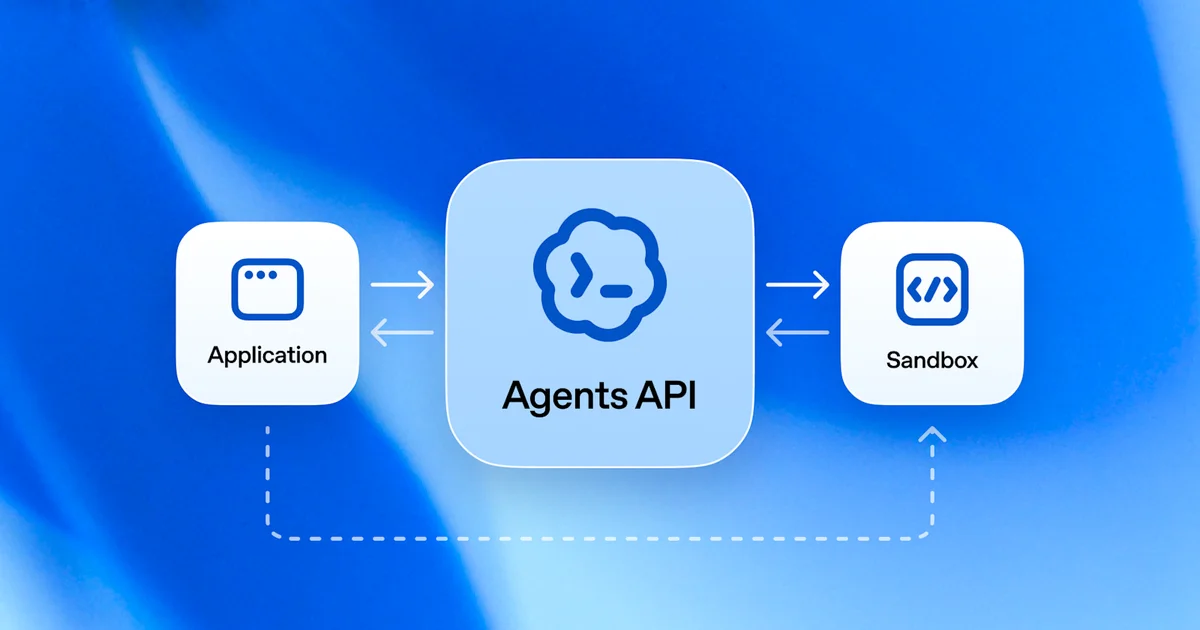
A chatbot can answer a prompt and stop. An agent investigating an outage, modifying a codebase or assembling a research report may need to perform dozens of actions, create files, call external systems, lose usable context, recover from failures and continue working hours later.
That operational layer is the product OpenAI is exposing.
Agents API entered public beta on September 10. Developers specify a task, select a model and its tools, then choose the environment where the agent will execute its work. OpenAI operates the harness coordinating everything around those choices.
The model is only one component
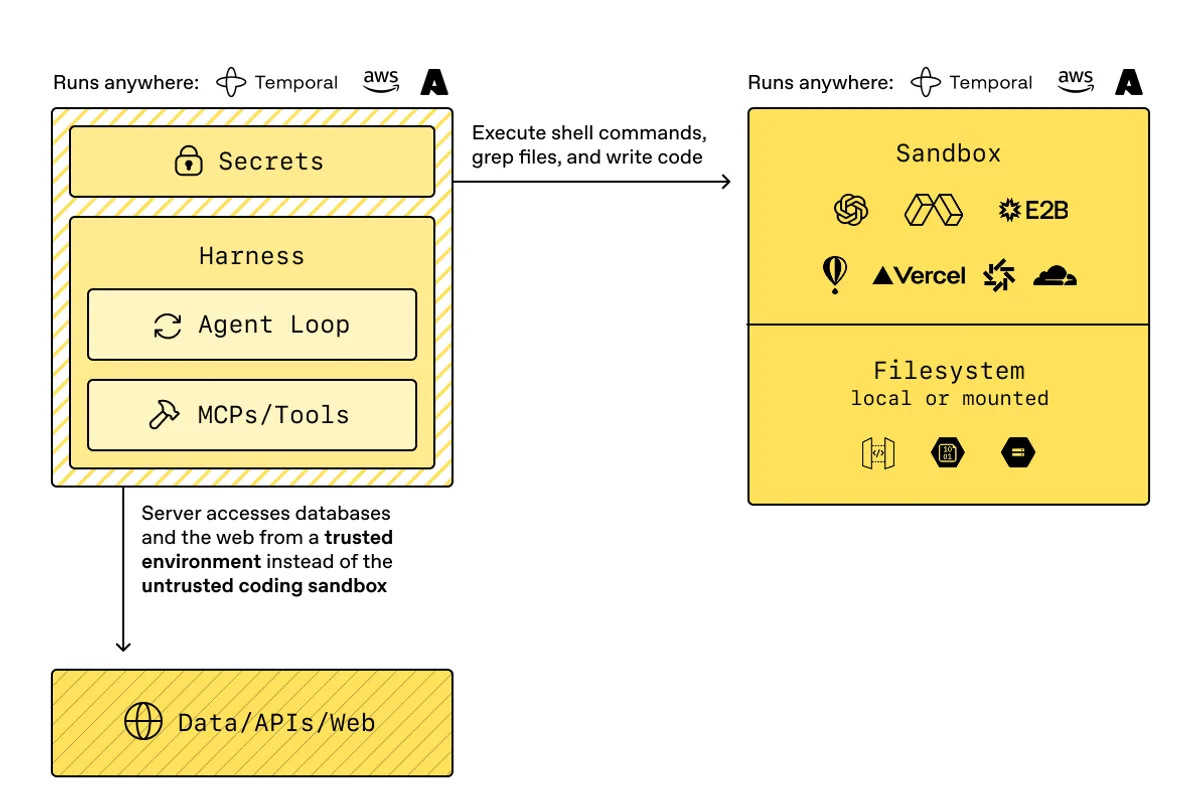
OpenAI describes the harness as the layer coordinating model calls, context and tool use. It is derived from the system used to run Codex.
Long sessions are one obvious problem. Once an agent approaches the limit of its context window, the API can automatically compact earlier information so useful state survives without requiring the application developer to build that bookkeeping from scratch.
Sessions are durable as well. OpenAI is explicitly designing the service around agents that may remain active for hours or days rather than one request-response cycle.
None of that sounds as exciting as a larger benchmark number. In production, it is often the difference between an impressive prototype and something people can actually depend on.
One agent can hand work to several others
Agents API includes native subagent coordination. A primary agent can break a task into pieces, assign them to separate workers and combine the results later.
OpenAI's own example asks an agent to investigate elevated server errors while delegating deployment analysis, error analysis and dependency analysis to subagents running in parallel.
Developers can put limits on concurrent subagents and inspect the resulting sessions and items through the API.
At that point, the mental model starts looking less like a chat interface and more like a small distributed computing system whose workers happen to be language models.
Tool overload is becoming its own engineering problem
Giving a model three tools is easy. Giving it hundreds creates a different problem: describing every available function can consume a meaningful amount of context before the agent has done any useful work.
OpenAI's harness addresses that with tool search, loading relevant tool definitions when they are needed instead of pushing the complete catalog into every prompt.
Programmatic tool calling also lets agents execute calls in parallel, chain operations and process results through code.
This is an important shift in what the output of an AI system actually is. A natural-language response can become merely the final report. The work itself may have happened through dozens of tool operations first.
The sandbox does not have to belong to OpenAI
OpenAI is separating orchestration from the compute environment where an agent manipulates files and runs code.
Developers can use an OpenAI-hosted sandbox, supply their own infrastructure or connect environments from supported providers including Cloudflare, DigitalOcean, E2B, Modal, Oracle, Runloop and Vercel.
That distinction is useful for enterprise deployments. Secrets, approval logic and access to internal business systems can remain in a trusted layer instead of being dumped into the same environment where generated code is being executed.
OpenAI-hosted sandboxes can run code, work with files, install packages and produce artifacts.
There is no separate Agents API fee
The public beta is available to all developers. OpenAI says the API itself carries no additional orchestration fee; customers pay for the model tokens and tools their agents consume, plus applicable compute costs for hosted environments.
That pricing decision matters because agent orchestration has become a market of its own.
A growing collection of frameworks and platforms exists largely to manage model loops, tools, state and recovery. OpenAI is now bundling a managed version of that layer directly around its models.
The harness may matter as much as the model
For years, AI infrastructure comparisons revolved around the model itself: intelligence, latency, context length and price per token.
Agents make that incomplete.
Two products using the same underlying model can perform very differently depending on how they preserve context, choose tools, recover from errors and distribute work across multiple workers.
OpenAI learned that while operating Codex at scale. Agents API turns those lessons into something developers can call rather than rebuild.
The model still generates the intelligence.
OpenAI is now selling the machinery that keeps that intelligence working after the first prompt.