
 By Tsuky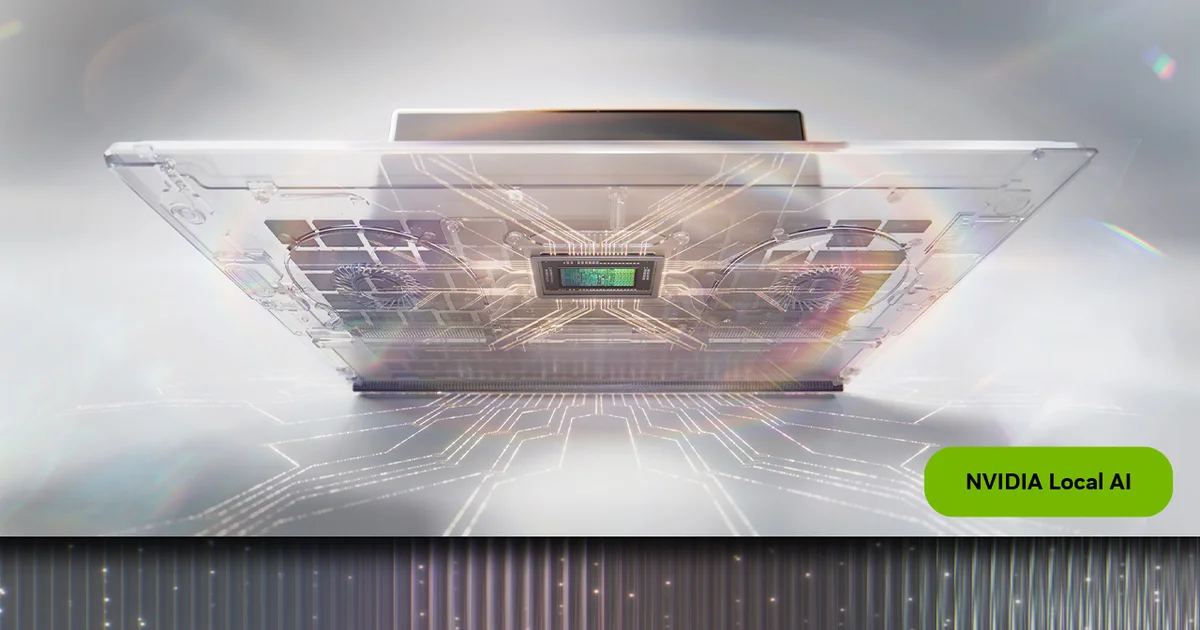
One endpoint, several independent computers
NVIDIA released PAIR in beta on September 3 as free, open-source software with both graphical and terminal interfaces. It currently works with Ollama and LM Studio.
Applications can target a single local PAIR endpoint rather than selecting a machine themselves. The router discovers compatible nodes and forwards individual inference jobs according to available capacity, adapting when devices enter or leave the network.
The hardware does not become one virtual accelerator. Memory is not pooled across machines and a model that does not fit on an individual node does not suddenly fit because three other PCs are sitting nearby.
That limitation explains the agent focus
Agentic workflows are unusually well suited to this kind of routing because they can generate multiple independent jobs. A coordinator might ask several subagents to inspect documents, classify messages or tackle separate pieces of a coding task at the same time.
On one GPU, those requests can queue behind each other. With PAIR, they can be dispatched to separate systems.
NVIDIA also points to a simpler practical case: a local AI job can move to another available machine while the primary PC is occupied with gaming or creative work.
It is not an RTX-only household
The beta supports GeForce RTX 20 Series GPUs and newer, professional NVIDIA RTX GPUs from the Turing generation onward, DGX Spark and Apple systems using M4 silicon or newer.
Windows, Linux and macOS nodes can participate in the same local setup. NVIDIA says no special networking hardware or rack infrastructure is required.
PAIR itself can operate without an internet connection after setup. Model downloads still require connectivity.
Local routing does not automatically make every agent private
NVIDIA's privacy pitch is straightforward: prompts, files and agent context handled through local inference can remain on the user's network instead of being sent to a cloud inference provider.
The application above PAIR still matters. A local-capable agent may have its own cloud features. Perplexity Portable Computer, for example, can process workflows locally but also escalate selected work to more than 15 frontier cloud models after asking for permission.
Anyone using local inference specifically for confidential files therefore has two things to check: where PAIR sends the inference request and what the agent application itself is allowed to send elsewhere.
llama.cpp gets a separate speed boost
The routing software arrives alongside new inference optimizations. NVIDIA reports up to 1.9x higher llama.cpp throughput on a GeForce RTX 5090 through kernel work, enhanced speculative decoding and faster prefill.
Those improvements are available in the llama.cpp backend and can also be reached through LM Studio and Ollama.
For vLLM, NVIDIA reports a 1.2x improvement on the RTX PRO 6000 Blackwell Workstation Edition and up to 1.4x on two-DGX-Spark configurations, with new XQA attention kernels in FlashInfer among the changes.
Those are NVIDIA's measurements on specific configurations. The 1.9x figure should not be read as a universal uplift for every RTX GPU, model and workload.
RTX Spark hardware follows in October
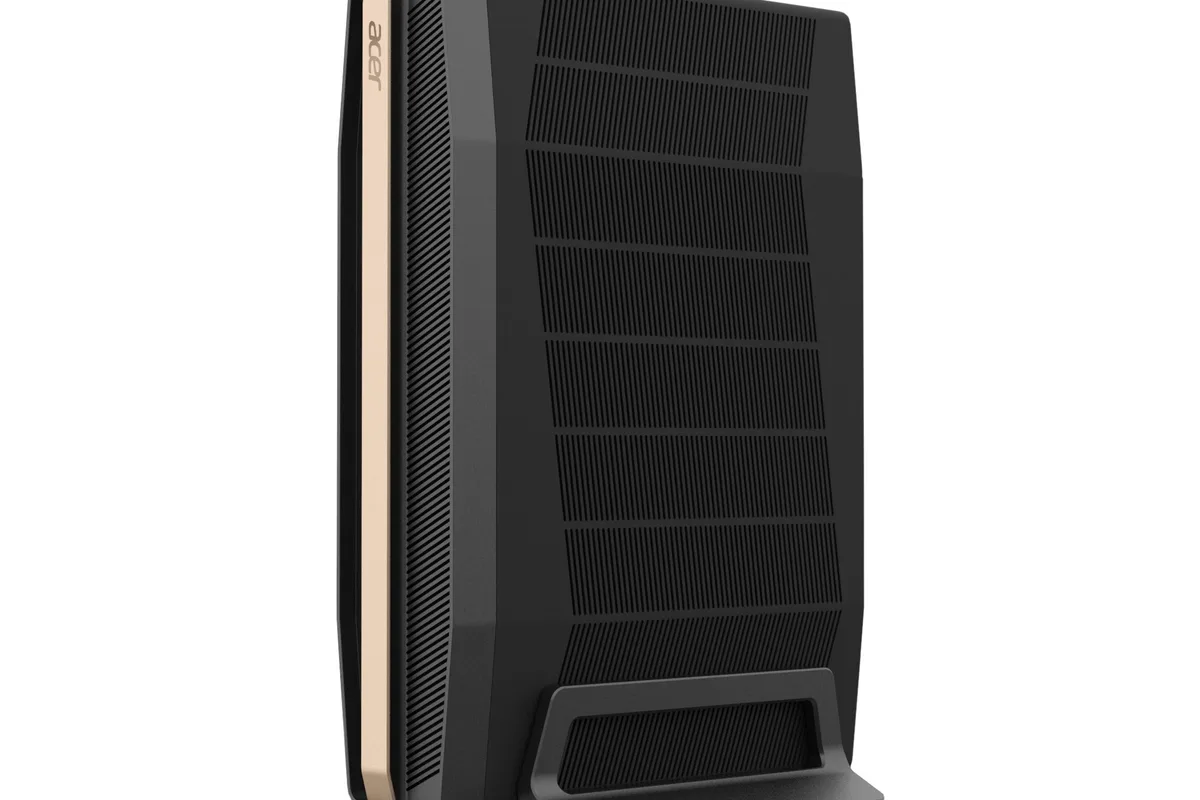
NVIDIA also used IFA to put a firmer date on its new Windows platform. RTX Spark PCs are scheduled to start arriving in October 2026, with Acer showing a compact desktop design and Lenovo presenting the Yoga Pro 9n and Yoga 9n 2-in-1.
At the upper end, RTX Spark combines a Blackwell RTX GPU rated for up to 1 petaflop of FP4 AI compute, as much as 128GB of unified memory and a 20-core Grace CPU. That large shared memory pool is particularly relevant for local models that quickly exceed the VRAM available on conventional consumer GPUs.
NVIDIA is pairing the hardware with Microsoft's new Windows Agent framework, intended to give always-on agents OS-level controls while they operate in the background.
PAIR is about concurrency more than aggregation
The distinction will determine whether the software is useful in a given home or development setup. PAIR does not make several modest GPUs behave like one enormous card.
It gives independent AI requests somewhere else to go.
For a single oversized model, that may change very little. For an agent spawning five parallel jobs while several capable computers sit idle on the same network, it is almost exactly the problem NVIDIA designed PAIR to solve.
The PAIR beta is available now. RTX Spark Windows systems are due in October.