
 By Camille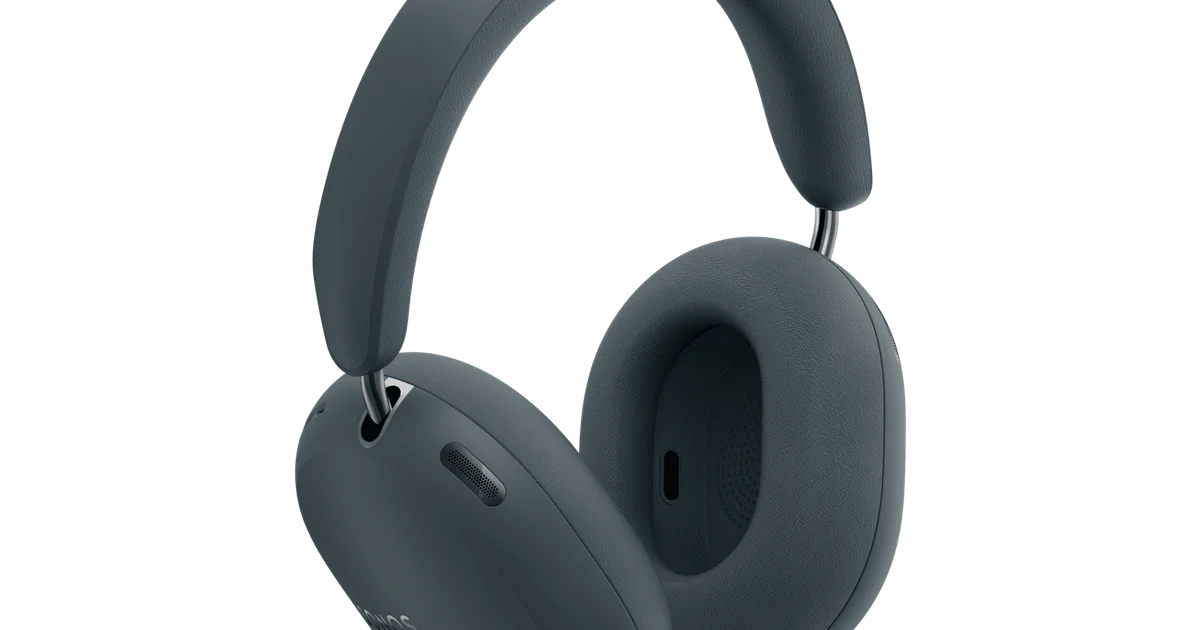
The battery is designed to be replaced instead of taking the headphones with it
Sonos announced Ace Ultra on September 1 alongside Beam Ultra and the Sonos 27 software platform.
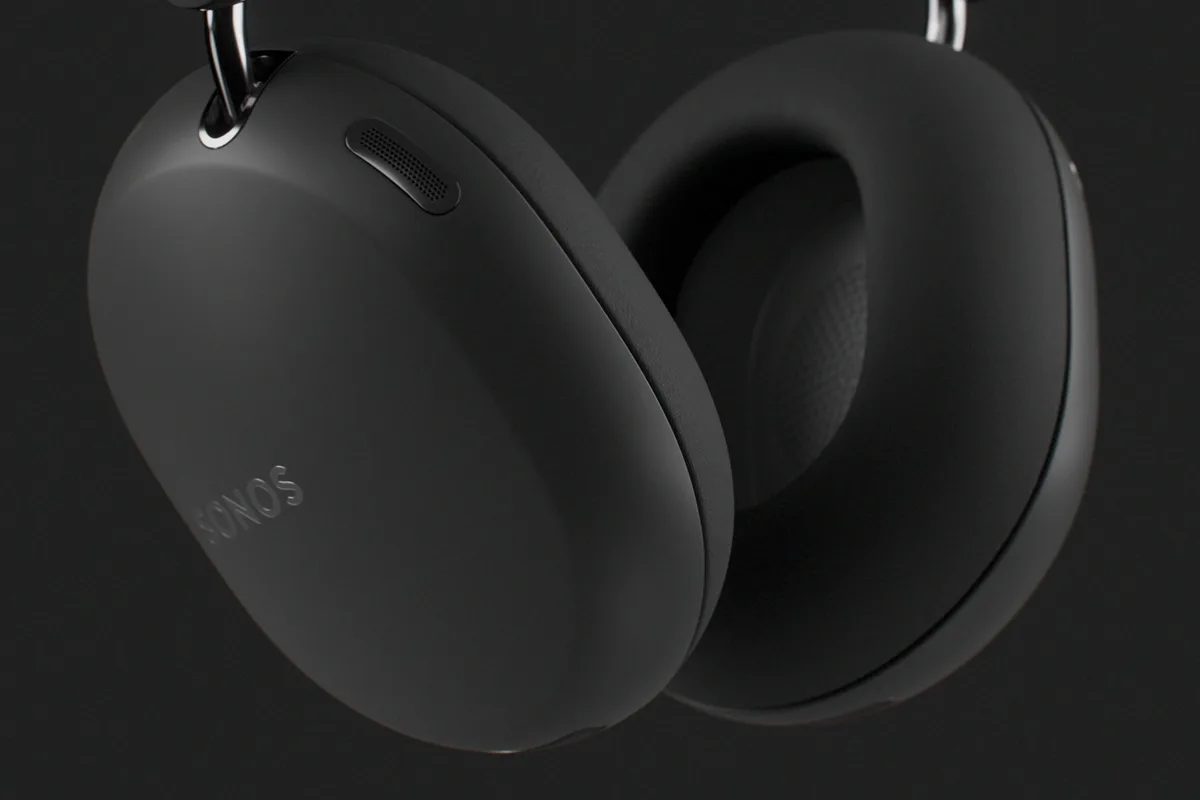
The basic design remains recognizable, with large over-ear cups, integrated metal rods and physical controls rather than touch-sensitive panels.
US pricing remains $449, while the new model costs €449 in Europe and £399 in the UK.
Shipping is scheduled to begin September 29.
The more unusual change is that both the battery and ear cushions are explicitly designed to be replaced.
The DIY battery kit costs $25
Sonos lists an official Ace Ultra Replacement Battery Kit for $25 in the US and £25 in the UK.
The company describes it as a DIY repair part rather than something available only through a service center.
That matters because lithium-ion batteries inevitably lose capacity as they age.
On many wireless headphones, the speakers and electronics can remain perfectly functional long after the sealed battery has become the component limiting the product's useful life.
Battery life rises to 35 hours with ANC still enabled
Ace Ultra contains a 1,060mAh lithium-ion battery.
Sonos rates it for up to 35 hours with Active Noise Cancellation or Aware mode enabled.
The original Ace was rated around 30 hours under comparable ANC use.
Fast charging provides up to three hours of playback from a three-minute charge when starting from an empty battery.
A complete charge can take up to three hours.
The driver is still 40mm, but it is a new Sonos design
Each ear cup continues to use a 40mm driver.
Sonos says the Ultra unit is an entirely new in-house design tuned with experienced recording and film engineers.
The company promises deeper bass, greater detail and lower distortion.
Those claims need listening tests.
Driver diameter by itself says very little about sound quality because diaphragm construction, motor design, enclosure acoustics, damping and tuning all matter.
Ten microphones feed a new adaptive ANC system
Ace Ultra uses ten microphones for noise control, calls, Aware mode and TrueCinema.
Sonos claims up to twice the active noise cancellation of the original Ace.
The new Adaptive ANC also compensates when the acoustic seal changes because of head movement, glasses, hair or other leaks around the cushions.
That is important because even a powerful ANC algorithm becomes less predictable when low-frequency sound enters through a physical gap.
Adaptive EQ reacts to the same seal changes
The headphone also changes its frequency response based on fit.
Adaptive EQ attempts to compensate for acoustic leakage around the pads.
A glasses arm can create only a small opening between skin and cushion, yet that gap may noticeably alter bass response.
Sonos is trying to keep the tonal balance more consistent without asking listeners to constantly reposition the headset.
Manual EQ expands to three or eight bands
The Sonos app now offers both three-band and eight-band equalization.
That is much more flexible than the limited adjustment available on the original model.
For a premium headphone, giving owners control over several frequency ranges is a practical improvement rather than a niche audiophile feature.
A $449 tuning should not have to be permanent if the listener simply prefers less bass or wants to adjust the upper midrange.
Lossless works over compatible Qualcomm aptX or USB-C
Sonos supports lossless playback over Bluetooth using Qualcomm aptX with a compatible source device.
The source requirement is important.
Simply pairing any phone over Bluetooth does not guarantee a lossless path.
USB-C can also carry lossless audio.
Sonos includes both a USB-C to USB-C cable and a USB-C to 3.5mm cable in the box.
Bluetooth moves to 6.0
Ace Ultra uses Bluetooth 6.0 for ordinary wireless streaming.
It remains compatible with standard Bluetooth devices and supports switching between paired sources.
A double press of the Bluetooth button can move between sources.
A newer Bluetooth version does not automatically mean every Bluetooth 6.0 feature will work with every phone, but it gives Sonos a newer connectivity foundation for the product's lifespan.
The major ecosystem upgrade is direct Wi-Fi linking
The original Ace had a surprisingly limited relationship with the broader Sonos ecosystem.
It could receive TV audio from compatible Sonos soundbars, but it was not a normal Wi-Fi endpoint for the home system.
Ace Ultra introduces Headphone Linking in Early Access.
At home, users can connect the headphones to compatible Sonos products over Wi-Fi and use the Content Key to move currently playing audio between speakers and the headset.
One press can pull audio into the headphones and another can push it back into the room.
There is an odd limitation: Wi-Fi linking currently uses SBC
Direct Sonos integration does not currently provide the highest-quality path.
Sonos says Headphone Linking sessions use SBC.
Lossless and spatial audio are therefore not supported through this particular Wi-Fi linking mode.
That is counterintuitive on a headphone capable of lossless playback through compatible Bluetooth aptX and USB-C.
Headphone Linking remains an opt-in Early Access feature, so the implementation can still change.
TV Audio remains one of the strongest reasons to own Sonos headphones
Ace Ultra can take over television audio from a compatible Sonos soundbar.
That makes it possible to watch a movie late at night without reconfiguring the home theater system.
Dolby Atmos is supported with compatible content and hardware.
Dynamic head tracking uses Sonos Intelligent Motion Processing with Dolby Head Tracking to keep the virtual soundstage anchored as the listener moves.
That kind of home-theater integration is more difficult for a generic Bluetooth headphone to reproduce.
TrueCinema tries to preserve the acoustics of the room
TrueCinema uses information about a compatible Sonos soundbar and room to tune headphone playback.
The goal is to retain some impression that sound exists around the listener rather than collapsing completely into the left and right ear cups.
Sonos can leverage room information it already gathers for its speaker ecosystem.
This is one area where the company can provide something more specific than simply adding another codec.
Aware mode gets a voice-focused option
Aware mode mixes environmental sound back into playback.
A Voice Boost option can emphasize nearby speech.
During calls, Sidetone feeds some of the wearer's own voice back through the headphones so speaking feels more natural while ANC is active.
These are small features, but they address exactly the comfort issues that become noticeable during long working days.
At 322 grams, Ace Ultra is not particularly light
The headset weighs approximately 322 grams.
That is relatively heavy compared with several travel-focused competitors.
Sonos is relying on the headband shape and revised padding to distribute that weight.
The magnetic ear cushions are replaceable as well.
A replacement set is priced at $39 in the US.
That helps with both customization and long-term wear because pads often degrade much earlier than the acoustic hardware inside a headphone.
The design changes less than the internals
Ace Ultra comes in Black, Soft White, Agave and Sand.
Its overall industrial design remains close to the first Ace rather than introducing a folding mechanism or dramatically smaller travel footprint.
A travel case is still included, with a removable pouch for the supplied cables.
Sonos has clearly spent more of this generation's engineering budget on acoustics, connectivity and serviceability than visual reinvention.
$449 becomes easier to defend when the product can actually be maintained
At this price, Ace Ultra competes directly with flagship ANC headphones from Sony, Bose, Apple and specialist audio brands.
Its claimed 2x ANC improvement and new driver therefore need to perform well in independent testing.
The replaceable battery changes a different metric that comparison charts often ignore.
A $449 headphone that lasts three years and one that can remain useful for six do not really have the same annual cost.
For once, one of the best upgrades on an Ultra product is not designed to make the previous generation feel obsolete.
It is designed to stop the new one from becoming obsolete too soon.