 By Kilam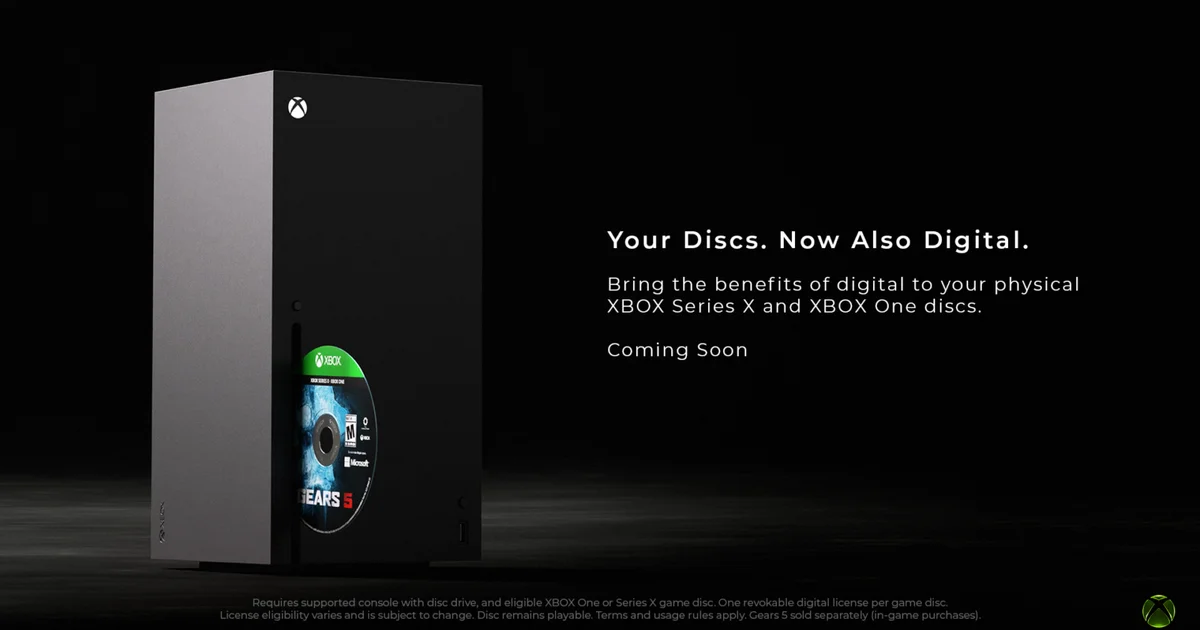
Xbox Insiders begin testing disc-to-digital on August 31. The initial step requires an Xbox One or Xbox Series X console capable of reading an eligible disc.
Microsoft says most Xbox One and Xbox Series X disc releases will support the feature, covering thousands of titles at first. More are expected to be added, but compatibility is not universal.
The optical drive becomes an enrollment device
A conventional physical license is easy to understand: the console reads the disc when the game is used. Hardware without a drive cannot perform that check.
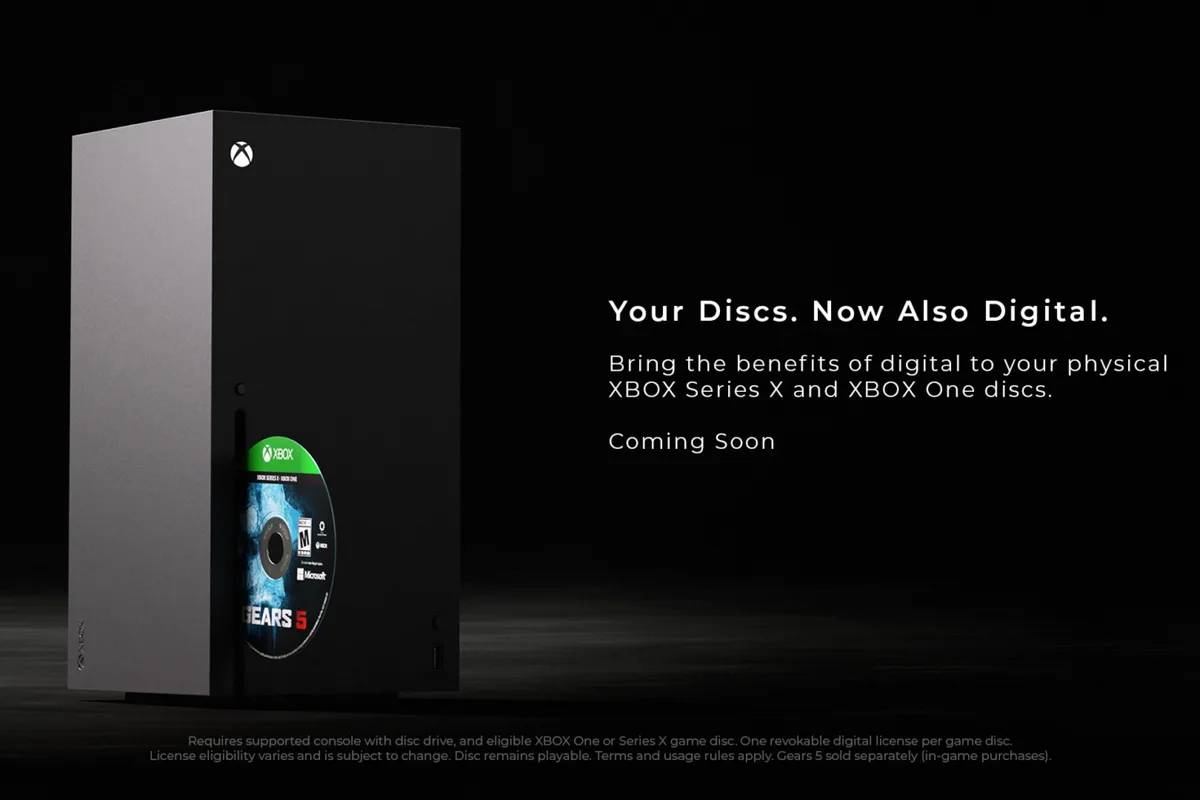
The new system allows compatible hardware to perform the initial disc check and attach a digital entitlement to the experience. That entitlement can then participate in digital Xbox features without requiring the destination device itself to read the original media.
Microsoft's own promotional image describes the result as one revocable digital license per eligible disc. The mechanism is therefore not equivalent to generating an unrestricted second copy.
Play Anywhere is where the architecture gets more useful
Supported Xbox Play Anywhere games can already move between console, Windows PC and compatible handheld environments while carrying saves, achievements and other account data.
Disc-to-digital allows eligible physical purchases to enter that same model. The optical disc is used at the beginning of the process, but the resulting access is no longer conceptually limited to a box with a drive.
Microsoft had already pushed Play Anywhere beyond 1,000 supported games by early 2026. Disc entitlement makes that infrastructure relevant to another category of ownership.
Cloud access makes the physical origin almost invisible
Microsoft also lists Xbox Cloud Gaming as a benefit where supported. An eligible game originally purchased on disc can therefore potentially be streamed to devices that have no meaningful relationship with optical media at all.
That does not override the normal cloud catalogue or subscription requirements. Compatibility still depends on the individual game, service and region.
Backward compatibility increasingly has a licensing problem
Modern hardware can emulate or otherwise run increasingly large back catalogues, but software compatibility only solves half of the preservation problem. A future device still needs a way to establish that the player owns the software.
Physical media traditionally answers that question by being present. As optical drives disappear from more configurations, that model becomes harder to maintain.
Xbox's approach separates the ownership check from the device eventually used to play. The disc remains functional, while the ecosystem gains a digital representation of the entitlement.
The architecture is potentially important for whatever Xbox hardware comes next. Its success will depend less on the headline number of supported games than on how reliably Microsoft preserves those entitlements once players begin moving between generations and devices.