
 By Adri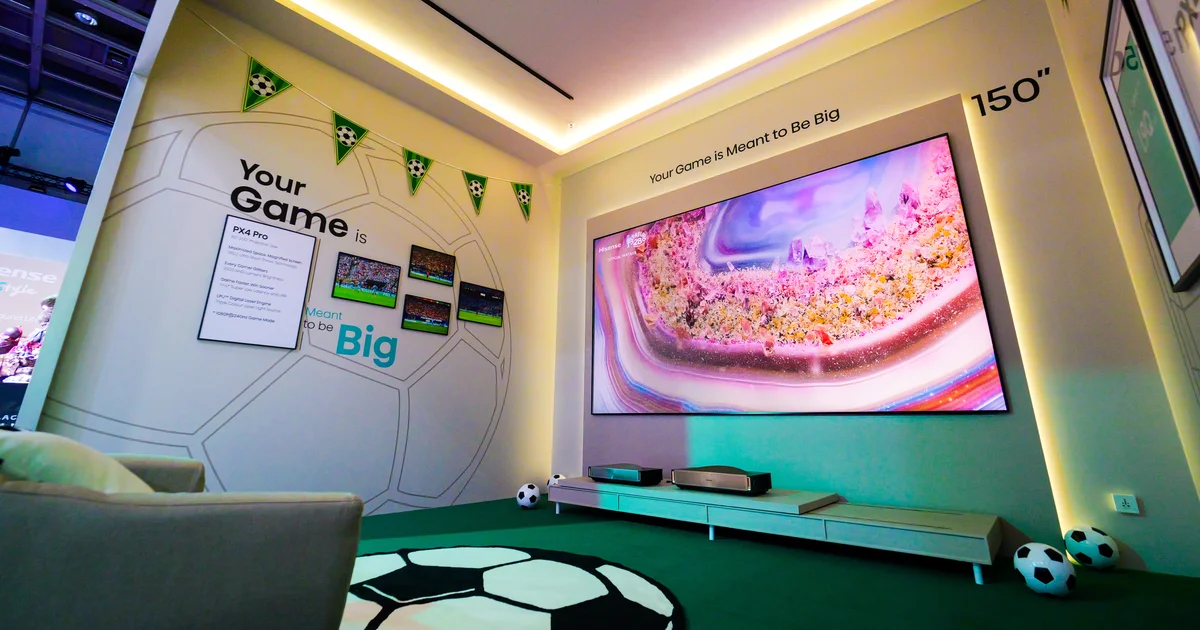
A laser projector can mean several different optical systems
Many established laser projectors use a blue laser together with phosphor conversion and additional optical elements to create the colors required for the image.
RGB triple-laser systems instead generate red, green and blue from dedicated laser sources.
Hisense markets that approach as TriChroma. Other manufacturers simply call it RGB laser or triple laser.
BenQ has finally joined the RGB side
Two of BenQ's IFA 2026 projectors mark a substantial change for the company.
The W4200 and TK715i use Nichia's Qualas 42 RGB triple-laser engine with a 0.47-inch DLP DMD. Both are rated at 3,200 ANSI lumens and 99 percent DCI-P3 coverage.
W4200 is aimed more directly at home cinema. TK715i shifts toward everyday entertainment and gaming.
BenQ is also holding an IFA session on September 5 specifically about its new ERA RGB laser system and reducing laser speckle.
RGB laser's easiest advantage to explain is color gamut
Generating three primaries directly gives projector designers access to highly saturated red, green and blue light without relying as heavily on wavelength conversion.
That can produce a much wider color gamut.
Hisense rates both the new C3 family and XR10 at 118 percent BT.2020. Those numbers describe gamut area under the manufacturer's chosen measurement method; they should not be interpreted as a projector somehow displaying 118 percent of all visible colors.
Wide gamut is not the same thing as accurate color. Calibration, tone mapping and the projector's behavior at different brightness levels still determine whether that capability produces a faithful image.
Hisense now spans 3,000 to 6,000 ANSI lumens with triple laser
The C3 lineup gives the clearest picture of how quickly RGB laser is moving through the market.
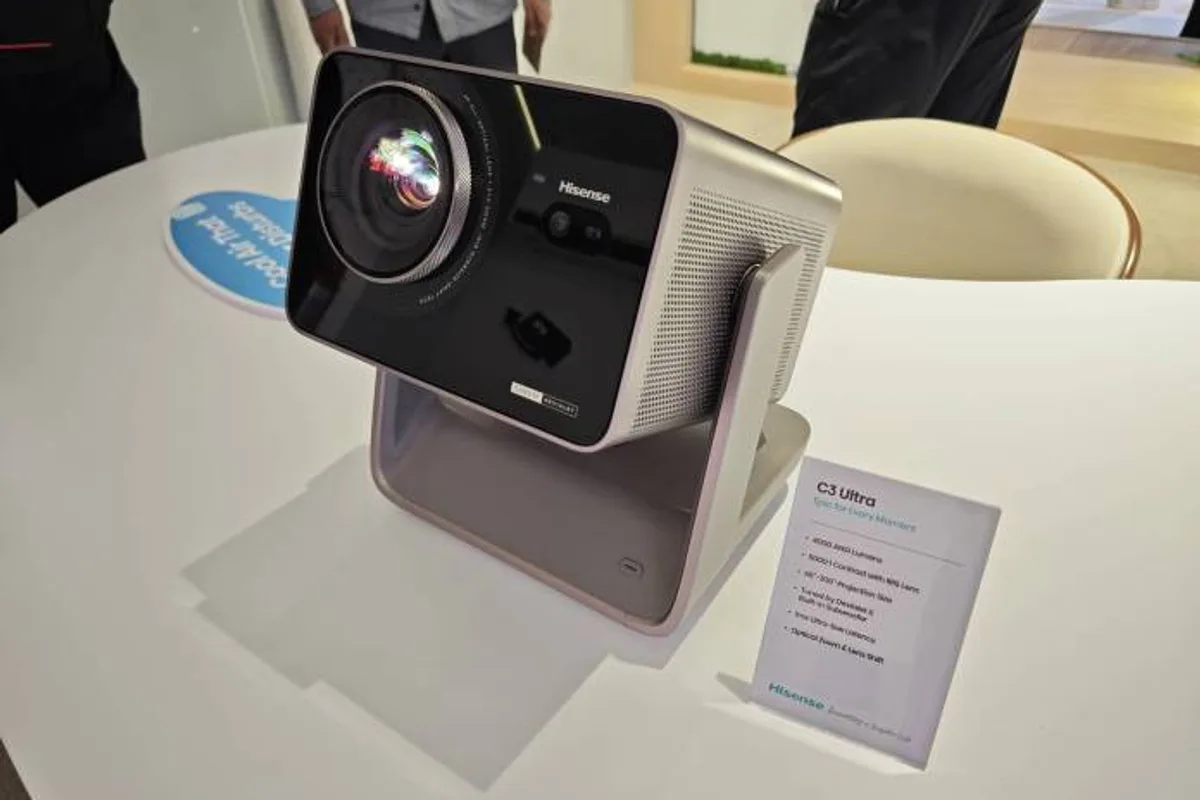
C3 Pro is rated at 3,000 ANSI lumens, C3 Ultra at 4,000 and C3 Ultra Max at 5,000. All three use RGB triple-laser illumination and support 4K projection from 65 to 300 inches.
C3 Pro and Ultra have 1.6x optical zoom and lens shift rated at ±100 percent vertically and ±35 percent horizontally.
Ultra Max increases that to 2x zoom with ±120 percent vertical and ±47 percent horizontal shift.
European pricing is expected to start at €2,499 for C3 Pro, €2,999 for C3 Ultra and €3,999 for C3 Ultra Max, with availability planned for Q4 2026.
XR10 is the more extreme version
Hisense XR10 uses the company's LPU 3.0 engine with a pure RGB triple-laser light source.
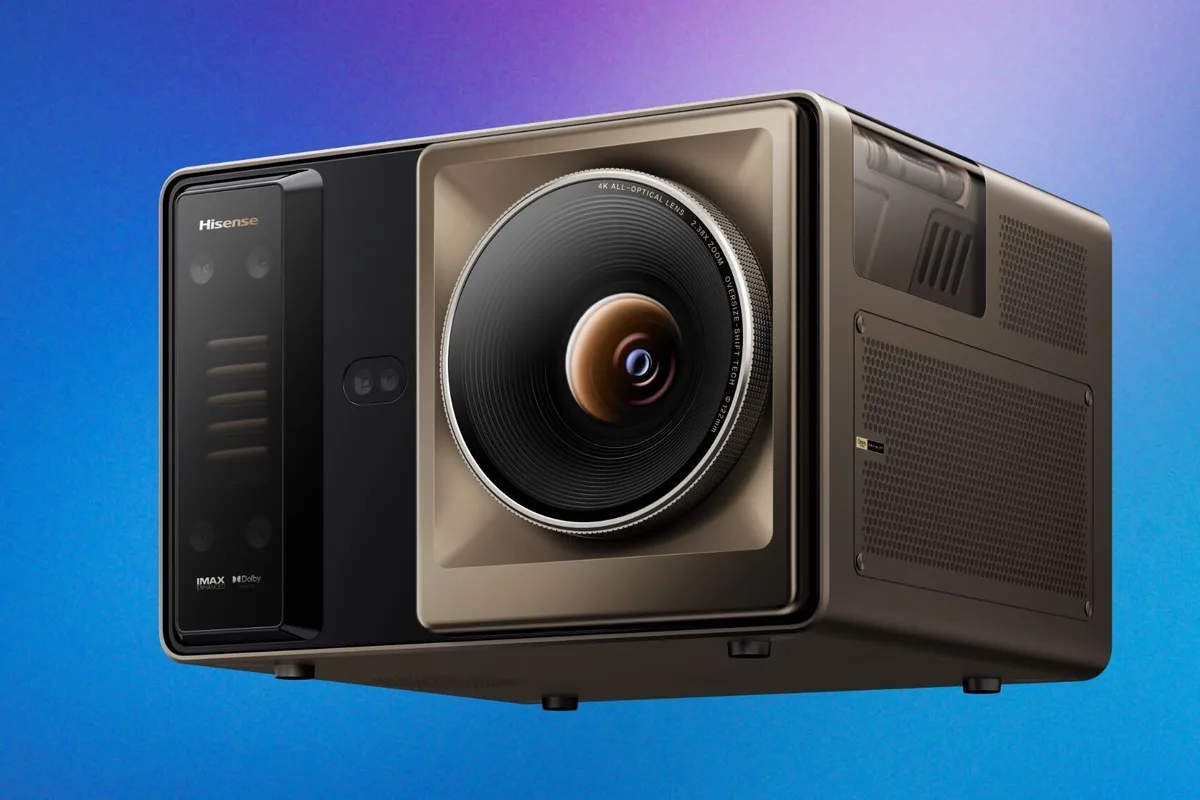
Brightness is rated at 6,000 ANSI lumens. Optical zoom reaches 2.38x with a 0.84–2.0:1 throw range, while lens shift extends to ±130 percent vertically and ±46 percent horizontally.
A six-blade iris is rated for 6,000:1 native contrast and up to 60,000:1 dynamic contrast under Hisense's test conditions.
The projector supports images up to 300 inches.
JMGO goes even higher on the specification sheet
The global version of JMGO's Iris Ultra Max reaches IFA with a claimed 6,500 ISO lumens from a triple-laser engine.
It also combines 4K at 120Hz, an advertised 10,000:1 native contrast ratio, VRR, ALLM and substantial optical lens adjustment.
Shipping is scheduled to begin October 19 at $3,499, with a lower preorder price offered ahead of launch.
ANSI and ISO lumen specifications use different standards, so the headline values should not be treated as perfectly interchangeable measurements.
Three lasers create their own problem
Laser speckle is one of the less attractive consequences of coherent light.
On a projection surface it can appear as a fine shimmering or granular texture, and its visibility varies with the screen material, viewing geometry and the person watching.
This is why BenQ is making anti-speckle technology part of the ERA RGB launch rather than treating the optical engine as an unqualified upgrade.
Hisense also advertises dedicated speckle-reduction technology on XR10.
Rainbow artifacts still deserve attention
Single-chip DLP projection can produce brief colored flashes for viewers who are sensitive to the rainbow effect, particularly around bright objects moving against dark backgrounds.
RGB lasers do not automatically make that issue disappear. Color sequencing and the rest of the optical architecture still matter.
AWOL is explicitly advertising second-generation Anti-RBE technology on its new LuxVision 4K 120Hz RGB triple-laser UST projector at IFA.
Conventional laser projection is not suddenly obsolete
Laser-phosphor systems can be less expensive and may avoid some of the problems associated with three coherent RGB sources while still delivering strong brightness and long light-source life.
A projector with narrower gamut but better native contrast, optics and calibration can easily be the more convincing home-cinema machine.
The words printed beside “light source” never describe the entire image.
Placement may matter more than another color-gamut percentage
IFA's newest projectors are also getting considerably better optical adjustment.
Real lens shift preserves image geometry optically. Digital keystone correction has to transform and resample the image instead, potentially sacrificing usable resolution and introducing additional processing.
For a fixed home-theater installation, zoom range and lens shift can determine whether a projector actually fits the room long before BT.2020 coverage becomes relevant.
The important IFA 2026 trend is normalization
Hisense now uses triple laser from the lifestyle-oriented C3 family through the 6,000-ANSI-lumen XR10. JMGO is pushing 4K120 and 6,500 ISO lumens. AWOL is bringing RGB laser into a premium 4K120 ultra-short-throw design.
BenQ joining the category with W4200 and TK715i may be the clearest signal of all.
“Laser projector” is becoming too broad a label to make a useful buying decision by itself. The next question is which laser architecture is inside.