
 By Kilam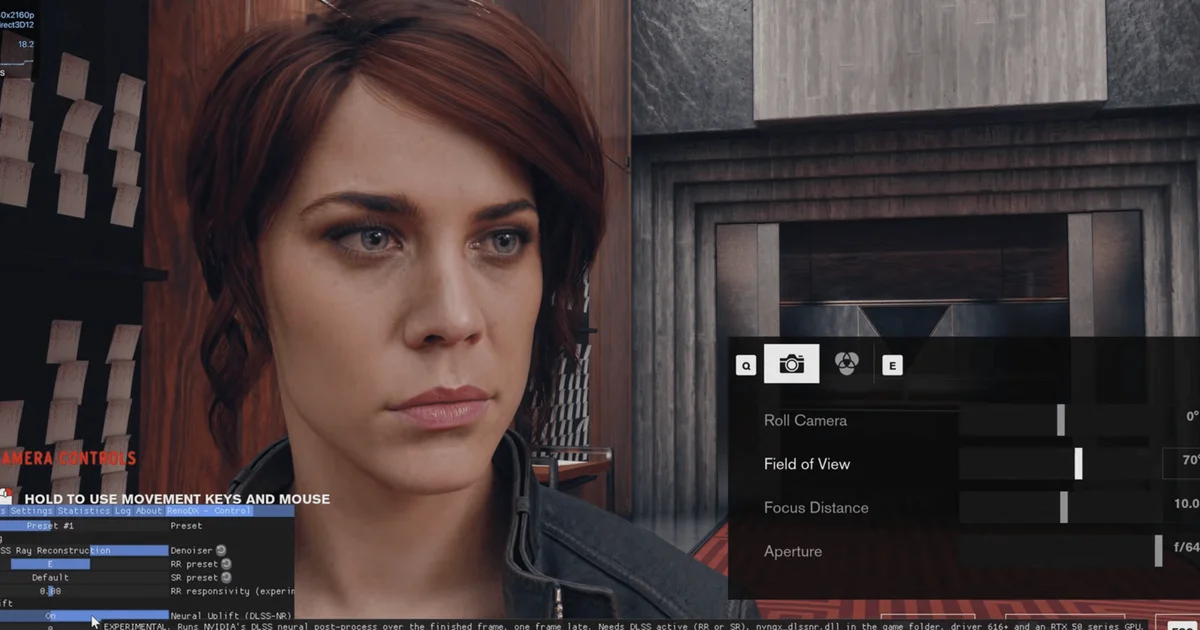
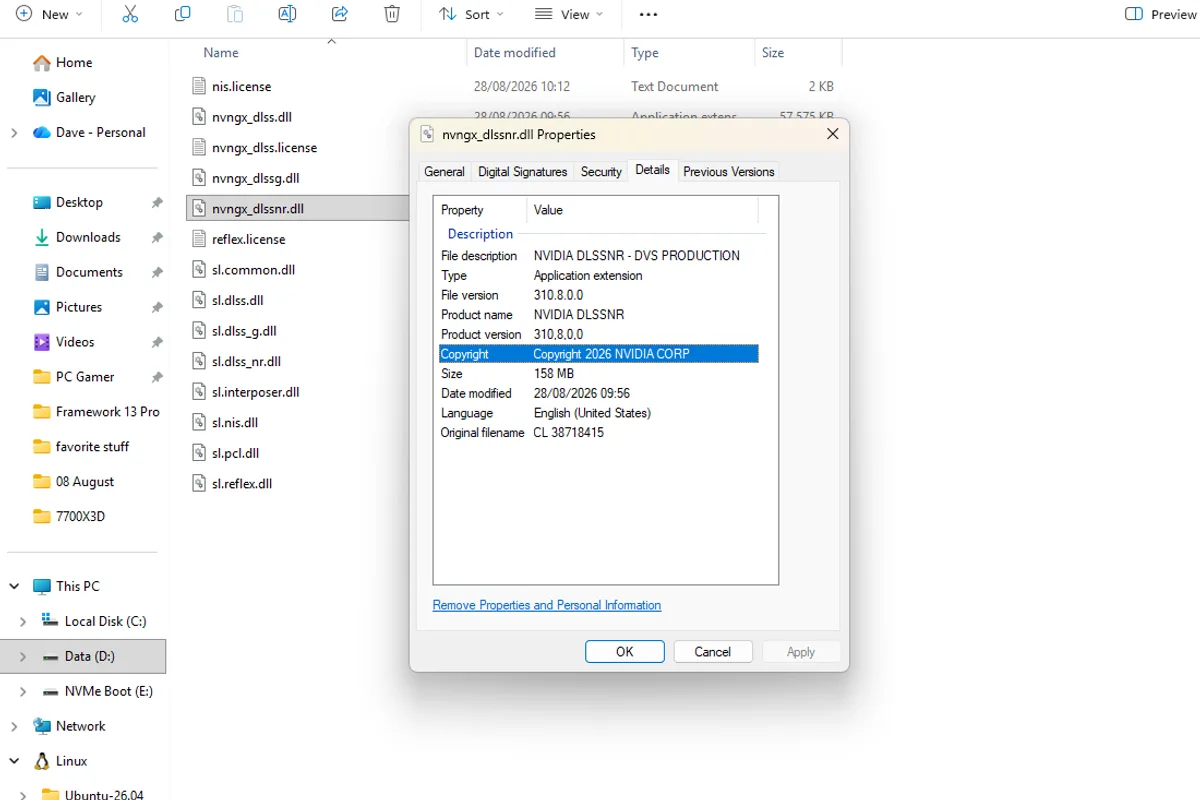
The nvngx_dlssnr.dll library found inside NBA 2K27 identifies itself as NVIDIA DLSSNR 310.8.0.0 and weighs roughly 158 MB. RenoDX developers had it running inside Control within hours.
NVIDIA's own explanation helps make sense of that. DLSS 5 receives a rendered 2D frame and motion vectors. It does not directly consume full engine geometry or artist-authored PBR parameters such as roughness and metallic values.
Material reconstruction happens after much of the engine's work is already done
NVIDIA says the neural model infers materials from the rendered image. It has been trained to recognise visual semantics including skin, hair, fabric and lighting conditions. That architecture makes an experiment like this unusually portable: the model is not waiting for every engine to expose the same internal material representation.
RenoDX still has to bridge the rendering pipeline and provide the required information, but the library has now been attached to games built on very different technology stacks.
More than a dozen games, almost none of them meaningful compatibility tests
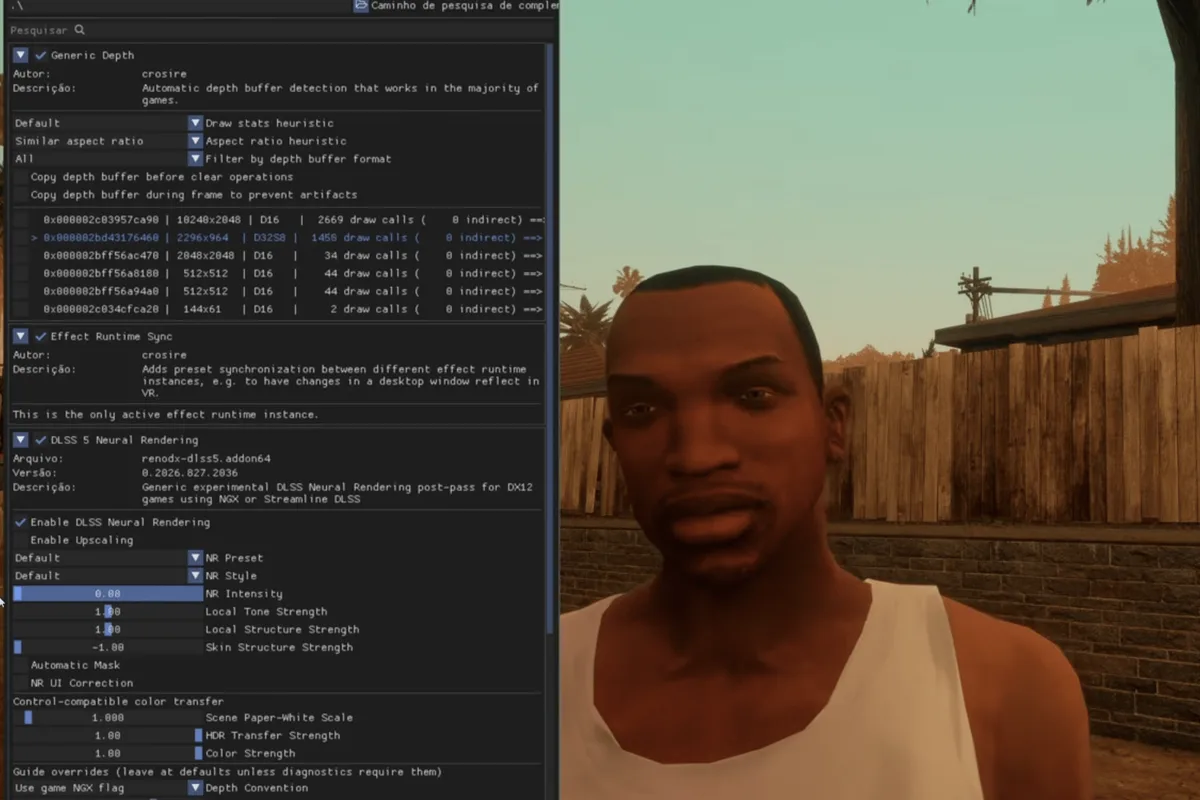
Cyberpunk 2077, Red Dead Redemption 2, The Last of Us Part II Remastered, Black Myth: Wukong, Hogwarts Legacy, GTA V, Starfield, Monster Hunter Wilds and Silent Hill 2 are among the examples documented so far. Control was simply the first visible success.
That breadth is technically notable and practically misleading. These titles do not have official DLSS 5 implementations. HDR is already problematic in some RenoDX tests, and interactions with other DLSS components vary. There is no studio-authored masking or tuning pass behind these screenshots.
Current performance looks brutal
The most repeated Control figure comes from an RTX 5070 Ti test at 4K, where reported performance fell from about 71 fps to 35 fps after Neural Rendering was enabled for character models.
VideoCardz also documented a Cyberpunk 2077 run on an RTX 5070 at 1440p: 138 to 68 fps in rasterisation, 111 to 55 fps with Ray Tracing Ultra and 71 to 45 fps under path tracing.
Those numbers establish that this experimental runtime is computationally expensive. They do not establish the cost of shipping DLSS 5. The games are unsupported, the library is pre-release, the injection framework adds its own variables and test configurations are not controlled.
The most useful discovery may be hardware behaviour
The leaked runtime demonstrates that DLSS Neural Rendering can execute on a single consumer Blackwell GPU, rather than only the extravagant configurations associated with NVIDIA's earliest demonstrations.
Modders have also patched incompatible CUDA instructions to make the library execute on some RTX 40-series Ada cards. That is an engineering experiment, not a product announcement. NVIDIA has not confirmed official RTX 40 support.
Official DLSS 5 support is still scheduled for fall 2026, with games including Assassin's Creed Shadows, Hogwarts Legacy, Resident Evil Requiem and Starfield. Those integrations will be the first useful place to measure performance, because the developers will finally be controlling where the network is allowed to reinterpret their image.