
 By Adri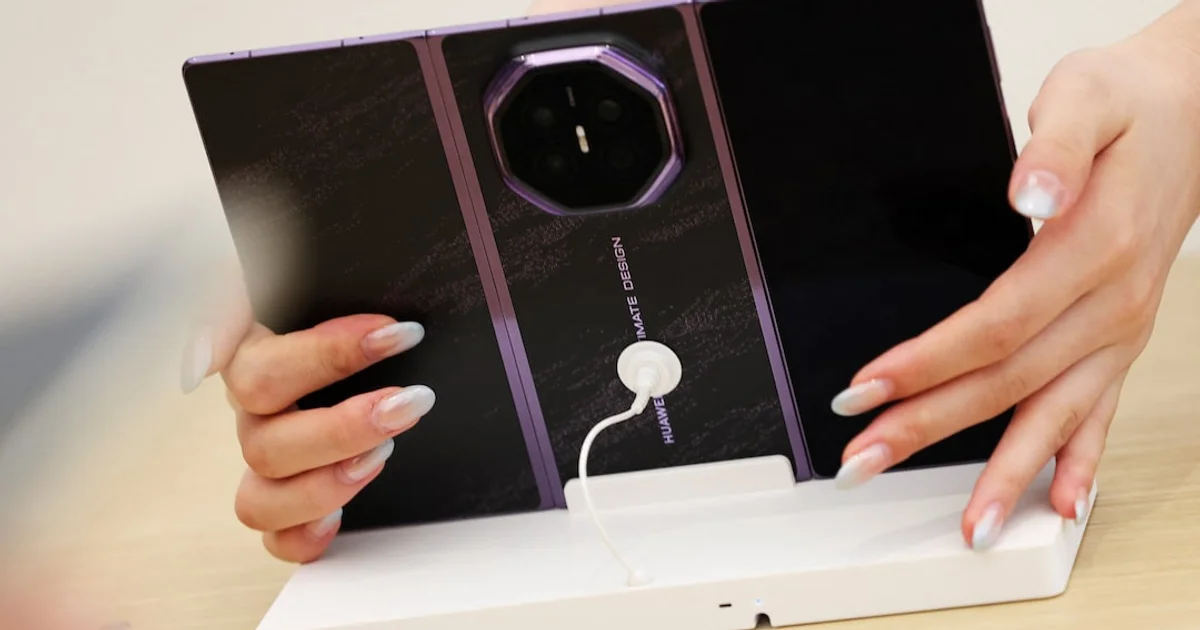
The first Mate XT had an immediate advantage: almost nobody else was commercially shipping anything like it.
It also had an obvious weakness. Part of its large flexible display remained exposed when the phone was closed.
Huawei has abandoned that Z-shaped arrangement for the Mate XT 2. Both side sections now fold inward over the center, protecting the 10.2-inch flexible panel inside the chassis.
That requires a separate 6.5-inch cover screen for normal phone use. It sounds less futuristic. It makes considerably more sense.
A 6.5-inch phone becomes a 10.2-inch tablet
Fully opened, the Mate XT 2 provides a 10.2-inch OLED with a 3184 x 2232 resolution. The standard flexible panel supports adaptive LTPO refresh rates up to 90Hz.
Closed, users switch to a dedicated 6.5-inch 2442 x 1140 OLED on the outside, with refresh rates reaching 120Hz.
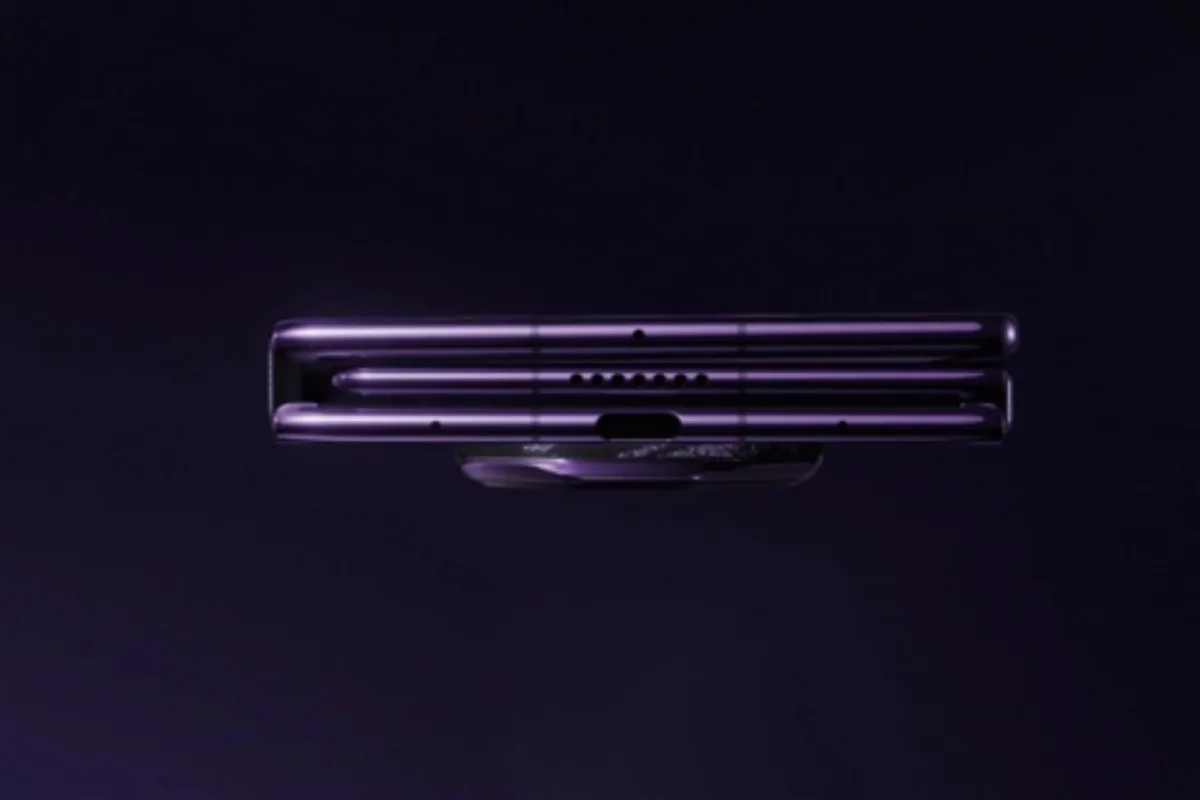
The geometry is still extreme. Huawei lists the phone at approximately 299 grams and 12.3mm thick when folded.
The thinnest unfolded section reaches 3.5mm.
That number looks spectacular in product photography. The 299 grams will probably be more noticeable in a pocket.
The new folding structure fixes the original design's biggest vulnerability
The hinge redesign matters more than another headline specification.
The first Mate XT used the same flexible display as both an internal tablet screen and part of the phone's exterior. That produced a brilliant demonstration, but also left an expensive flexible surface exposed to drops, tables and whatever else happened to share a pocket or bag with it.
The XT 2 moves to a fully inward-folding structure. When closed, the large flexible panel is no longer the outside of the device.
Huawei has also added IP58 and IP59 dust and water resistance claims alongside a reinforced structural design.
For a phone containing three body sections and two hinges, water resistance is no longer a minor checkbox.
Kirin 9050 Pro keeps Huawei's in-house silicon push moving
The Mate XT 2 debuts Huawei's Kirin 9050 Pro.
Huawei provides fewer low-level architectural details than most mainstream mobile chip vendors, but it is promoting a new LogicFolding architecture within what it calls the Tau Scaling Law approach.
Huawei claims overall device performance is 42% higher than the previous generation through the combination of the new chip, HarmonyOS 7 and system-level optimization.
That is a manufacturer claim, not an independent benchmark.
The more important point is strategic. Huawei is continuing to put its own Kirin silicon into its most expensive consumer hardware despite U.S. restrictions that have complicated access to advanced semiconductor technologies.
A 5,600mAh battery has a very large screen to feed
Battery capacity is 5,600mAh, with 66W wired charging and 50W wireless charging.
That is substantial for a foldable, although the Mate XT 2 can also turn into a 10.2-inch tablet. Capacity alone cannot tell us whether endurance will be exceptional.
Huawei has redesigned thermal management around the three-section chassis as well, spreading heat sources across multiple parts of the device and creating conduction paths that continue across the folding structure.
A conventional smartphone already has limited room for cooling hardware. Two hinges make the heat-transfer problem considerably less conventional.
The camera system does not look like a foldable afterthought
Huawei has kept a physically large rear camera module, but the hardware inside it would not look out of place on a conventional flagship.
- 50MP main camera with OIS and continuous variable aperture from f/1.49 to f/4.
- 40MP ultrawide camera.
- 50MP periscope telephoto camera with optical stabilization.
- Third-generation Red Maple color-sensing system.
The variable aperture is particularly notable because it changes the optics physically rather than relying entirely on computational photography to simulate the effect.
Huawei has used the idea before, but its return here is timely as mechanical aperture control is once again becoming a talking point in premium smartphone photography.
The privacy display is a very specific luxury
Some Mate XT 2 configurations include what Huawei calls a Privacy Display.
Its pixel structure can narrow viewing angles when privacy mode is enabled, reducing what people beside the user can see.
That sounds unusually appropriate for a device that can turn into a 10.2-inch document viewer in a train, plane or conference room.
It is not standard across the range. Huawei reserves the feature for more expensive configurations and also offers a top storage bundle with a stylus.
RMB 19,999 is only the beginning
The entry configuration combines 16GB of RAM with 256GB of storage for RMB 19,999.
Pricing rises to RMB 21,999 for 512GB and RMB 23,999 for 1TB.
A 1TB Privacy Display version costs RMB 24,999. A 2TB configuration with the privacy screen and stylus package reaches RMB 29,999.
Chinese sales began September 12.
There is no broad international launch comparable with Samsung or Apple, which means the Mate XT 2 remains more useful as evidence of what Huawei can engineer than as a realistic purchase for most global consumers.
Huawei already owns most of China's foldable market
The XT 2 is not being developed by a fringe player experimenting from the sidelines.
Smart Analytics Global data cited by Reuters put Huawei at 68% of Chinese foldable smartphone shipments in the second quarter of 2026. IDC separately ranked Huawei first in China's overall smartphone market with a 22.6% share.
That changes how the extravagant hardware should be viewed.
The Mate XT 2 can remain expensive and niche while still functioning as a technology flagship for a company that already dominates foldables in its home market.
The timing makes the contrast difficult to miss.
Apple has only just entered foldable phones.
Huawei is already on another generation of figuring out how to make a phone fold twice without making the whole idea feel like a prototype.