
 By Camille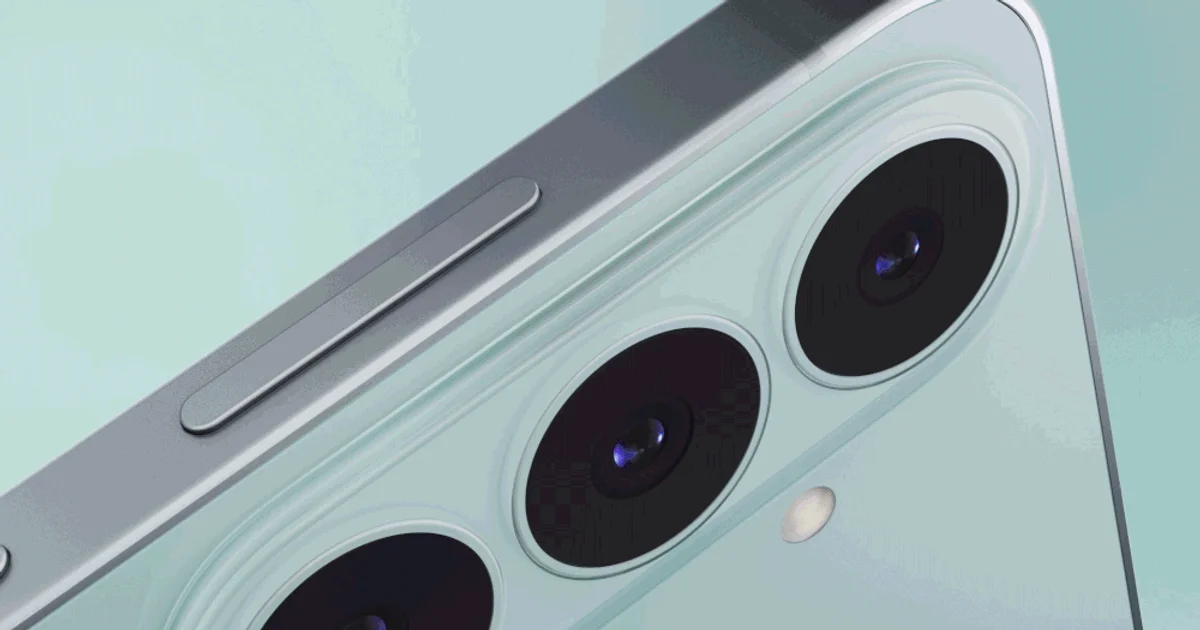
Samsung's release calendar has produced an unusual situation.
The original Galaxy S26 phones are older devices, but the later S26 FE ships with newer software.
Samsung announced the Fan Edition on August 27 and says availability begins September 4 in selected markets.
It is the first S26-series phone to ship with One UI 9 out of the box.
One UI 9 turns the FE into a software launch vehicle
Samsung began testing One UI 9 on the regular S26 series in May.
Those phones will naturally receive the stable software through updates, but the FE requires no major post-setup upgrade to reach the new generation.
One UI 9 is based on Android 17.
Samsung also promises seven generations of operating-system upgrades and seven years of security updates from launch.
Starting that policy on Android 17 gives the S26 FE an unusually long theoretical software runway.
Samsung is making One UI increasingly contextual
Now Brief continues to evolve from the personalised summary system introduced with the Galaxy S25 generation.
Users can now create additional cards through voice instructions, allowing the daily feed to include more individually chosen information.
Now Nudge attempts to surface actions according to conversational context and supports selected third-party messaging services.
Samsung lists services including Google Messages, Google Chat, Signal, LINE and KakaoTalk, although availability depends on market and language.
Gemini is becoming part of Samsung's editing workflow
The S26 FE also receives Gemini Omni.
Samsung positions it as a way to create or edit videos using material already stored in the phone's Gallery through conversational instructions.
Photo Assist similarly accepts voice commands for edits including transformations, adding content and restoring missing portions of an image.
Individual editing steps can be reviewed or undone.
The pattern is clear: Samsung increasingly wants the experience after capturing an image to matter as much as the physical camera that captured it.
Some of that AI value does not actually live entirely on the phone
Galaxy AI is an umbrella for features with very different technical requirements.
Some functions require a network connection or Samsung account, while Gemini Omni is tied to Google's AI ecosystem.
In France, eligible S26 FE buyers receive six months of Google AI Pro with 5TB of cloud storage.
The subscription can become paid after the promotional period unless cancelled.
That makes it important to distinguish permanent device capabilities from services whose full experience depends on external accounts and subscriptions.
Exynos 2500 is the largest hardware change
Samsung has moved the FE to its 3nm Exynos 2500.
The processor uses a ten-core CPU configuration, with Samsung's French product specifications listing clock groups reaching 3.3GHz, 2.74GHz, 2.36GHz and 1.8GHz.
The newer SoC should provide additional headroom for imaging, AI and gaming.
Samsung's launch materials do not provide enough detailed comparative data to turn the chip change alone into a performance verdict, however.
Sustained power and thermals will matter as much as peak benchmark performance.
Almost everything around the processor looks familiar
The display remains a 6.7-inch FHD+ Dynamic AMOLED 2X panel running at up to 120Hz.
Samsung lists peak brightness at 1,900 nits.
Battery capacity remains 4,900mAh and wired charging tops out at 45W.
The 45W adapter is sold separately.
Samsung claims the phone can recover up to 69% charge in around thirty minutes under its test conditions.
These are good specifications. They simply do not represent a dramatic generational change.
The rear camera system is even more conservative
The primary camera remains a stabilised 50MP unit.
It is joined by a 12MP ultrawide and an 8MP stabilised telephoto offering 3x optical zoom.
Keeping a real telephoto camera is valuable in this category, particularly against phones that rely heavily on digital cropping.
Samsung has not, however, used the S26 FE to introduce a substantially redesigned rear imaging system.
The selfie camera mainly gets wider
The 12MP front camera now has an 85-degree field of view.
Samsung explicitly compares that with the S25 FE's narrower 80-degree field.
The practical benefit is straightforward: fitting more people into a group selfie becomes easier.
It is a sensible improvement rather than a headline camera revolution.
My FanCam is more distinctive than the sensor changes
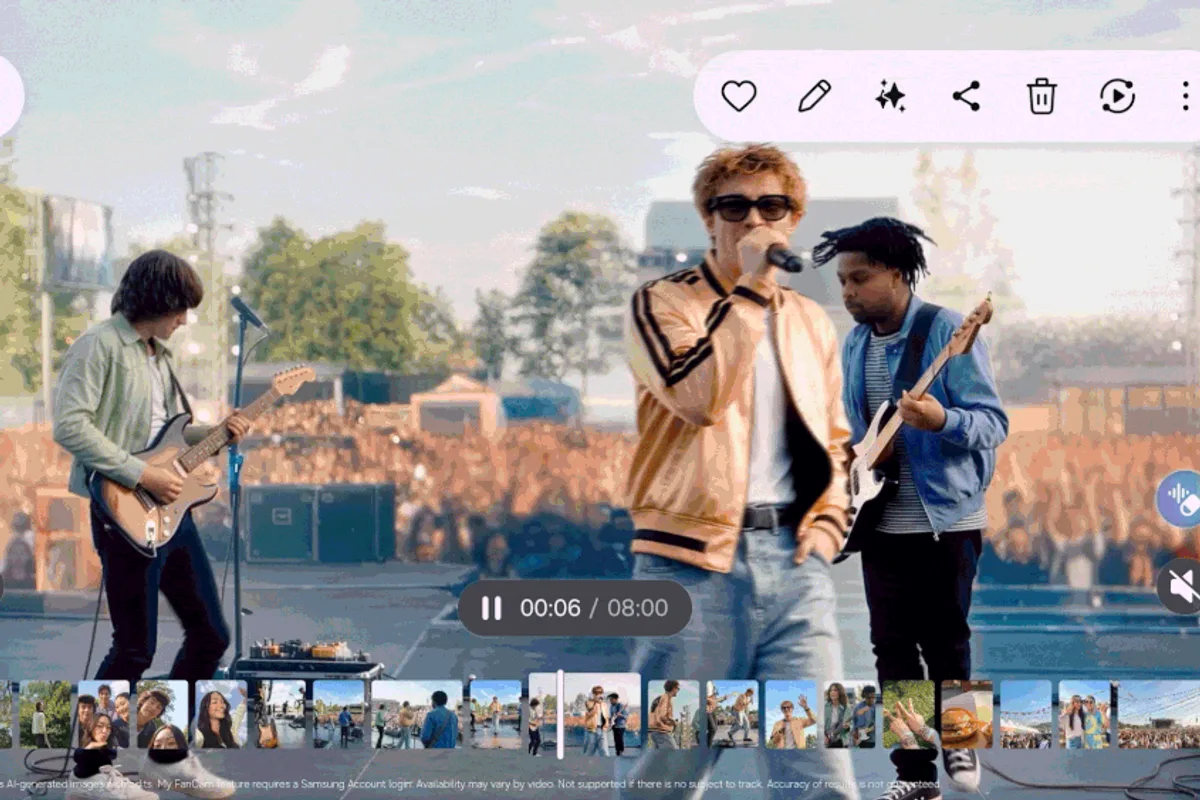
Samsung's Dynamic Cropping feature can automatically track a selected subject and keep that person centred throughout a video.
The company clearly sees concerts, events and social-video creation as important use cases.
Super Steady also gains a horizon-locking mode previously introduced elsewhere in the Galaxy lineup.
Once again, the S26 FE's camera story is more about what software does with the image than replacing the physical imaging hardware.
This is still a very large Fan Edition
The phone measures 161.6 by 76.9 by 7.4mm and weighs 193g.
Its 6.7-inch display places it firmly among large smartphones.
That makes sense for the video, gaming and creation scenarios Samsung emphasises, but leaves little room for anyone hoping that Fan Edition might mean a smaller alternative to the main Galaxy S lineup.
The meaning of Fan Edition has become increasingly vague
The original FE proposition was relatively easy to understand: retain much of the flagship experience while making carefully chosen compromises to reach a lower price.
That boundary is now less obvious.
The S26 FE has the visual language of the S26 family, a modern SoC, the full long-term software policy and most of Samsung's current software ecosystem.
The compromises increasingly appear in individual sensors, memory configurations, materials and product hierarchy rather than in one defining downgrade.
It feels less like a special edition for enthusiasts and more like another price rung inside the Galaxy S family.
That becomes uncomfortable when pricing approaches the flagship line
In the United States, the Galaxy S26 FE starts at $699.99 with 8GB of RAM and 128GB of storage.
The 256GB version costs $799.99.
The Verge has highlighted how this positioning complicates the FE value equation because the better-equipped S26 models can become relatively close once discounts enter the picture.
A customer may reasonably compare a full-price FE with a discounted S26 or S26 Plus rather than with another mid-range phone.
Discounts may eventually make much more sense of the product
Samsung frequently uses trade-ins, promotional bundles and direct discounts that can significantly change the real purchase price.
That has always mattered to the FE range.
At a meaningful discount, a 120Hz AMOLED panel, genuine 3x telephoto, seven generations of OS updates and 4,900mAh battery make a very strong package.
At a price too close to the higher S26 models, the argument becomes much harder.
What Samsung chose not to change may be the most revealing part
The S26 FE does not chase an enormous megapixel increase, radically faster charging or an entirely new battery chemistry.
Samsung keeps a proven hardware base and concentrates annual change in the processor, One UI and AI services.
That approach can be rational in a mature smartphone market, particularly when devices now receive software support for most of a decade.
It also makes every annual replacement harder to explain.
The Galaxy S26 FE will probably be a better phone than the S25 FE.
The more interesting question is whether Android 17, One UI 9 and another layer of AI features make familiar hardware feel sufficiently new to justify buying it at launch.