
 By Adri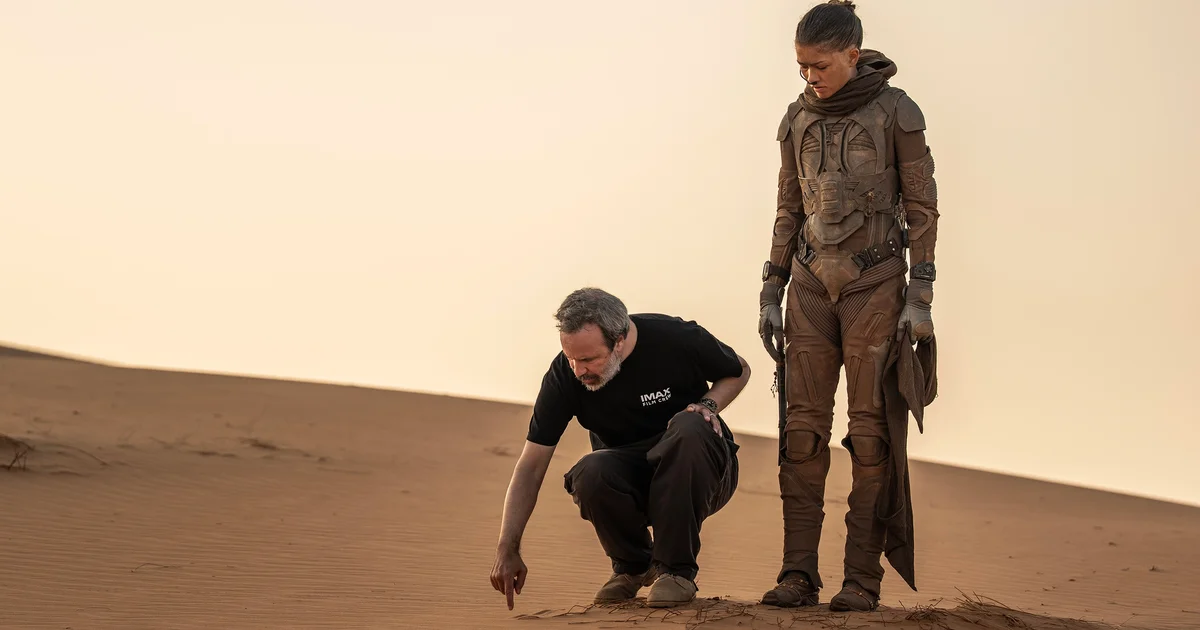
The first two Dune films began as large-format digital images. Greig Fraser photographed them with ARRI cameras before FotoKem transferred the graded material to film and scanned it back into the digital workflow.
That film-out stage was effectively an analog processing step. It changed texture, grain and highlight behavior without forcing the production to capture the original photography on negative.
Part Three moves the negative upstream
American Cinematographer says Sandgren photographed sequences on both 5-perf 65mm and 15-perf IMAX. IMAX also confirms the production used its film cameras.
The difference between those two 65mm systems is substantial. Five-perf 65mm uses vertically transported film with five perforations allocated to each frame. Traditional IMAX 15-perf transports 65mm film horizontally, using fifteen perforations per frame and creating a much larger image area.
That large negative is one reason the format remains attractive for enormous screens. It is also why the cameras, magazines and production workflow are considerably less convenient than modern digital systems.
Digital is not the fallback format
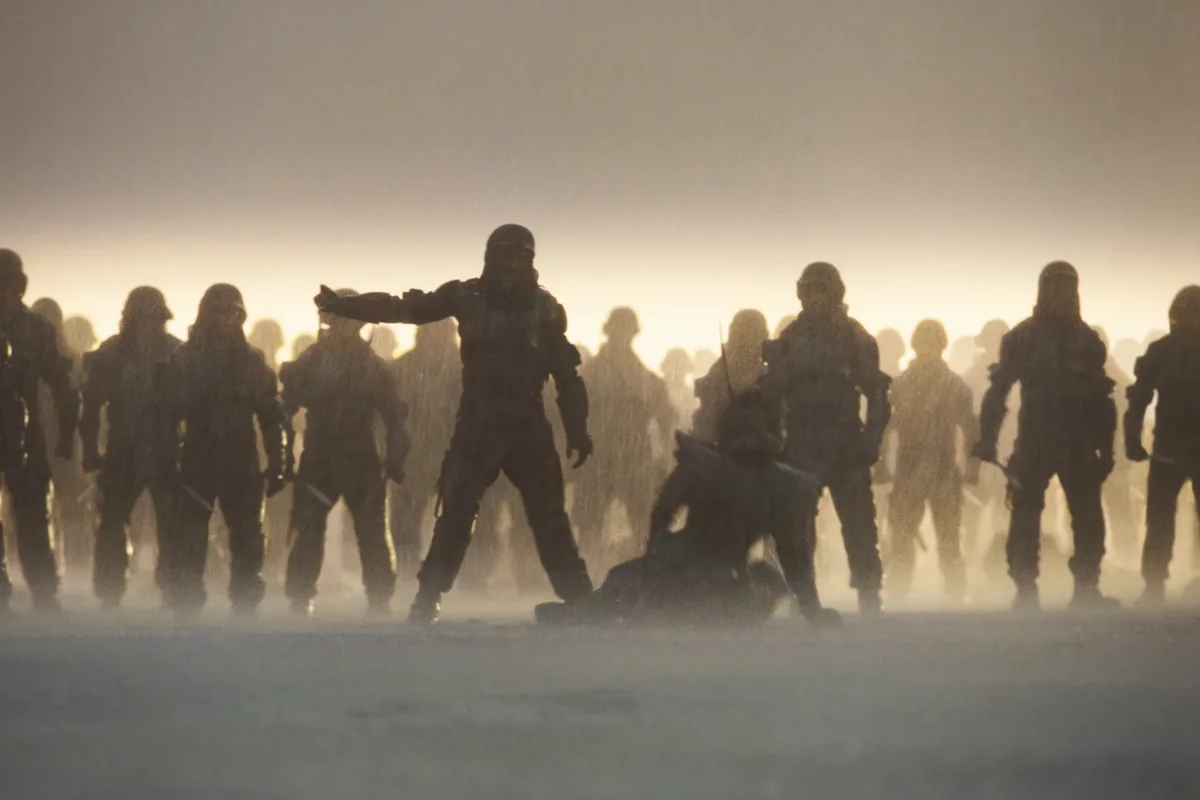
Villeneuve has specifically said he kept the desert digital because he likes the brutality it produces. That wording matters. Digital capture is not being treated as the cheaper remainder after the important scenes receive film.
Instead, the capture format becomes another creative variable. A different planet can be built around the physical response of negative while Arrakis retains a harder digital character established across the earlier films.
Color management and finishing will then have to reconcile those sources into one movie without erasing the reasons they were separated in the first place.
IMAX presentation and IMAX acquisition are separate decisions
Dune: Part Two is a useful example. It was aggressively composed for IMAX ratios and released in 70mm presentations, yet its photography was digital. Part Three adds actual 15-perf film acquisition to selected material.
IMAX says the new film will also receive IMAX 70mm presentation. In a compatible theater, that creates a more direct relationship between the huge-format negative used on set and the huge-format print running through the projector.
Sandgren is another variable in the image equation
Comparisons with the first two movies will need more nuance than simply looking for grain. Linus Sandgren replaces Greig Fraser, so lens choices, exposure, lighting strategy and camera movement can all change alongside the capture medium.
Villeneuve has said that was partly the point. Seventeen years have passed inside the story, Arrakis itself has evolved and the movie expands to previously unseen locations.
The final result is therefore a hybrid pipeline built to make change visible rather than hide it. The 70mm IMAX print will be the most spectacular endpoint, but it is only one version of a much more complicated image chain.