
 By Kilam
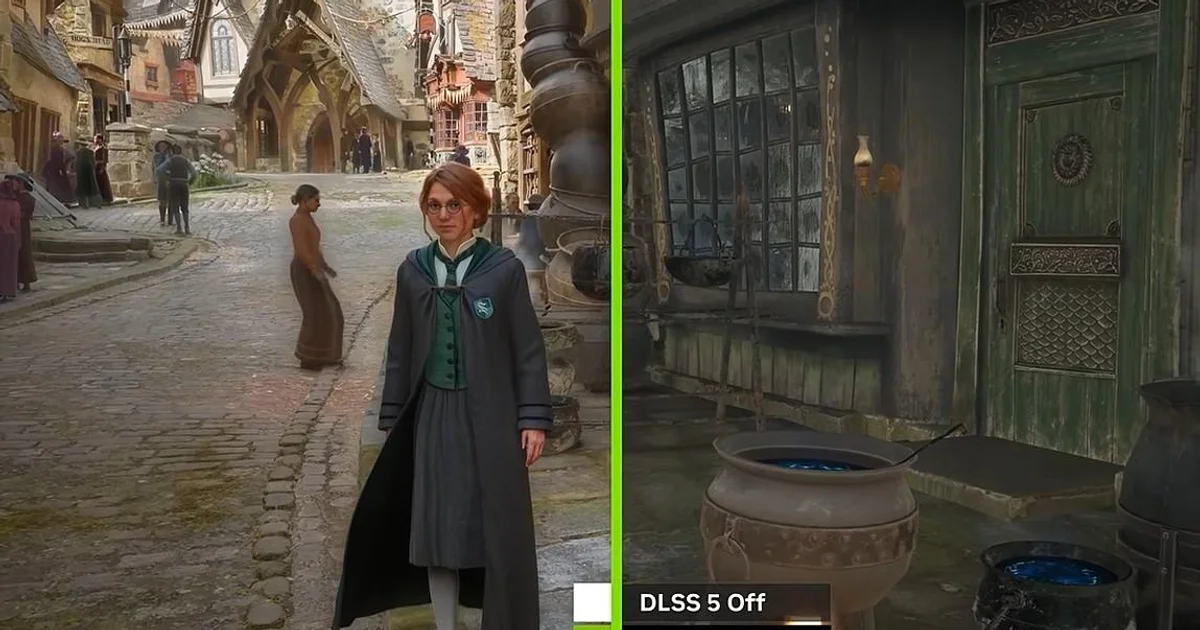
NVIDIA's most interesting DLSS 5 announcement this week is not simply another supported game. It is the efficiency of the neural rendering model that Hogwarts Legacy will use when its November 5 update arrives.
Compared with the preceding version, NVIDIA claims the October 2026 model doubles execution performance, reduces its footprint by 24% and consumes 20% less VRAM at 4K. The resulting model contains approximately 118 million parameters.
These are vendor-reported model improvements, not independently verified whole-game performance gains. A twice-as-fast neural renderer does not automatically make Hogwarts Legacy run at twice its previous frame rate.
Neural rendering adds another stage to the graphics pipeline
DLSS 5's 3D-Guided Neural Rendering operates after the game engine has produced its scene. The system uses rendered image information and motion vectors to add lighting responses and material details that would otherwise be expensive to compute explicitly.
NVIDIA describes the underlying geometry, textures and lighting buffers as fixed references. Neural processing remains guided by those inputs, rather than freely rebuilding the entire image without knowledge of the game's scene.
This distinction matters because DLSS 5 is not merely another upscaler. It can change the appearance of reflections, ambient occlusion, surface detail and subsurface scattering. Even with geometry preserved, those changes can noticeably affect an environment's artistic presentation.
Developers can restrict where AI changes the picture
The SDK provides multiple neural models and two notable controls. Structure Intensity adjusts high-frequency visual details, while Tone Intensity controls broader lighting and color changes. Developers can retain the source frame's original tones or allow stronger adjustments.
Semantic masking can distinguish scene elements automatically. Engine-level masks add a more explicit method for restricting neural changes to selected materials or objects.
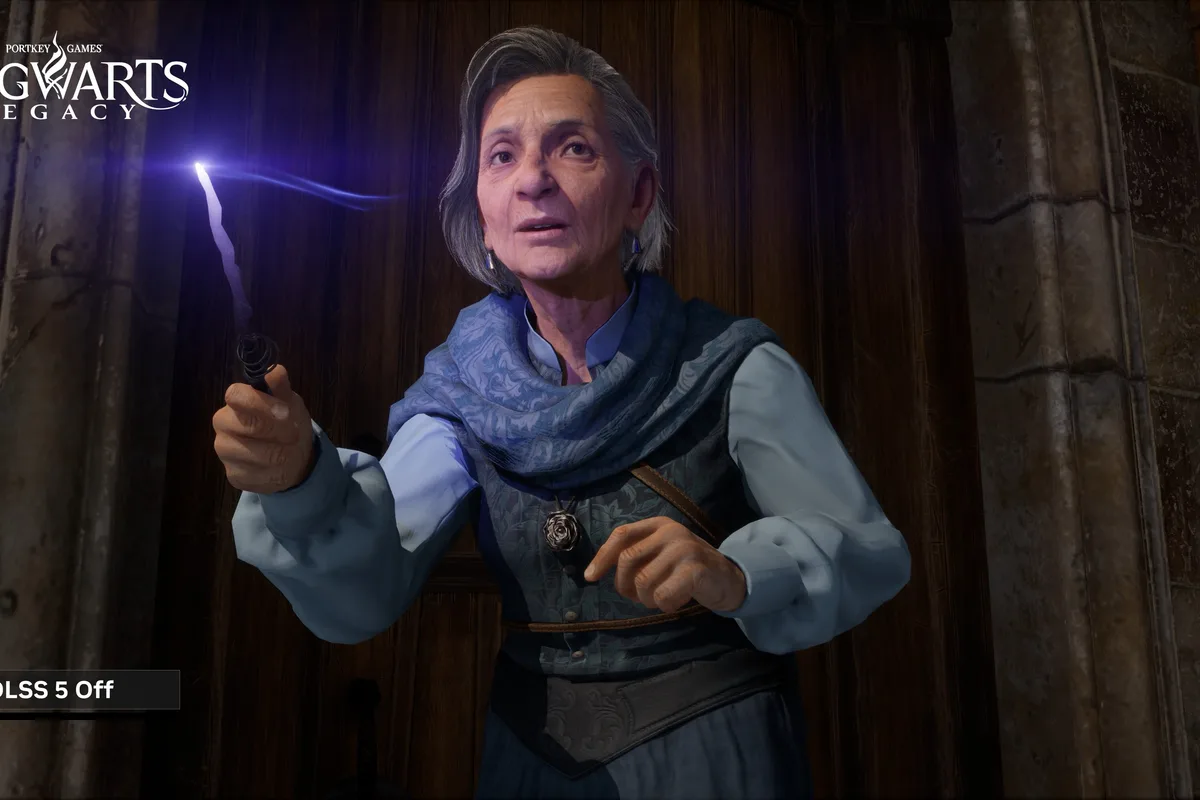
Avalanche Software has used these options to tune Hogwarts Legacy's environments, character materials and overall tone. NVIDIA says the integration is designed to preserve the game's artistic identity despite the additional photorealistic detail.
The hardware transition is substantial
When NVIDIA first demonstrated DLSS 5 in March 2026, its neural rendering setup required two GeForce RTX 5090 cards. Seven months later, the company claims an overall tenfold performance improvement that enables operation on a single compatible GeForce RTX 50 Series GPU.
Support also extends to RTX Spark devices and GeForce NOW Ultimate. The new feature will be available as an optional Neural Rendering setting inside Hogwarts Legacy, rather than being permanently imposed on the existing graphics pipeline.
The performance and memory improvements help explain this wider deployment. They do not establish identical results across the RTX 50 lineup, however. GPU resources, rendering settings and scene complexity will still influence the final cost.
Three games, one optimized model
Hogwarts Legacy receives the technology on November 5, following NVIDIA's scheduled Game Ready Driver release on November 4.
War Thunder is expected to integrate the same model in mid-November through the Eagle's Shadow update. Where Winds Meet follows on November 23, with developer-specific adjustments to the neural rendering controls.
All three titles will use NVIDIA's October 2026 model. The practical question now is how much of its reported efficiency translates into real-world performance across different GPUs, resolutions and art directions. The announcement provides the model specifications, but comparable independent game benchmarks remain necessary.