
 By Tsuky
OpenAI announced the milestone on August 31, giving the first major scale indicator for an advertising product that did not exist publicly at the beginning of the year.
ChatGPT Ads now serves tens of thousands of advertisers, according to the company, and reached the billion-dollar annualized pace in less than 200 days.
OpenAI did not disclose cumulative ad revenue
Annualized run rate is useful for describing current momentum, particularly for a young business whose revenue is changing rapidly.
It is not an accounting total for the money earned since launch.
OpenAI does not disclose the underlying monthly revenue used for the calculation, cumulative ChatGPT Ads sales, geographic revenue mix or advertiser concentration in the announcement.
That leaves the exact economics fairly opaque even as the headline establishes that advertising has already become a meaningful business line.
The self-service product is doing much of the scaling work
ChatGPT advertising began with managed sales, agency relationships and technology partners.
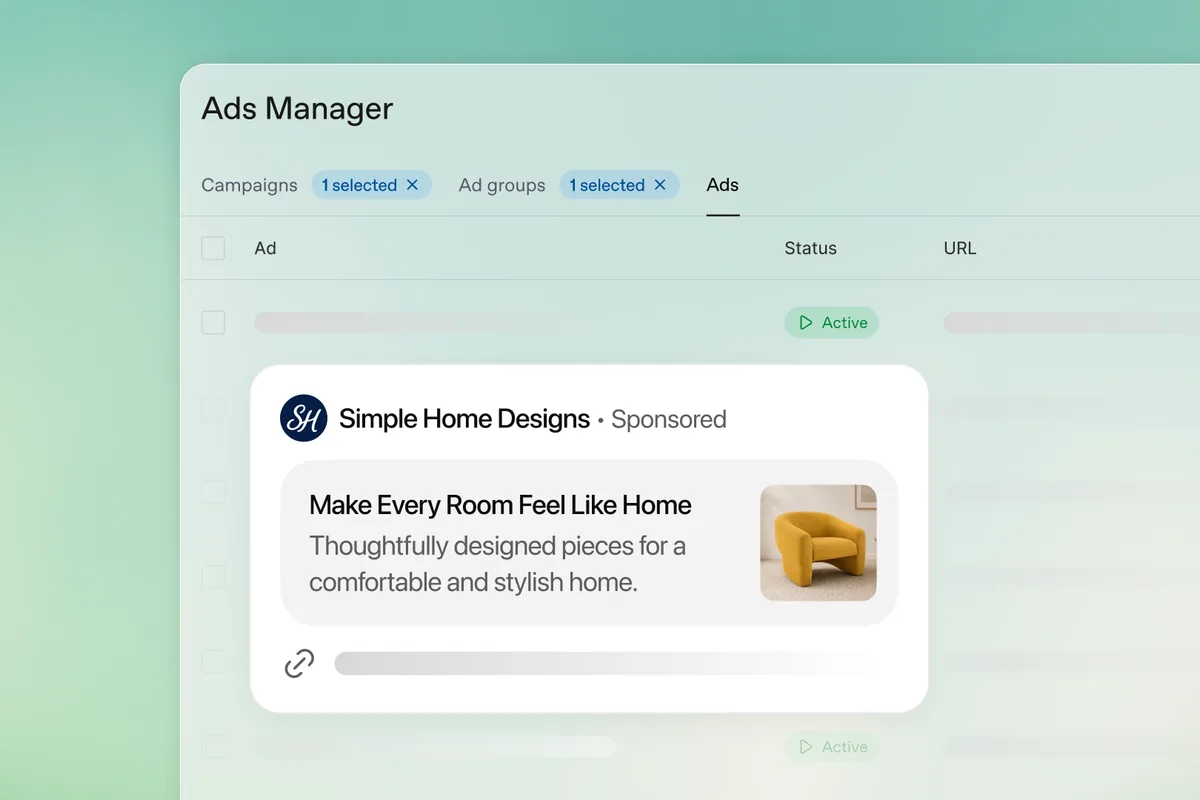
In May, OpenAI launched Ads Manager Beta and added self-service campaign creation. Advertisers can now manage campaigns, ad groups, budgets, reporting and conversion measurement without requiring a salesperson to handle every transaction.
OpenAI says small and medium-sized businesses now represent a material share of the advertiser business, although it provides no percentage.
The buying stack has also become recognizable to conventional digital marketers. CPC and outcome-optimized bidding account for most campaigns, while Pixel and Conversions API provide measurement infrastructure.
Product feeds, geographic and platform targeting and custom audiences have since been added around those core tools.
The international rollout is broader than the self-service map
OpenAI says ChatGPT Ads is available across more than 40 countries when direct sales, agencies and technology partners are included.
Its August 31 announcement says self-service Ads Manager access is expanding across India, Europe, the Middle East and North Africa.
The rollout should not be interpreted as every country switching on simultaneously. OpenAI's own availability documentation still listed India and many European markets as “Coming Soon” during the latest check.
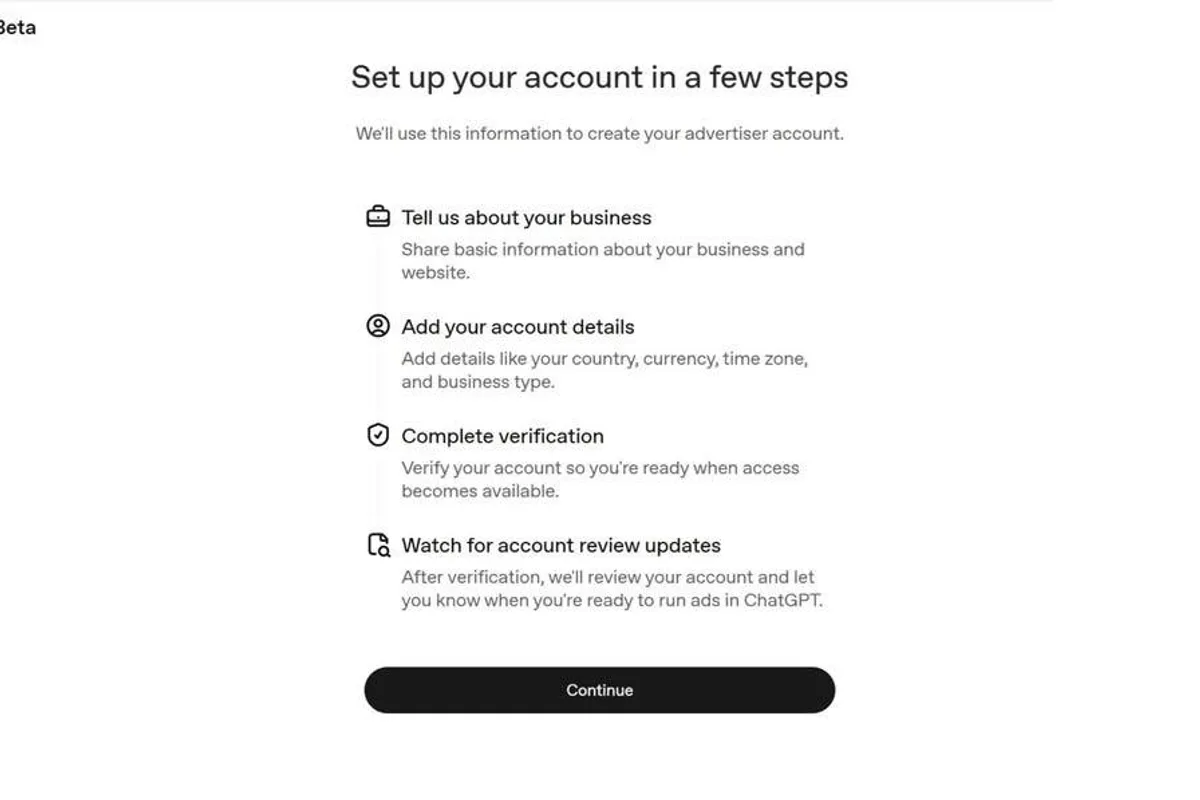
That means a company in a newly covered market may be able to buy through a partner before it can open Ads Manager and launch a campaign entirely on its own.
The product is selling conversational intent
Traditional search advertising works because queries often expose what somebody wants. ChatGPT can receive considerably more of that information in one session: the goal, budget, constraints, alternatives already rejected and follow-up questions.
OpenAI uses current-conversation context to determine whether an ad is relevant. In markets and configurations where ad personalization is enabled, selected signals from a user's broader ChatGPT experience can also be considered.
The company says sponsored content remains separate from the assistant's answer and does not influence that answer.
Advertisers do not receive access to private conversations, according to OpenAI, and the company says user data is not sold to them.
The audience has crossed another significant threshold
OpenAI now says more than one billion people actively use ChatGPT each week.
The August announcement does not provide a detailed methodology for that weekly-active-user figure.
For advertisers, however, the scale of the claimed audience changes the conversation. ChatGPT Ads no longer needs to be evaluated purely as an experimental placement inside an AI product; it is attached to one of the largest consumer software audiences on the internet.
Ads remain tied to the lower-cost plans
OpenAI's stated economic argument has remained consistent since January: advertising helps subsidize free and lower-cost access to increasingly expensive AI services.
Ads may appear on ChatGPT Free and Go. Plus, Pro, Business, Enterprise and Edu remain ad-free.
Eligible Free users can also choose an ad-free Free configuration, but doing so reduces usage limits and removes access to some features.
Accounts identified as belonging to users under 18 are excluded from the ad system, and OpenAI places additional restrictions around sensitive and regulated topics.
The performance evidence is still selective
OpenAI highlights an ecommerce advertiser that achieved a 3x return on ad spend across 28 days.
It also cites a technology partner reporting that more than 80% of ad-driven ChatGPT traffic represented new customers.
Neither example identifies the advertiser or supplies enough underlying data to treat the result as a platform benchmark.
OpenAI has not published an average CPC, click-through rate, conversion rate or advertising revenue per user alongside the billion-dollar run-rate announcement.
The next version of ChatGPT advertising is already being planned
The original product was deliberately simple: a labeled sponsored unit separated from the assistant's response.
OpenAI now says it plans additional formats, objectives, buying options and measurement features, along with more native ways for businesses to interact with consumers inside ChatGPT.
Those formats have not yet been detailed.
For the moment, the important number belongs to the existing product: less than 200 days after launch, OpenAI says it is already operating at a $1 billion annualized advertising pace.