
 By Tsuky
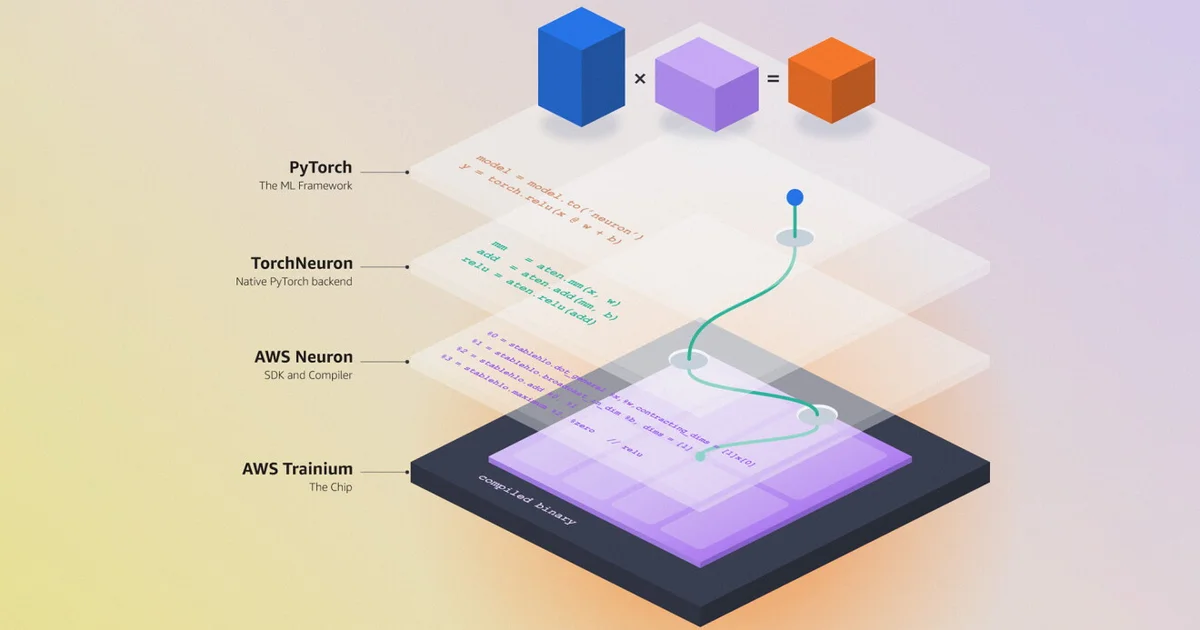
The expensive part of moving an AI workload between chip platforms is not always the hardware. It can be the engineering work required to make a model run correctly, rebuild custom operators, validate numerical behavior and recover acceptable performance.
Amazon's latest attempt to compete with NVIDIA addresses that problem directly. TorchNeuron, introduced on October 19 and released in public beta the following day, registers AWS Trainium as a native device within PyTorch.
For developers using supported PyTorch operations, the change can be as straightforward as moving a model to .to('neuron'). The framework remains familiar, and developers can continue using many of the APIs they already rely on for experimentation, training and inference.
TorchNeuron is distributed under the Apache 2.0 open-source license. Initial hardware support covers Trainium2 and Trainium3 through compatible Amazon EC2 environments.
How TorchNeuron integrates with PyTorch
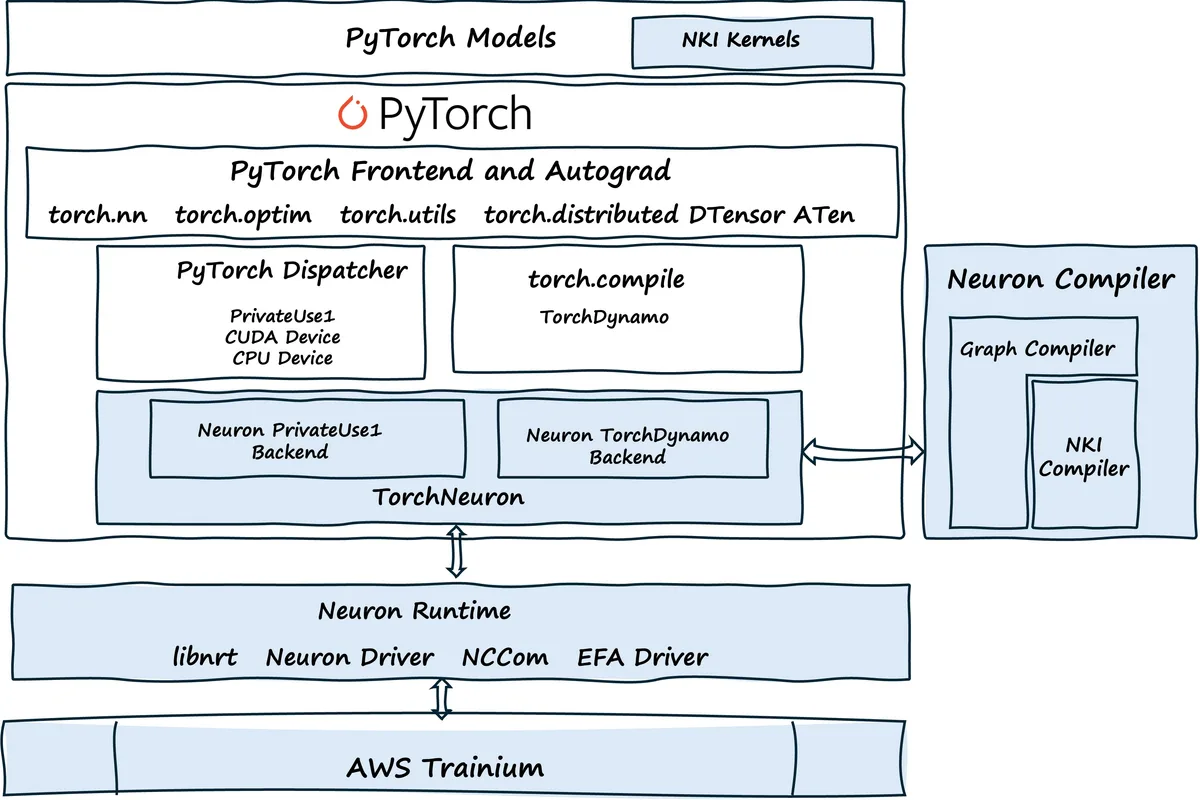
The backend uses PyTorch's PrivateUse1 extension mechanism. This interface allows third-party accelerator vendors to register hardware devices without redesigning the public model-building APIs.
PyTorch's dispatcher sends supported tensor operations to the Neuron backend, which supplies implementations for Trainium. Common interfaces including torch.nn, torch.tensor, distributed processing and profiling are exposed through the normal framework.
The architecture supports eager execution as well as torch.compile. Eager mode is especially useful during development because operations execute as they are encountered, preserving Python control flow and conventional debugging techniques.
That flexibility has performance implications. In basic eager execution, individual operators may be compiled into separate Neuron executables. AWS provides an Adaptive Eager mechanism to combine operations and reduce some of this overhead.
For production workloads, torch.compile can capture computation graphs and generate more optimized executables. Developers requiring fine-grained hardware control can use the Neuron Kernel Interface to build specialized operations.
These are distinct levels of optimization. Running an existing PyTorch script is the entry point, not necessarily the fastest configuration that Trainium can achieve.
The compatibility claim needs a closer reading
Amazon emphasizes that developers can move existing projects to Trainium without extensive rewrites. The public beta nevertheless has hardware, operating-system, package-version and operator compatibility requirements.
AWS publishes compatibility information for the backend and requires matching torch-neuronx and PyTorch versions. Existing extensions that assume CUDA, unsupported operators or specialized quantization workflows may still need modifications.
The company also describes an extensive model validation process. Its engineers say they run approximately 100,000 models from the Hugging Face ecosystem in reduced but representative configurations, covering 99.9% of observed usage by download count.
That methodology is useful for discovering missing operators and execution failures. It should not be interpreted as evidence that every model achieves production-ready performance on Trainium. The tests examine loading, forward and backward passes, compilation and device execution paths, including fallback behavior.
The technical documentation acknowledges remaining compatibility gaps. For teams considering a migration, testing their own models is still essential.
The ecosystem partnerships may matter more than the device switch
Native PyTorch execution would have limited practical value if the libraries surrounding it continued to require CUDA-specific implementations.
Hugging Face has announced native Trainium support in Transformers, Diffusers and Kernels. AWS has also integrated TorchNeuron with TorchTitan, supporting familiar distributed training techniques such as Fully Sharded Data Parallelism.
Work on vLLM and performance kernels addresses another important part of modern AI infrastructure: serving models efficiently to large numbers of users.
Amazon says more than thirty early adopters are already using TorchNeuron, across fields including robotics, voice AI and world models. The company has highlighted Cartesia and the Lieber Institute for Brain Development among its examples.
These deployments demonstrate commercial interest and early usage. They do not establish a single performance or cost advantage that applies to all model architectures.
For smaller engineering teams, however, the potential benefit is clear. Reducing the amount of platform-specific work makes it easier to compare alternative computing services without committing significant resources before an initial trial.
Why this challenges NVIDIA without replacing CUDA
NVIDIA's position in AI infrastructure rests on more than accelerator specifications. CUDA, optimized libraries, established tooling and accumulated engineering expertise make its ecosystem difficult to replace.
A competing chip can offer attractive price or performance characteristics and still struggle to win adoption when customers must rework existing software.
TorchNeuron lowers one of those barriers by using standard PyTorch mechanisms. Instead of creating an entirely separate programming model, AWS is aligning Trainium with the framework developers already know.
That does not make CUDA obsolete. PyTorch applications often depend on external libraries or custom implementations that assume NVIDIA hardware. Porting those components may involve more than selecting a different device.
AWS also retains its own hardware-specific optimization environment through the Neuron Kernel Interface. The most portable implementation and the most efficient implementation may therefore require different amounts of engineering work.
The competition is increasingly about which accelerator vendors can support mainstream software with the fewest compromises, rather than hardware specifications alone.
Trainium economics remain workload-dependent
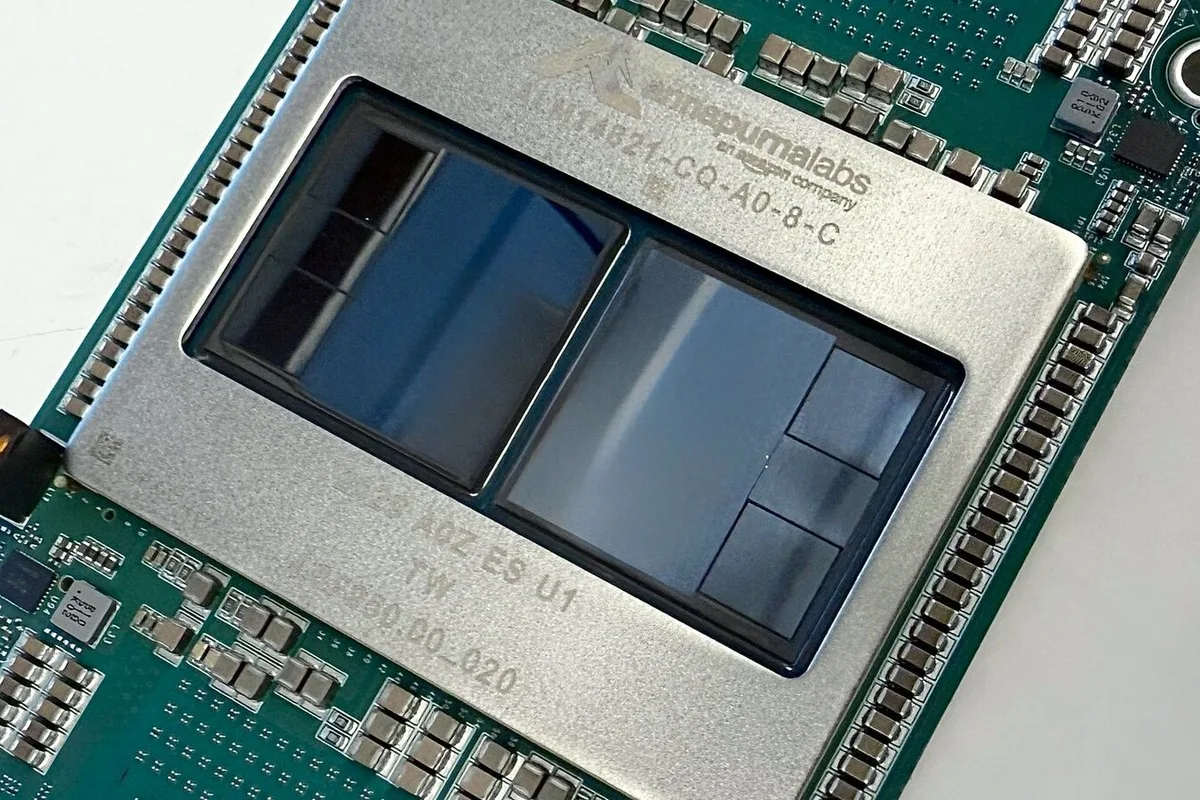
Trainium2 and Trainium3 are designed by Amazon's Annapurna Labs division for large-scale AI computing. AWS controls both the accelerator platform and the cloud infrastructure through which customers access it.
Amazon has shown a training script operating on conventional acceleration hardware and Trainium after a device configuration change. In the demonstration, the model followed comparable learning behavior.
This supports the functional portability claim. It does not establish universal throughput, latency or cost leadership against NVIDIA GPUs.
Those measurements depend on model size, numerical formats, memory requirements, communication patterns and the specific accelerator instances being compared.
Teams evaluating Trainium will also need to account for compilation overhead, supported kernels, cloud instance pricing and the effort required to optimize workloads for production.
TorchNeuron itself is free and open source. Running substantial computations on EC2 Trainium instances remains a paid cloud service.
Public beta is available now, with documented restrictions
The public beta launched on October 20 alongside the PyTorch Conference North America. AWS Neuron 2.33.0 release notes document the new backend, supported environments and compatibility requirements.
Developers can install the torch-neuronx package in a supported environment and begin testing PyTorch applications on Trainium2 or Trainium3. Documentation covers eager execution, compilation, distributed training, profiling and custom kernels.
This is a usable software release rather than a future roadmap commitment. At the same time, its beta status means compatibility gaps and performance differences should be expected until workloads have been independently tested.
Amazon has made it easier to answer the first question in a hardware migration: whether an existing PyTorch project can run on Trainium at all. The more difficult question remains whether it runs well enough to justify changing the infrastructure behind it.