
 By Kilam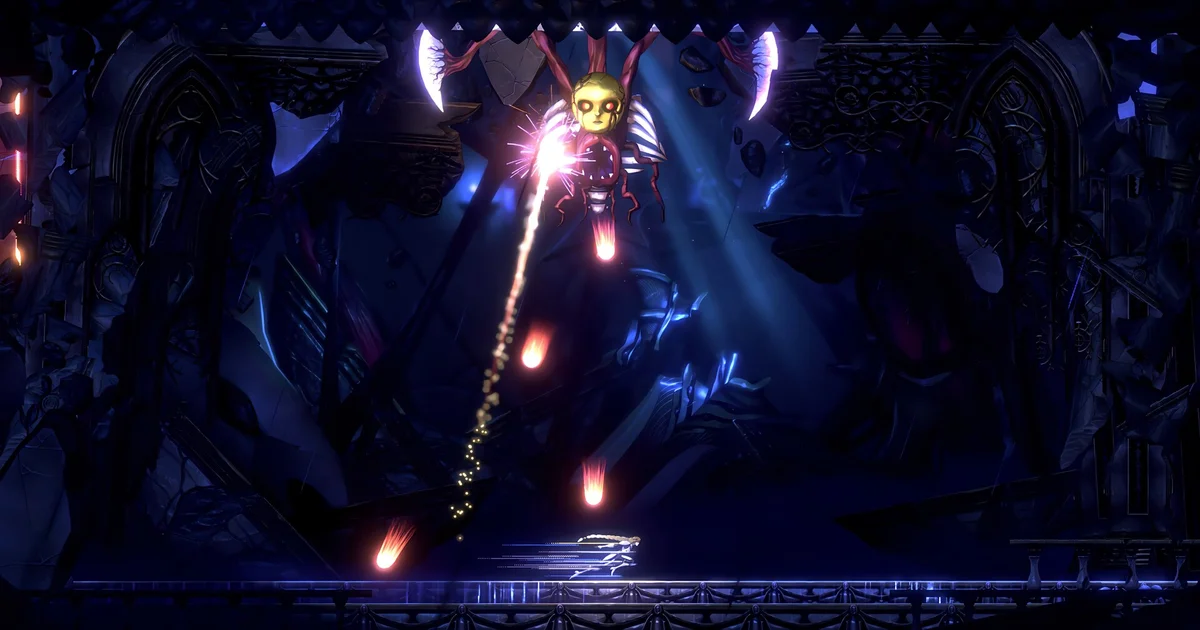
The game is scheduled for PC, PS4, PS5, Xbox One, Xbox Series and Nintendo Switch at $24.99 / €24.99.
Its original September 2025 release was dropped after the studio cited both Hollow Knight: Silksong's timing and missing development kits required for the simultaneous console launch it wanted.
The developer said at the time that the game itself was already essentially finished. That makes the new technical list more relevant: much of the additional production period appears to have been spent below the content layer.
World streaming is supposed to remove conventional loading screens
Aeterna Lucis is now described as a fully interconnected world without traditional loading pauses or artificial scene breaks.
The studio has not published details about its streaming implementation, memory budgets or storage behavior on individual consoles. Those questions matter most on PS4, Xbox One and Switch, where asset streaming has less headroom than on current-generation hardware.
What is confirmed is the design goal: moving between regions should no longer require the segmented transitions associated with earlier builds.
Dynamic lighting is interacting with gameplay objects
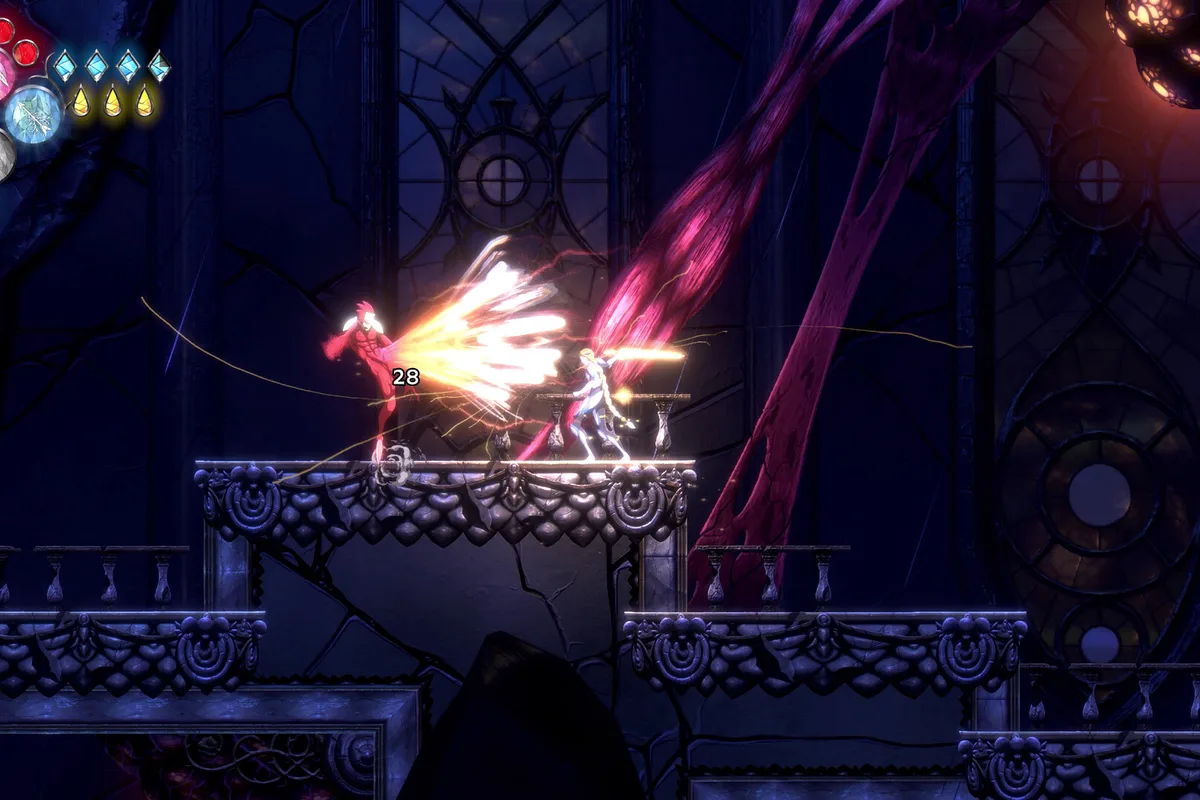
The new lighting engine operates in real time and is designed to react to weapons, projectiles and enemies.
That is a useful fit for a hand-drawn 2D game. The system is not replacing authored art with physically realistic rendering; it is adding dynamic illumination on top of illustrated spaces whose visual language is still heavily based on stained glass.
Recent footage shows bright attacks substantially changing the contrast around characters and backgrounds during combat.
The map is being rendered as recognizable rooms
Aeternum Game Studios has also abandoned a purely schematic map for miniature representations of the actual chambers, including recognizable scenery.
That adds visual complexity to an interface system, but the practical objective is navigation. Players should be able to recognize locations by appearance rather than interpreting abstract geometry every time they return to the map.
Console-specific systems were rebuilt
The developer says save systems, data handling and platform-specific performance pipelines have been overhauled from scratch.
It is promising stable frame rates and responsive controls across platforms at launch. No per-console resolution or frame-rate targets were published with the September announcement, so those performance claims remain unverified until final versions can be tested.
That distinction matters more than the marketing language. Rebuilt pipelines are a development fact being reported by the studio; smooth performance is still a promised result.
The PC requirements remain relatively light
Steam currently lists Windows 10, 8GB of memory, an Intel i5-7400 or Ryzen 3 3200G, and either a GTX 750 or Radeon HD 7770 as the minimum specification. Storage is listed at 10GB.
The recommended GPU tier rises to a GTX 1070 or Radeon RX Vega 56, paired with a Core i7-7700 or Ryzen 7 1700X.
Full controller support, Steam achievements and Steam Cloud are also listed.
Difficulty modes are separate from performance profiles
Aeterna Mode offers a more forgiving progression curve, while Lucis Mode preserves the harsher bosses and precision platforming aimed at experienced players.
These are gameplay difficulty settings, not announced graphics modes. Aeternum Game Studios has not yet detailed quality-versus-performance options for PS5 or Xbox Series.
The final test therefore arrives with the game itself on December 3.