
 By Tsuky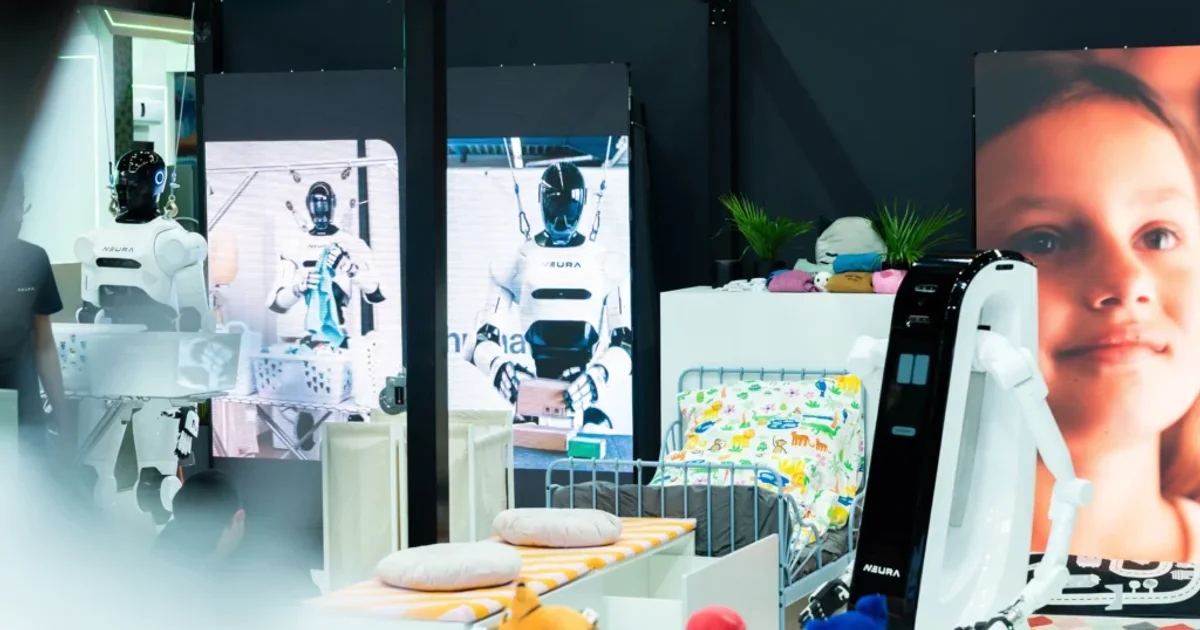
IFA calls the next step Physical AI
IFA's definition is useful because it draws a clear line around an otherwise fashionable term. Physical AI combines artificial intelligence with robotics and sensing so a machine can perceive an environment, act autonomously and interact directly with people.
That changes the failure modes immediately.
A software assistant operates inside an information system. A physical robot also has to estimate distance, motion and contact forces while handling situations that may never have appeared exactly that way in its training data.
Its output can be a movement rather than a sentence.
The catwalk belongs to robots on September 5
IFA schedules Robots on the Runway for 12:45 on the Creator Stage. The one-hour event is built around humanoids, quadrupeds and robotic companions performing in front of a consumer-show audience.
The official description mentions robots transforming, posing, dancing and even performing backflips.
At 13:00, the broader Robots on Stage programme begins. Participating exhibitors listed by IFA include Primebot Robots, EngineAI, Cozio Robotics, Dobot Robot, DEEP Robotics, Agibot, Unitree, ZBy – Mind with Heart, Ollobot, Astrall Dynamics and AIMOGA.
A runway is not a benchmark. It does make robotics unusually visible at a show where those machines now compete for attention alongside TVs, laptops and appliances.
RoboCup is running throughout the show
The less theatrical side of the programme is RoboCup, scheduled from September 4 through September 8.
Researchers and students use robotic football and other competitions to work on problems including localization, coordinated movement, autonomous decision-making and control under constantly changing conditions.
IFA specifically highlights Berlin United from Humboldt University in Berlin.
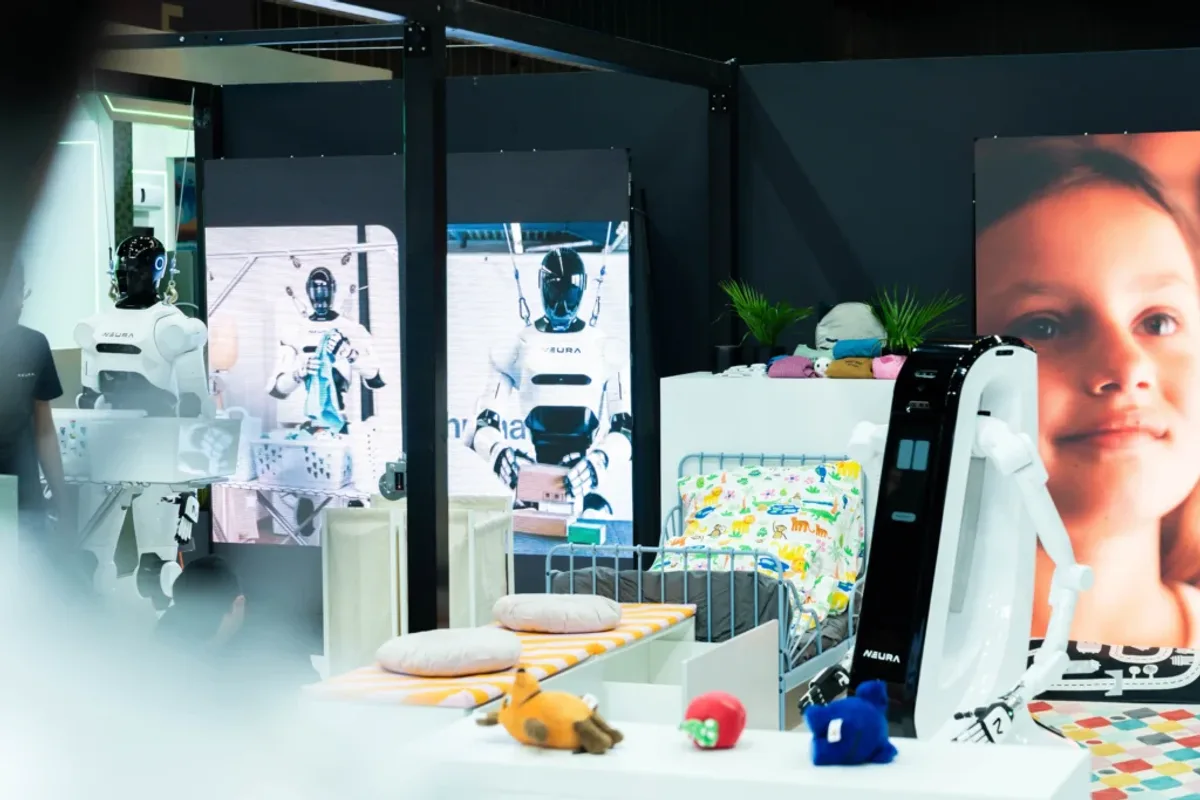
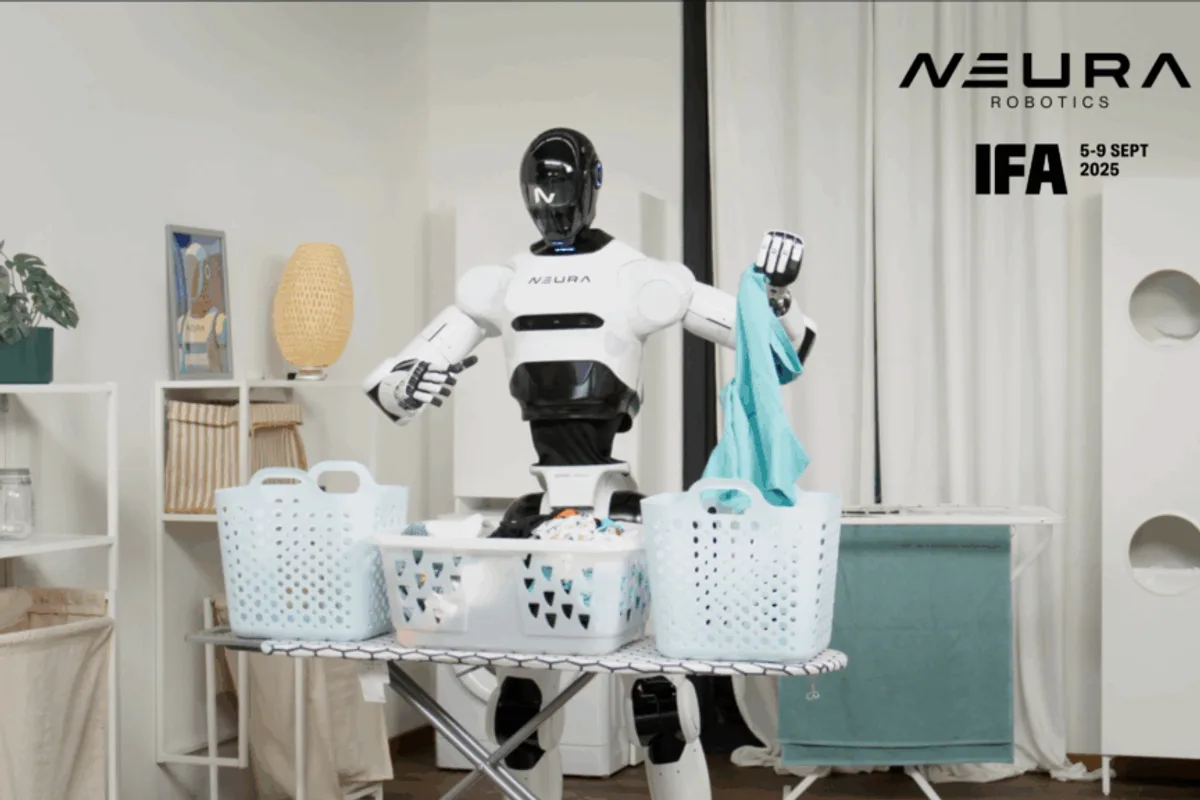
NEURA's pitch is about an ecosystem, not one humanoid
David Reger, founder and CEO of German company NEURA Robotics, is scheduled to speak on the Innovation Stage at 14:30.
His session, From Europe, for the World: Building the Ecosystem for Physical AI, frames robotics as an economic and industrial challenge for Europe.
NEURA argues that demographic pressure and future labor shortages will make physical automation increasingly important. Those forecasts are part of the company's case for the technology rather than independently established outcomes.
The manufacturing challenge is more immediate. A capable robot combines mechanical actuators, batteries, sensing, safety systems, local compute and software. Scaling the model alone does not solve the rest of that stack.
Robot training has a data problem that the web cannot solve by itself
Large language models benefited from an enormous existing supply of digital text. Robotics needs another kind of material: trajectories, contact, object manipulation and examples of how actions succeed or fail in physical environments.
That is why robotics companies increasingly mix simulation with repeated training on real machines.
The resulting data can be expensive to collect. For robots operating in homes or care environments, it can also become highly sensitive because cameras and other sensors observe physical spaces rather than abstract documents.
Autonomy is much easier to demonstrate than to prove
Trade-show robots have ideal conditions for showing progress. The environment is known, the demonstration is prepared and engineers are nearby.
Real deployment introduces clutter, pets, children, unusual furniture, reflective surfaces and countless combinations that were never arranged for a stage presentation.
Safety is harder to treat as a software footnote when an AI system controls motors with real mass behind them.
The important shift is where these robots are being shown
Industrial robots are old technology, and research competitions have been around for years. IFA is not inventing either category.
What stands out in 2026 is how closely robotics is being placed beside mainstream consumer technology. The show groups humanoids, AI PCs, connected appliances and autonomous machines under its World of AI & Future of Tech programme.
Physical AI may eventually become another label pasted onto products that barely need it. At Berlin this year, though, the underlying transition is visible enough: AI companies spent the last few years improving what machines can generate on a screen. The difficult part now has arms, wheels and a floor to fall onto.