

Version 1.0 finally looks like the end of an Early Access cycle
Destructoid offers one of the clearest before-and-after comparisons. Its writer strongly disliked the old version's movement, jank and grind, but found the final release dramatically smoother and reported seeing almost none of the roughness that had previously driven the experience.
That matters because Palworld's technical problems were rarely isolated from its systems. A Pal stuck on geometry was also a worker no longer feeding the production chain.
The visual pass is broader than a new coat of paint
Version 1.0 revised water materials, coastlines, lighting, environmental rendering, shadows and some draw-distance behaviour. The result is not a generational rendering leap, but it gives the expanded world a more coherent presentation.
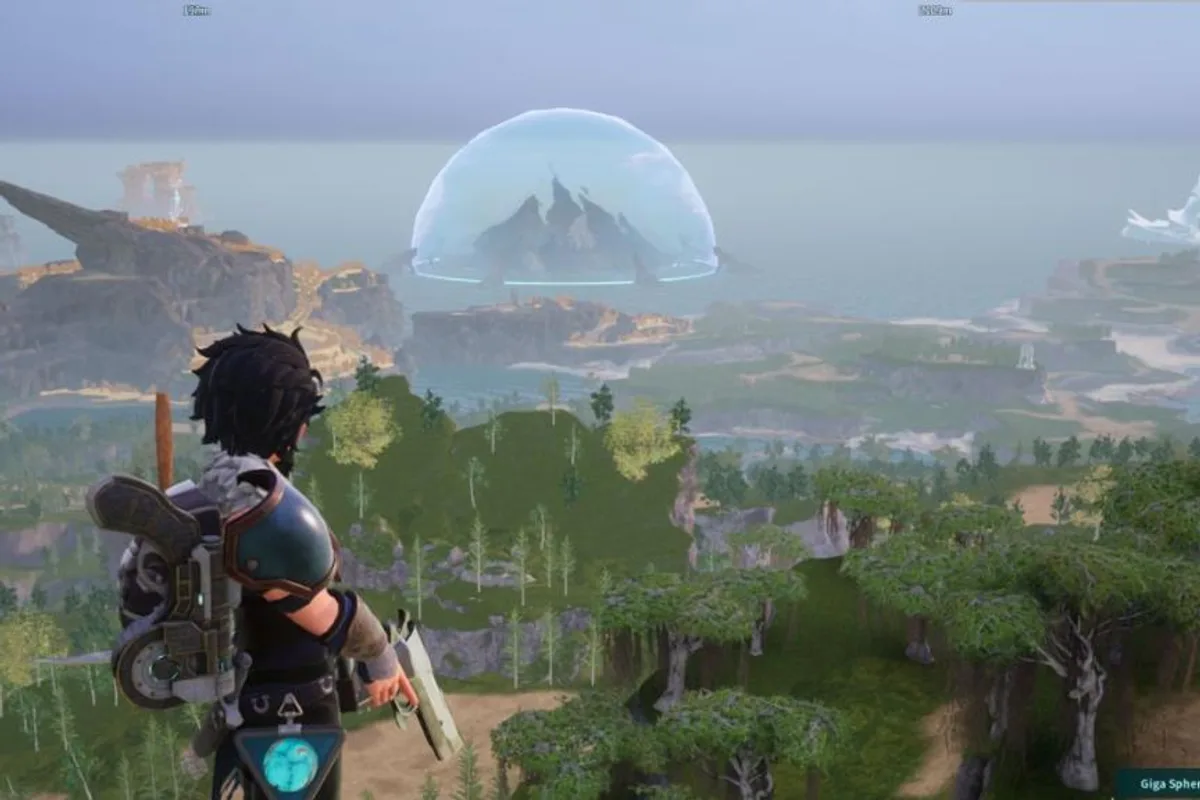
GamingBolt reports more than 100 frames per second at 2560 × 1440 on a Ryzen 7 7800X3D, Radeon RX 7800 XT and 32 GB system. That is useful evidence for high-end PC performance, provided it is not mistaken for a universal benchmark.
Memory and simulation tell another story
The current official PC requirements list 16 GB of RAM as the minimum and 32 GB as recommended, with an SSD required. The minimum GPU is a GTX 1660, while the recommended tier lists an RTX 3060 Ti or RX 6700 XT.
Steam also warns that performance may vary with the number of active Pals. A busy base is effectively running a collection of workers that need to navigate, select tasks, transport materials and maintain routines at the same time.
Pal AI is infrastructure
Workforce behaviour is not a cosmetic detail. If pathfinding or task assignment fails, the base economy fails with it. Recent reviews generally find the system much more dependable than it was in Early Access.
Pocketpair is still correcting edge cases. Version 1.0.3 fixed, among other issues, situations where some Pals could freeze and stop attacking.
Combat readability is now a bigger concern than raw spectacle
GamesRadar praises the fluidity and weapon feel, but large Pal abilities can create an aggressively busy image. Effects overlap, targets disappear and the player occasionally has to read through the spectacle rather than with it.
That is not automatically a performance failure. It is an information-design problem produced by a combat system capable of putting a lot on screen at once.
Cleaner, not lightweight
Palworld 1.0 is substantially more polished than the viral Early Access build that introduced the game in 2024. Movement and general stability are much less distracting, while the graphical overhaul helps the enlarged world.
Its workload has grown too. Large automated bases, creature AI and effect-heavy encounters explain why a cheerful visual style should not be confused with trivial hardware demands.