
 By Kilam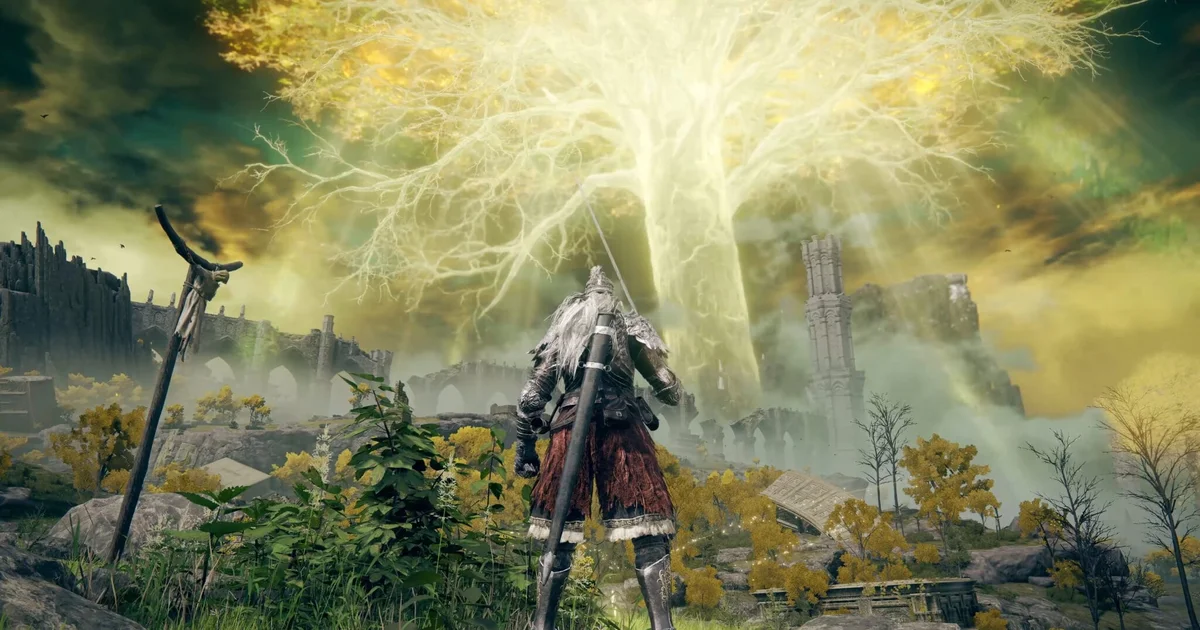
Elden Ring often produces images that look like a technology showcase. Most of the time, they are actually an art-direction showcase.
FromSoftware does not rely on a particularly extravagant renderer. Scale, silhouettes, fog, palette and environmental composition do most of the heavy lifting.
The Erdtree matters more than a checklist of rendering features
The Erdtree dominates horizons through placement and contrast. Caelid communicates corruption through color and organic forms. Liurnia uses water and atmospheric depth to make enormous spaces feel mournful rather than empty.
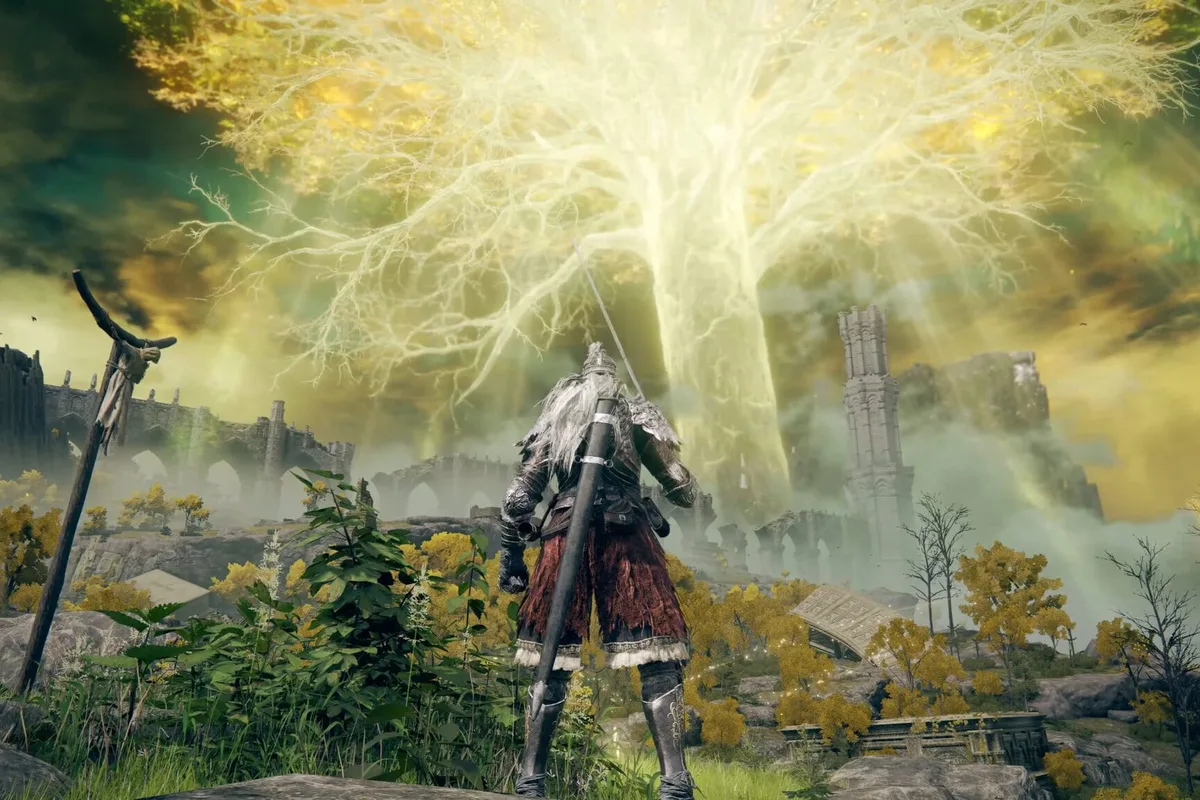
Elden Ring is a useful reminder that technical fidelity and visual quality are different measurements.
The original PC release was much harder to defend
PC Gamer criticized the 60fps cap, limited graphics configuration, missing native ultrawide support and persistent stuttering.
Digital Foundry's launch analysis was harsher still, describing profound stutter issues in the DirectX 12 version.
The important point was that expensive hardware could not simply brute-force every problem away.
Current-generation consoles also missed a clean 60fps target
Digital Foundry measured launch-era performance modes on PS5 and Series X fluctuating roughly through the 45–60fps range, while quality modes were also variable.
VRR helped Series X on compatible displays. PS5 often operated somewhat faster, but neither system originally delivered the locked 60fps response that a precision action game ideally wants.
Ray tracing never became Elden Ring's visual identity
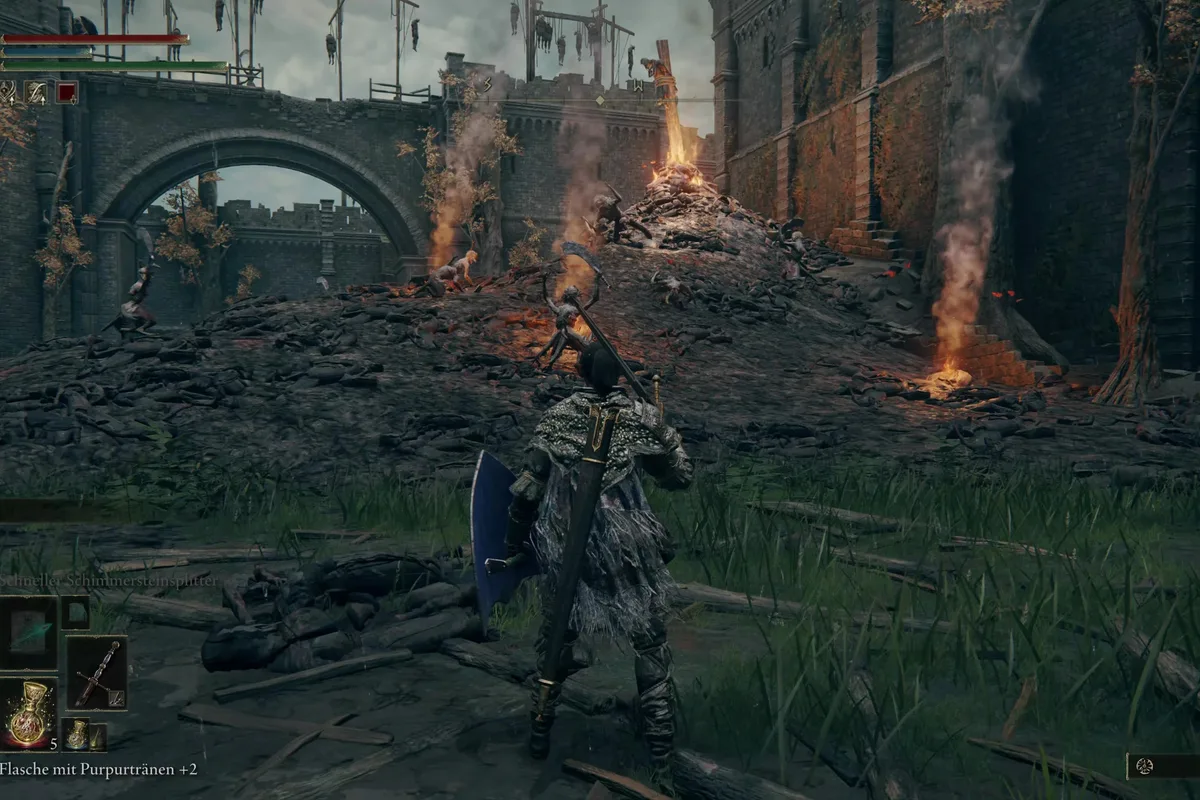
Later ray-tracing support added another option, but the presentation never depended on it.
The performance cost is difficult to justify as transformative when the rasterized art direction already creates the game's strongest images.
Switch 2 is the more interesting 2026 technical story
Tarnished Edition launched on Nintendo Switch 2 on August 28, 2026 after an earlier delay.
Recent reviews from GamesRadar, TechRadar and The Verge describe a substantially improved final port compared with its concerning early demonstrations.
The target is 30fps, with occasional drops or visual compromises depending on the scene, but the complete game is now genuinely viable as a portable experience.
That is a more impressive optimization achievement than simply adding another high-end rendering toggle.
Patch 1.17 shows continued maintenance rather than a technical reinvention
FromSoftware's August 27 update added Tarnished Pack support and balance changes across PlayStation, Xbox and Steam.
Four years after launch, Elden Ring is still maintained, but its underlying technical personality remains recognizably conservative.
The frame-rate ceiling and limited PC feature set belong to that same philosophy.
The artists consistently outrun the engine
A carefully framed castle can matter more than a more expensive reflection. A distant landmark can make traversal feel larger than a raw polygon count ever will.
Elden Ring repeatedly spends visual attention where players are most likely to remember it.
That is why its technical score stops at four out of five while its imagery remains almost impossible to forget.