
 By Adri
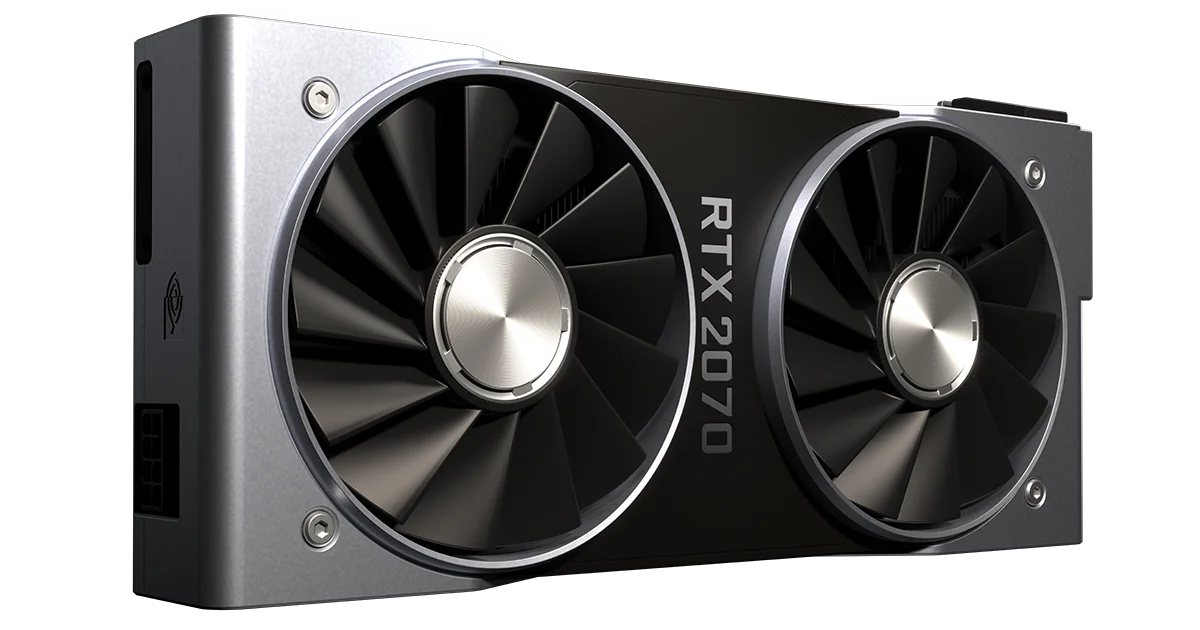
An RTX 4060 Laptop increasing its measured matrix throughput from 29.89 to 49.33 TFLOPS is an attention-grabbing result.
The gain is approximately 65%, yet it comes without a new NVIDIA graphics driver or a permanent video BIOS modification.
Instead, the change is produced by nv-uefi-unlocker, an open-source project developed by physicsdolphin and community contributors.
The project was widely reported by technology publications on November 1, bringing increased attention to earlier work on NVIDIA Tensor Core performance restrictions.
However, the result requires careful interpretation.
This is not a general method for making every GeForce GPU dramatically faster.
The tool targets specific mathematical operations, and the performance benefits depend heavily on the application.
A restriction affecting certain Tensor Core operations
NVIDIA introduced Tensor Cores to its GeForce lineup with the Turing generation.
These specialized processing units accelerate selected matrix operations used in artificial intelligence and related computing workloads.
They complement traditional graphics processing hardware rather than replacing every part of the GPU.
Community researchers identified a performance restriction affecting certain reduced-precision Tensor Core operations with FP32 accumulation.
The effect depends on the architecture and the specific instructions executed.
It does not mean every Tensor Core operation runs at half its theoretical performance.
Previous community projects, including gpu-unlock and related Turing and Ada adaptations, explored ways to change the relevant settings.
Nv-uefi-unlocker builds on that work and provides a more accessible approach for compatible Windows and Linux systems.
The utility operates before the NVIDIA driver loads
The project's main technical distinction is its execution environment.
Nv-uefi-unlocker runs as a UEFI application during the computer's boot process.
It operates before the operating system has completed initialization of the NVIDIA graphics driver.
That timing provides access to a stage at which the targeted GPU configuration can be modified.
The project uses techniques developed around NVIDIA's signed firmware mechanisms and selected Tensor Core speed-control registers.
It temporarily changes the relevant settings, verifies the resulting state and then proceeds with the normal operating-system boot.
The read-back verification mechanism is intended to establish whether the targeted change was actually applied.
However, verification of a register value does not guarantee complete system stability.
Motherboard firmware behavior, GPU configuration and operating-system compatibility remain important.
No permanent VBIOS flashing is required
Unlike some graphics-card modifications, the tool does not permanently rewrite the GPU's video BIOS.
It also does not require users to install a patched NVIDIA driver.
The change is applied before the normal driver loads.
A bootable USB device can be used to initiate the process.
The modified state generally disappears after the system loses power completely.
The operation therefore needs to be repeated after a cold boot if the user wants to restore the unlocked behavior.
That temporary nature distinguishes the method from a permanent firmware modification.
However, firmware-level execution can still cause boot failures, black screens or initialization problems.
Avoiding a permanent VBIOS flash reduces one category of risk without making the operation safe for every system.
RTX 4060 Laptop demonstrates a 65% FP16 increase
One of the clearest documented results comes from the developer's RTX 4060 Laptop.
In an FP16 matrix multiplication test with FP32 accumulation, performance increased from 29.89 to 49.33 TFLOPS.
That represents a throughput multiplier of approximately 1.65.
The measurement provides evidence that the targeted calculation can run substantially faster.
However, matrix benchmarks are specialized tests.
They do not directly measure the performance of an entire AI application or a commercial video game.
Real software performs numerous operations, some of which may not benefit from the change.
The final improvement depends on how much execution time is spent in the accelerated calculations.
RTX 2070 results show gains reaching 75%
The project also reports substantial improvements on older Turing GPUs.
For an RTX 2070, the developer measured approximately 36 TFLOPS before modification and between 60 and 63 TFLOPS afterward in selected matrix workloads.
That corresponds to gains of roughly 67% to 75%.
The result demonstrates that the method is not restricted to recent Ada Lovelace hardware.
However, compatibility varies across Turing models and system configurations.
The project documents additional firmware requirements for RTX 20 cards.
Some boards have also encountered boot or handoff failures.
A result obtained on one RTX 2070 should therefore not be treated as a guaranteed outcome for every RTX 20 system.
RTX 4080 approaches twice its original BF16 throughput
Community results include high-end cards from the RTX 40 generation.
An RTX 4080 owner reported a BF16 matrix multiplication increase from 100.37 to 192.18 TFLOPS.
That represents approximately 1.91 times the original throughput.
The result illustrates how large the effect can be on a highly suitable workload.
It does not establish a 91% improvement across all applications.
Power consumption, thermal limits and memory transfers can reduce the realized benefit.
There is also an important difference between peak instruction throughput and sustained performance in a complete computation.
Previous community modifications sometimes doubled a specific instruction rate without producing an equivalent improvement in practical software.
Why gamers should not expect major FPS improvements
Modern video games rely on a combination of rendering workloads.
These include shader execution, rasterization, texture processing, geometry operations and, in some titles, ray tracing.
Nv-uefi-unlocker does not directly accelerate all of those activities.
It targets a subset of Tensor Core computations.
Even when games use AI-based rendering technologies, the affected mathematical operations may represent only a small portion of the total execution time.
The published results do not demonstrate a general frame-rate improvement.
It would therefore be misleading to describe an RTX 4060 as becoming 65% faster in games.
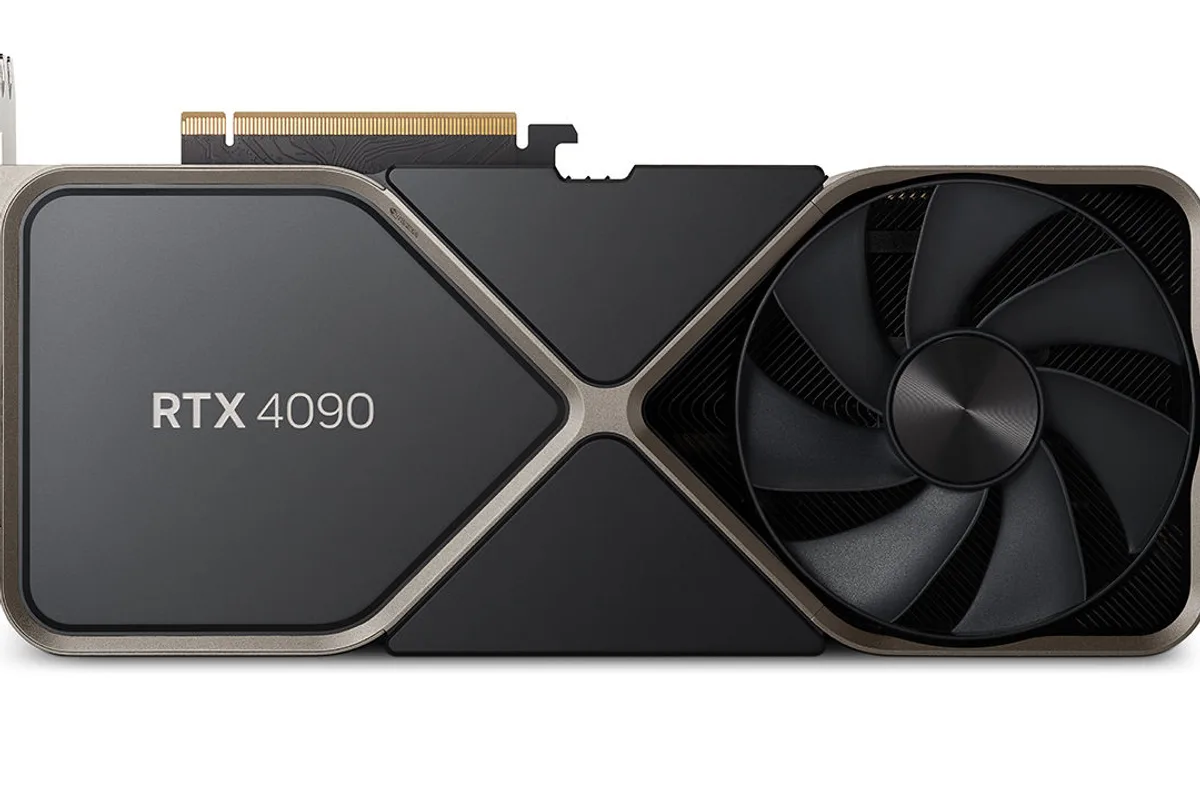
Nor does a large matrix benchmark gain mean an RTX 4090 will automatically produce twice as many frames.
The primary audience for the tool is more likely to be people experimenting with local AI workloads.
Image generation and model training offer more promising workloads
Applications that perform large amounts of FP16 or BF16 matrix multiplication are plausible beneficiaries.
These include certain image-generation tasks, neural-network training operations and model fine-tuning workflows.
One community report described approximately 28.8% faster Stable Diffusion XL processing in ComfyUI on an RTX 3080 LHR.
That is a meaningful improvement but significantly lower than some synthetic matrix benchmark results.
The difference is not surprising.
Complete applications perform operations that may be limited by factors other than Tensor Core throughput.
Video-memory capacity remains one of those limits.
Unlocking faster matrix calculations does not increase a GPU's VRAM or memory bus bandwidth.
Models that do not fit into available memory will not suddenly become usable because of the modification.
Language-model generation may remain memory-bound
Local large language models illustrate the limitations particularly well.
During token-by-token text generation, moving model parameters through memory can be a major performance bottleneck.
When memory bandwidth dominates execution time, increasing selected Tensor Core arithmetic throughput may deliver relatively small gains.
Prompt processing and larger batched operations can sometimes make greater use of matrix computing resources.
Earlier community experiments reported variable improvements in prompt processing without equivalent increases in generation speed.
That distinction explains why a GPU can perform dramatically better in a mathematical benchmark while offering only modest improvements in a local chatbot.
For practical evaluation, tokens per second, prompt-processing latency and total task completion time are often more useful than a single TFLOPS figure.
RTX 20, 30 and 40 are supported with important limitations
Nv-uefi-unlocker targets the Turing, Ampere and Ada Lovelace architectures.
These correspond to the GeForce RTX 20, RTX 30 and RTX 40 generations.
The repository documents successful tests on several desktop and laptop GPUs, including RTX 2070, RTX 3060, RTX 3080 and multiple RTX 40 models.
However, support for a GPU family does not mean every individual board and computer configuration has been independently validated.
The implementation routes devices partly according to shared architecture and firmware characteristics.
Compatibility can also depend on motherboard firmware, graphics initialization and operating-system behavior.
Thunderbolt-connected external GPUs present additional reset and persistence challenges.
Laptop systems may require the discrete graphics processor to be active at the appropriate boot stage.
The project does not currently support NVIDIA's RTX 50 generation.
Secure Boot requirements create a significant trade-off
Because the tool runs during the UEFI boot stage, Secure Boot becomes an important consideration.
Secure Boot is designed to restrict the execution of unauthorized boot components.
The project's standard approach requires Secure Boot to be disabled or configured to trust an appropriately signed EFI application.
Changing these settings can affect the security guarantees of the boot process.
It may also interfere with applications that require Secure Boot to remain enabled.
Certain anti-cheat systems enforce such a requirement.
The tool does not bypass those restrictions.
For managed business computers, modifying boot-security settings may conflict with organizational security policies.
The potential performance benefit must therefore be considered alongside a real security trade-off.
Firmware-level experimentation introduces stability risks
The developers and related community projects warn about possible failures.
Some configurations may hang during startup or fail to complete the transition to the operating system.
Firmware-level interventions are not subject to the same validation process as an officially supported driver feature.
Power and thermal protections may remain active, but their presence does not guarantee identical behavior on every card.
Laptop GPUs in particular often operate within closely managed cooling and power limits.
Additional computational demand can cause a processor to reach those limits sooner.
As a result, sustained performance may fall below the theoretical improvement indicated by shorter benchmarks.
The project should be regarded as experimental rather than as a routine optimization for production systems.
Open source does not mean officially supported
The nv-uefi-unlocker source code and documentation are available on GitHub.
That openness allows researchers to inspect the implementation and contribute test reports.
It also gives users an opportunity to examine changes between versions.
However, publicly available source code does not automatically establish software security.
A utility running before the operating system requires particular scrutiny concerning file integrity and the provenance of its executable components.
The project says its release archives do not directly distribute NVIDIA firmware files.
Instead, certain assets are prepared locally from public inputs and checked against specified hashes.
Those measures provide technical safeguards but do not constitute an independent security audit.
NVIDIA has not announced official support for the unlocking procedure.
Users should distinguish community research from a feature endorsed and maintained by the hardware manufacturer.
Professional GPU segmentation does not disappear
NVIDIA sells consumer GeForce cards alongside professional and data center products.
Different product families may share elements of their underlying GPU architectures.
They can nevertheless differ in memory capacity, software features, validated workloads, drivers and support arrangements.
The Tensor Core restriction examined by the community is one part of this wider product segmentation.
It would be inaccurate to claim that unlocking these operations transforms a GeForce into a fully equivalent professional accelerator.
Memory capacity, bandwidth, reliability requirements and software compatibility remain significant distinctions.
A localized throughput increase cannot remove every hardware and operational difference between product categories.
The project reflects growing interest in local AI computing
Demand for locally executed AI models has encouraged users to extract more value from existing GPUs.
Many RTX 20 and RTX 30 cards remain in personal computers and smaller workstations.
For some workloads, improving the performance of existing hardware could be more economical than replacing an entire system.
However, an experimental procedure that can interfere with booting has a different operational cost from an officially supported optimization.
For a machine used for important daily work, downtime and recovery risks may outweigh the computational time saved.
For a dedicated laboratory machine, the calculation may be different.
The distinction between research value and dependable everyday value is essential.
The next challenge is reproducible application-level testing
Early results show that additional matrix throughput can be achieved on selected NVIDIA GPUs.
The next step is to determine how consistently that benefit appears in real applications.
Useful testing should include image generation, fine-tuning and different local-model inference scenarios.
Power consumption, sustained temperatures, system stability and boot compatibility also need to be recorded.
Performance should be compared on the same card, using the same software and identical test conditions before and after the modification.
Otherwise, apparent improvements may reflect unrelated changes.
Compatibility across RTX 20, 30 and 40 devices also requires continuing model-specific verification.
Support for RTX 50 cards remains outside the current project's documented capability.
A meaningful discovery with a narrowly defined benefit
Nv-uefi-unlocker demonstrates how community researchers can identify additional capabilities in existing hardware.
The reported gains are substantial enough to justify technical interest.
A 65% increase on an RTX 4060 Laptop and comparable results on other cards show that the effect is measurable.
However, those numbers come from specific tests.
They do not establish equivalent improvements in gaming or every AI workload.
The UEFI-based method also introduces security and compatibility considerations that a supported software setting would not normally require.
For users prioritizing a stable daily computer, caution is appropriate.
For GPU computing enthusiasts, the project provides a new direction for experimentation.
Its long-term significance will depend on whether the measured gains can be reproduced in useful applications with acceptable power consumption, stability and operational risk.