
 By Camille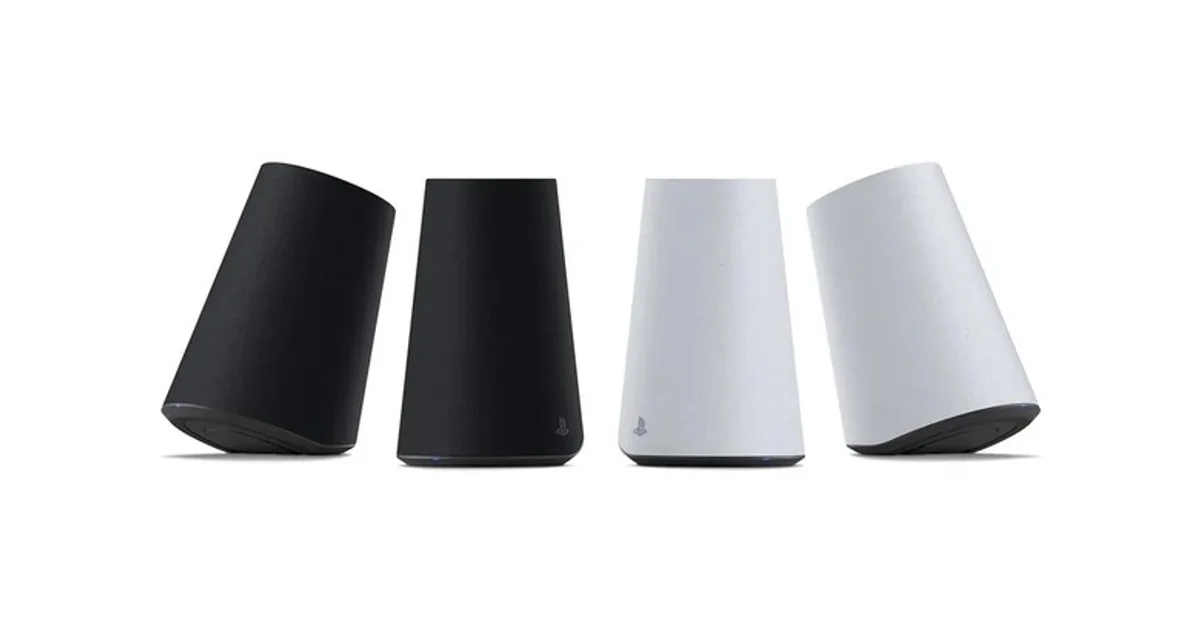
Sony has now given the product a November 12 launch date and a $219.99 US price. Each speaker comes with a charging dock, and a USB-C PlayStation Link adapter is included for compatible systems.
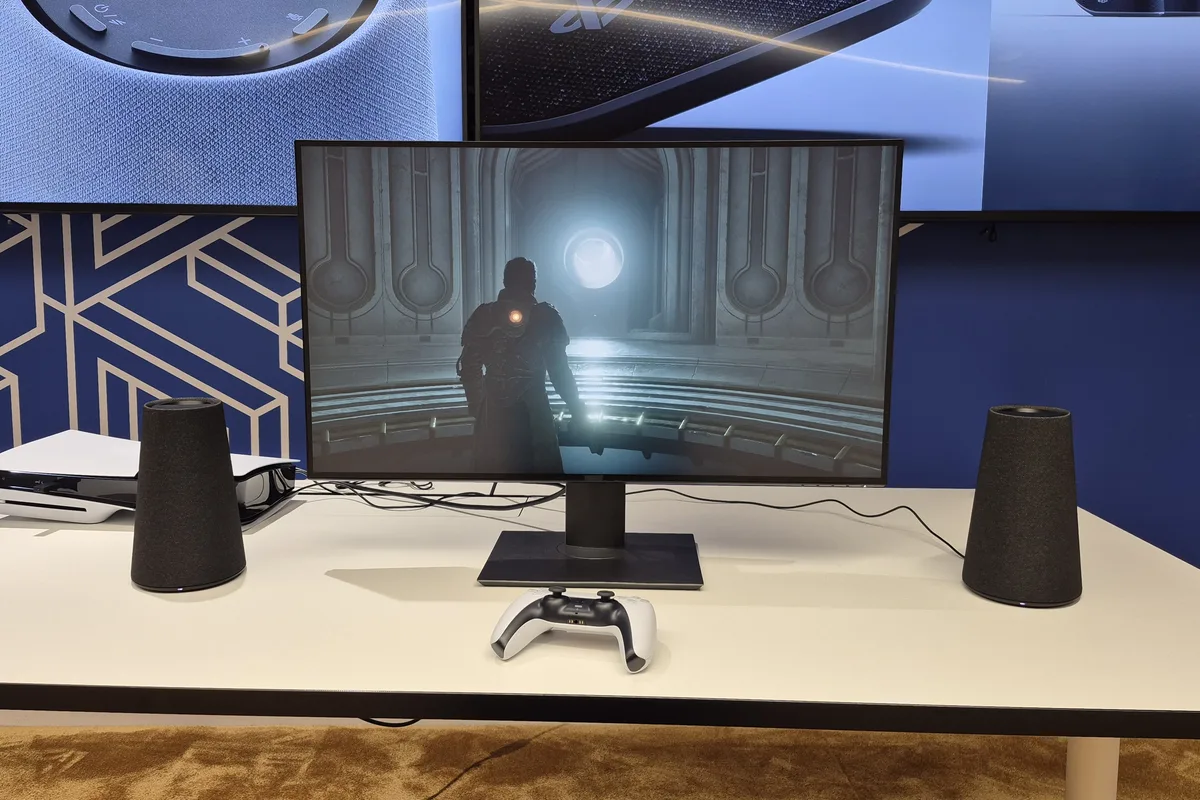
The enclosures can be tilted toward a near-field listener, which tells us more about the intended use than the portability marketing does. This is first and foremost a desktop stereo pair.
The acoustic layout is more ambitious than a typical gaming speaker
A planar magnetic driver sits in each enclosure alongside a separate woofer. Sony assigns the planar unit the job of reproducing detailed full-range content while the woofer supplies the low-frequency weight that a flat diaphragm in a compact enclosure may otherwise struggle to deliver by itself.
Planar magnetic designs distribute conductive traces across a light diaphragm suspended in a magnetic field. They can deliver very fast diaphragm movement and low distortion when implemented well, which helps explain their popularity in certain high-end headphones.
Speaker design adds an entirely different set of constraints. Cabinet volume, amplification, crossover behavior, DSP and room interaction still matter.
Sony has not yet published several conventional specifications that would make the hardware easier to evaluate before release. The current product material does not provide amplifier output, a numerical frequency-response range or detailed driver dimensions.
Gaming audio gets PlayStation Link instead of relying on Bluetooth latency
PlayStation Link is the primary gaming connection. Sony describes it as lossless and ultra-low latency, with support for PS5, PC, Mac and PlayStation Portal.
A USB-C adapter handles systems that need a transmitter. Bluetooth is available independently for phones, televisions and other compatible devices.
The useful trick is simultaneous playback. PlayStation Link can carry the game while a Bluetooth device supplies a second audio stream, allowing a phone call or music source to coexist without disconnecting the console.
There is no conventional wired-audio mode advertised on Sony's current product page. During TechRadar's June hands-on, PlayStation product development VP Edwin Foo said the speakers could not be used as a wired alternative.
The charging docks hide a 12-hour portable mode
Both speakers contain rechargeable batteries rated for up to 12 hours away from their docks. That turns the charging stands into their normal desktop resting point rather than a permanent requirement for playback.
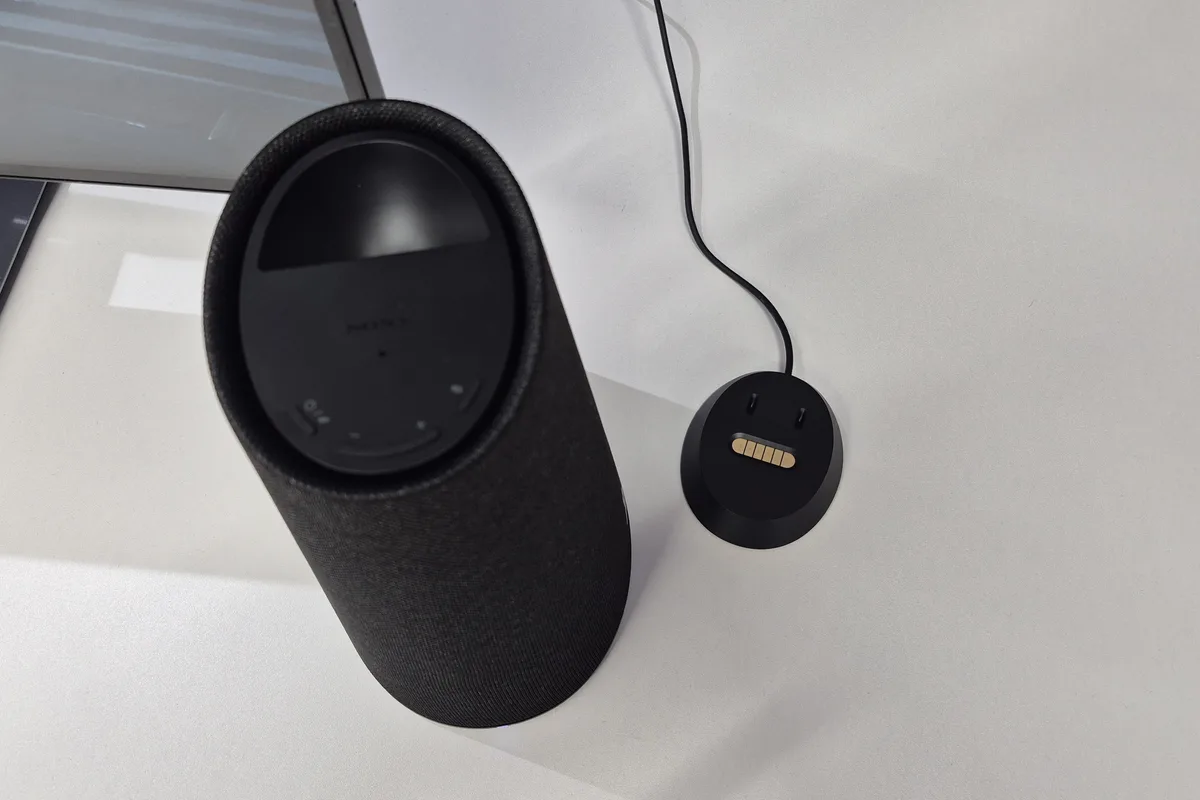
The obvious PlayStation use is moving them alongside a Portal, but a battery also makes mundane repositioning easier. They can move between a desk, kitchen or temporary laptop setup without carrying power adapters every time.
Sony has not supplied detailed endurance figures for different volume levels or simultaneous Bluetooth and PlayStation Link use.
The microphone has to cancel the product's own output
A microphone built into the right speaker handles voice chat. AI-enhanced noise rejection is tasked with separating the player's speech from surrounding noise, including sound coming from the Pulse Elevate pair itself.
That is a more demanding acoustic problem than cleaning up a microphone positioned a few centimeters from the mouth on a headset.
Sony demonstrated the system with loud music playing through the speakers while recording speech, and its June PlayStation Blog hands-on reported that the voice remained clear in the resulting call. A TechRadar demonstration produced a similarly strong first impression.
Neither test replaces evaluation in a normal room with fan noise, keyboard transients and reflective walls.
Two physical speakers are still two physical speakers
Tempest 3D AudioTech is supported on PS5 titles designed for it. The console can use spatial processing to place cues around the listener before the final stereo signal reaches the planar drivers.
That should not be read as a physical surround-speaker system. Imaging will still depend on speaker separation, listening position, room acoustics and the game's own mix.
The pair goes on sale November 12. Preorders begin September 1, with Midnight Black receiving the broadest distribution and White availability varying more heavily by market.