
 By Adri
AI data centers need more than advanced processors and high-speed networks. They require enormous amounts of electricity, delivered reliably enough to keep complex computing systems running.
That requirement is becoming a challenge for electricity suppliers as technology companies develop increasingly large computing campuses.
Power grids have physical constraints. Generation capacity, transmission lines, substations and local equipment all determine how much electricity can be delivered at a given moment.
During periods of extreme heat or cold, household demand can rise sharply.
A new industrial consumer requiring several gigawatts can make planning for those periods more complicated.
OpenAI is proposing a different relationship between large computing facilities and the grid.
Its Grid Protectors Program, announced November 2, aims to make future campuses capable of reducing electricity demand when local conditions require it.
A national program built around demand response
The main concept behind Grid Protectors is demand response.
Under this approach, a large electricity consumer agrees to reduce its power use temporarily when requested by the utility or grid operator.
The mechanism can help manage periods of high demand or unusually constrained supply.
OpenAI says it wants to incorporate this flexibility into the design of future compute campuses.
The company plans to work with utilities, regulators and policymakers to negotiate site-specific agreements.
Those arrangements will define how much demand can be reduced, how quickly a facility must respond and how long the reduction can continue.
These conditions are critical to the usefulness of the program.
A data center capable of reducing demand briefly does not provide the same operational benefit as one that can sustain a reduction for several hours.
Grid flexibility therefore depends on the amount of power, the duration and the availability of the response.
Georgia provides the first concrete commitment
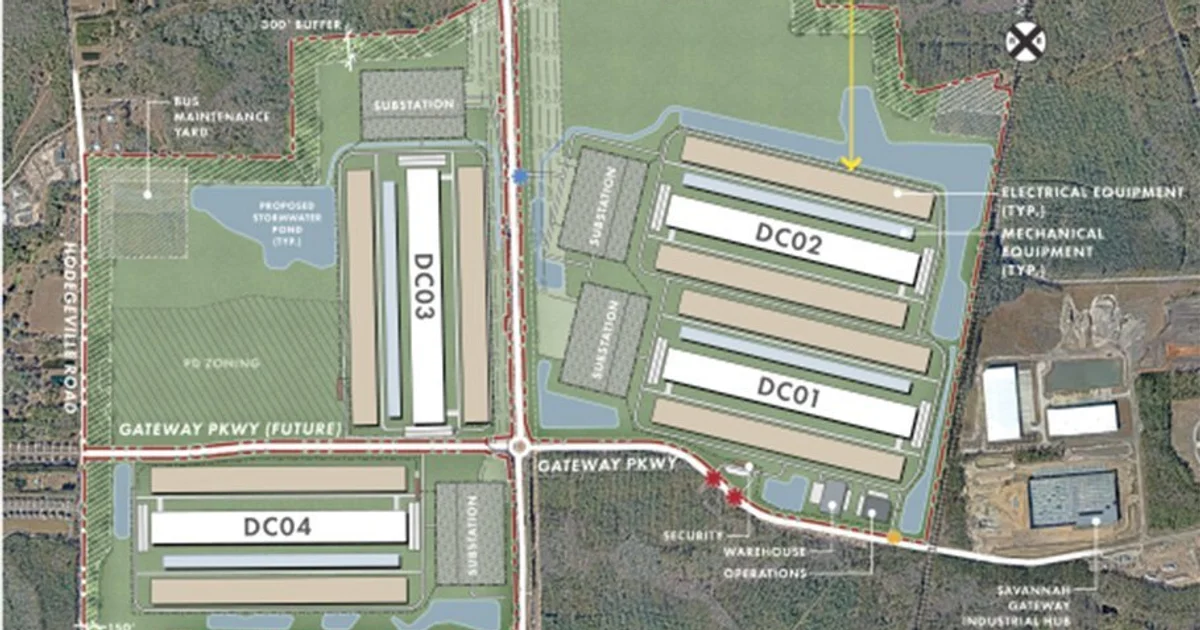
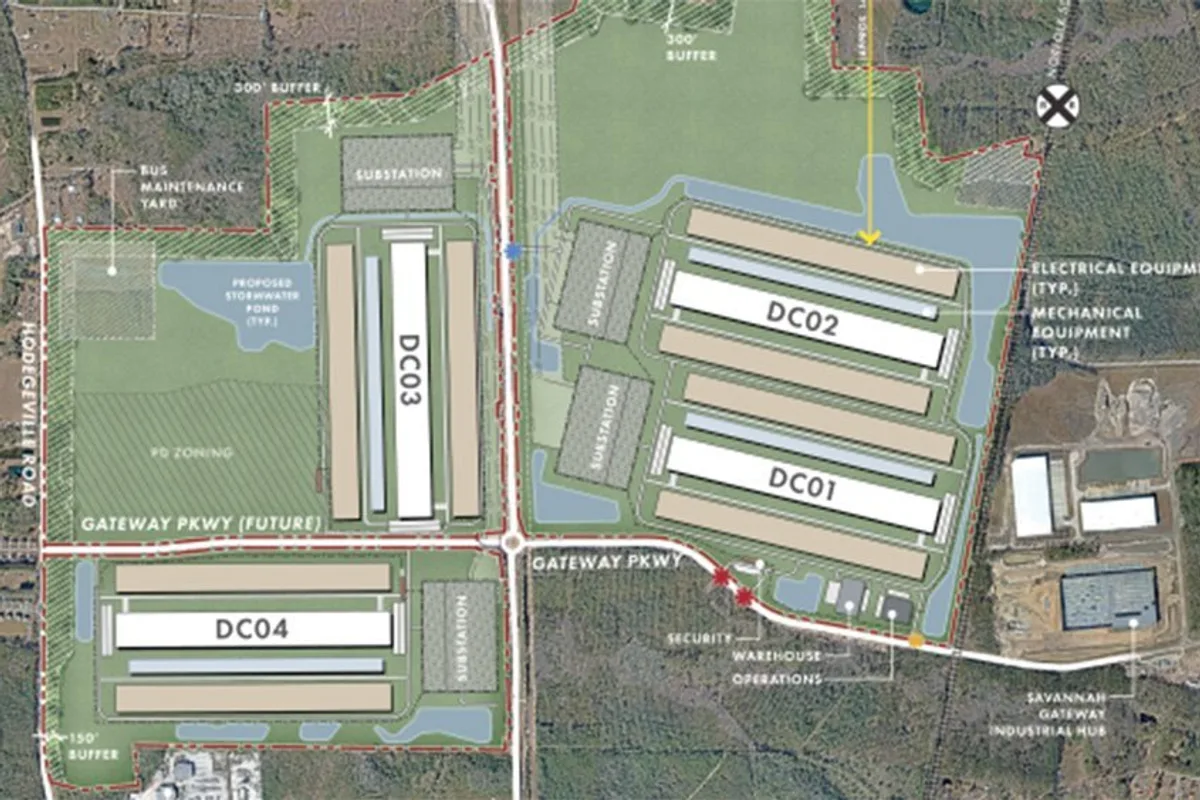
The program builds on an existing electricity agreement for OpenAI's planned campus in Effingham County, Georgia, near Savannah.
The facility is associated with Project Camellia, a major computing development that OpenAI is planning in the region.
On August 26, 2026, Georgia Power confirmed that its contract to serve the campus had received regulatory approval from the Georgia Public Service Commission.
The agreement covers approximately 3,200 megawatts of planned electricity demand.
That represents 3.2 gigawatts of potential load from one large facility.
The contract also includes up to 1,000 MW of flexible demand response.
Under the agreed framework, Georgia Power can reduce the electricity delivered to the campus during certain periods of high demand.
The facility is still under development.
Consequently, the announced 1,000 MW is a future contractual capability rather than a measured reduction already delivered by an operational data center.
What does 1,000 megawatts actually mean?
One gigawatt equals 1,000 megawatts of power.
To communicate the scale, OpenAI compares the planned flexibility with the average electricity demand of approximately 700,000 American households.
That comparison is useful, but it needs context.
Reducing a data center's consumption by 1,000 MW is not equivalent to generating 1,000 MW of new electricity.
It means lowering demand that would otherwise have been placed on the system.
The released capacity may then help meet other demand or reduce pressure on grid infrastructure.
The 700,000-household comparison concerns average power consumption.
It does not mean that the data center would directly supply electricity to 700,000 homes.
The distinction between demand reduction and electricity generation is central to understanding the initiative.
Can AI computing workloads really be interrupted?
The technical challenge is more complicated than turning off a collection of servers.
Different computing workloads have different availability requirements.
Some systems must respond quickly and continuously, particularly when supporting real-time services.
Other work can potentially be scheduled or adjusted according to available resources.
Depending on the architecture, some training operations, data-processing jobs and nonurgent computations may offer greater flexibility.
However, interrupting a poorly prepared workload can result in lost progress, delays or additional costs.
A practical demand-response system therefore needs to account for applications, storage, cooling and hardware limitations.
It must also coordinate the reduction and restoration of computing capacity.
OpenAI has not published a complete technical description of how individual workloads will be controlled under Grid Protectors.
It would therefore be premature to claim that specific models or services will automatically be suspended during grid emergencies.
On-site batteries could provide additional flexibility
Reducing computing demand is only one possible component of the initiative.
OpenAI also says future campuses may use on-site generation and electricity storage, depending on local conditions.
A battery can temporarily supply some of a facility's electricity needs.
That could allow a data center to draw less power from the grid without reducing its computing activity by the same amount.
Power-control systems can also help smooth rapid changes in demand.
These technologies may be valuable to grid operators seeking to manage fluctuations.
However, storage has important physical limitations.
Its usefulness depends on the amount of stored energy, discharge power and duration.
A battery capable of delivering a large amount of power for a few minutes may not support the same output for several hours.
OpenAI has not committed to an identical storage system at every future campus.
The company says equipment and operating arrangements will vary by location.
The initiative targets extreme-weather electricity demand
OpenAI's announcement emphasizes periods when communities need reliable electricity most.
In parts of the southern United States, extreme heat can create major demand peaks as households and businesses run air conditioning.
In colder regions, severe winter conditions can increase heating requirements.
Those events can place significant pressure on electricity infrastructure.
A large consumer able to reduce demand temporarily may help utilities maintain service during critical periods.
Demand response is not a new concept.
Other industrial sectors already use forms of flexible electricity consumption.
What makes OpenAI's announcement significant is its intention to incorporate similar capabilities into future AI computing campuses from the design stage.
The effectiveness of that approach will depend on how much flexibility the facilities can reliably provide.
Georgia Power sees a financial benefit
The economic argument is a major part of OpenAI's announcement.
A very large data center may require new power lines, substations and additional generation resources.
Those investments can be expensive and remain in service for decades.
That raises an important question about who should pay for infrastructure developed primarily to serve a large new customer.
OpenAI says households and small businesses should not subsidize its computing campuses.
For the Effingham County project, the company has committed to paying the full infrastructure and electricity-service costs associated with the development.
Georgia Power describes the supply arrangement as a 25-year agreement.
The 1,000 MW flexibility commitment is also expected to reduce the need for some new generation capacity that would otherwise be required for peak demand.
The underlying argument is that a large customer can help spread fixed grid costs across more electricity sales while agreeing to reduce demand when the system is under pressure.
The projected $950 million in savings is not solely from OpenAI
Georgia Power has published a substantial financial projection.
The utility expects its portfolio of large-load contracts, together with anticipated growth, to generate approximately $950 million in annual customer savings beginning in 2029.
It estimates that a typical residential customer consuming 1,000 kilowatt-hours per month could benefit by at least $15 monthly.
Those figures require careful qualification.
They are projections made by Georgia Power.
They relate to multiple large-customer agreements and expected changes in electricity demand, including the OpenAI project.
They are not $950 million in savings already achieved through Grid Protectors.
They do not establish an individually guaranteed bill reduction for every household.
Actual outcomes will depend on project completion, electricity consumption, capital costs and the regulatory framework.
A 3.2 GW facility with up to 1 GW of flexibility
The two main figures associated with the Georgia campus should be considered together.
The planned electrical demand is approximately 3.2 GW, while flexible demand response may reach 1 GW.
That represents roughly 31% of the proposed total load.
The proportion is substantial.
However, it does not establish that the campus could operate indefinitely with demand reduced by that amount.
Utilities must consider the frequency, duration and reliability of each demand-response event.
There may also be rebound effects.
Some computing tasks delayed during a reduction could need to run later.
That can be manageable when electricity demand has fallen and the grid has sufficient spare capacity.
But the scheduling must avoid creating another peak elsewhere.
The full operating characteristics of the future system have not yet been publicly demonstrated.
Local communities are asking broader questions
The debate surrounding AI data centers is not limited to engineering and utility economics.
Large developments require land, transport infrastructure, electricity equipment and other local resources.
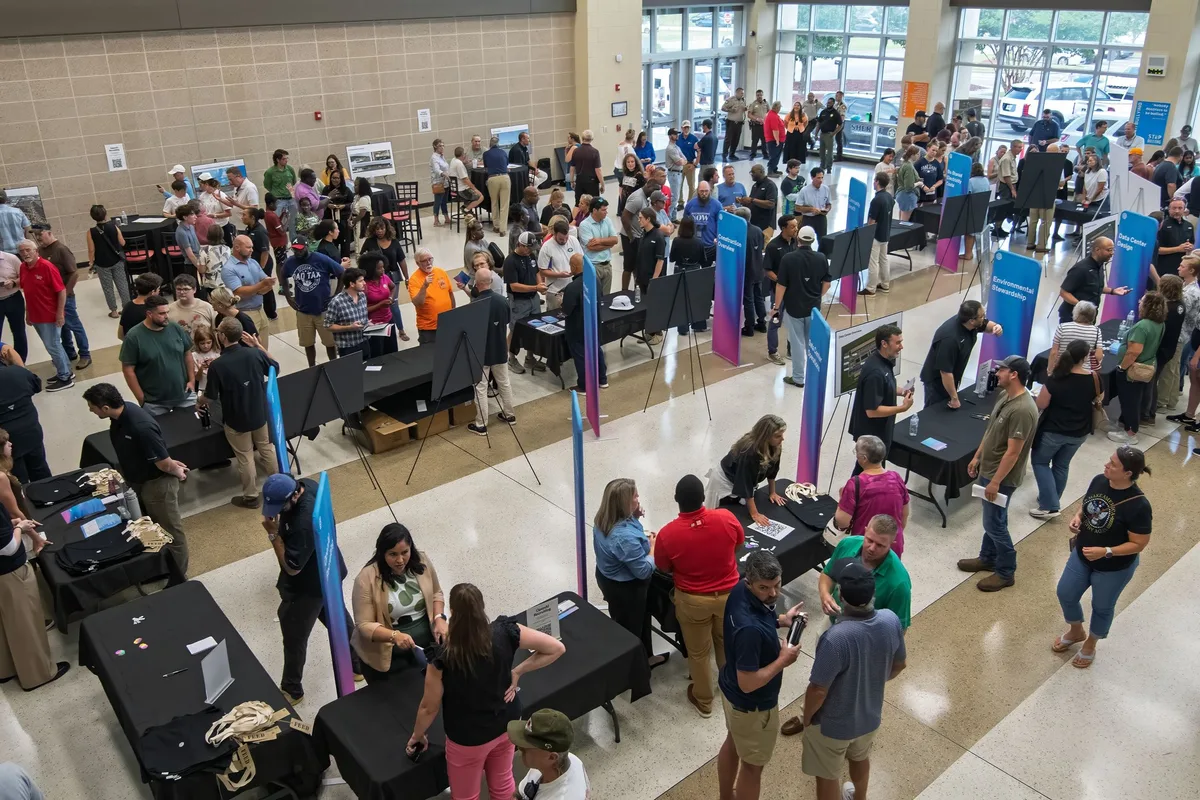
Project Camellia has already prompted public meetings and debate in Effingham County.
Local reporting documents questions about electricity use, water requirements, noise, construction impacts and community participation.
Public meetings held in July 2026 gave residents opportunities to discuss the planned development.
Some participants emphasized potential jobs and economic benefits.
Others raised concerns about the project's size and the consultation process.
Grid Protectors addresses one important part of the electricity discussion.
It does not automatically resolve every environmental or local-planning concern.
Temporary demand reduction alone cannot establish the total environmental impact of a large computing campus.
AI companies face mounting pressure over electricity costs
The announcement comes amid growing debate about the power demands of AI infrastructure in the United States.
Technology companies want large electricity supplies to support expanding computing systems.
Utilities must plan infrastructure investments that may take many years to recover.
Regulators are seeking ways to prevent the costs associated with a few large consumers from being shifted to residential customers.
Axios reports that policy discussions increasingly include flexible operation for major computing facilities.
That changes the relationship between data center developers and electricity providers.
A large customer must do more than identify a location and request a connection.
It must also demonstrate how its energy requirements will be integrated into the wider system.
Grid Protectors fits that changing debate, although the program's credibility will depend on real-world execution.
National expansion will require different local agreements
OpenAI describes Grid Protectors as a national program.
However, Georgia is currently the clearest example of a specific, quantified commitment.
Electricity systems across the United States do not operate under identical conditions.
Generation resources, seasonal demand, transmission constraints and regulatory rules differ between regions.
A campus in a summer-peaking region may have different flexibility requirements from a facility facing severe winter electricity demand.
The economic value of demand reduction can also vary by location.
OpenAI says new agreements will be negotiated individually.
The Georgia commitment of 1,000 MW should therefore not be presented as a universal requirement for every future campus.
The November 2 announcement does not establish a complete national implementation timetable.
Demand flexibility cannot replace grid construction
OpenAI explicitly acknowledges a major limitation of the program.
Flexible consumption does not eliminate the need for new electricity generation and transmission infrastructure.
Data centers will continue consuming substantial amounts of energy during most of their operating hours.
Their expansion may increase total annual electricity demand even if short-term peaks become easier to manage.
Demand response primarily changes when electricity is consumed.
It does not necessarily reduce total energy consumption by the same amount.
This distinction between power and energy matters.
A facility can consume large quantities of electricity over a year while still offering useful short-duration reductions in power demand.
Both characteristics are important when evaluating infrastructure costs and environmental impact.
The decisive test will come after the campus begins operating
Grid Protectors represents a potentially useful approach to integrating very large AI computing facilities into electricity networks.
The Georgia agreement demonstrates that substantial flexibility commitments can be negotiated before construction is complete.
However, a contractual commitment and proven operational performance are not the same thing.
The future campus will need to show that it can actually reduce electricity use when Georgia Power requests it.
Important measures will include delivered power reductions, response time, sustainable duration and the effect on computing operations.
The ability to repeat these events without compromising equipment or service reliability will also matter.
Financial benefits to customers should ultimately be evaluated against actual results rather than initial projections alone.
For OpenAI, the challenge is to demonstrate that a major AI data center can become a more adaptable electricity consumer while continuing to meet demanding computing requirements.
Grid Protectors reflects a change in how AI infrastructure is being presented: not only as a growing source of electricity demand, but potentially as a source of flexibility for the grid.
Whether that ambition can be fulfilled at scale will become clearer when the promised facilities and systems are operational.