
 By Camille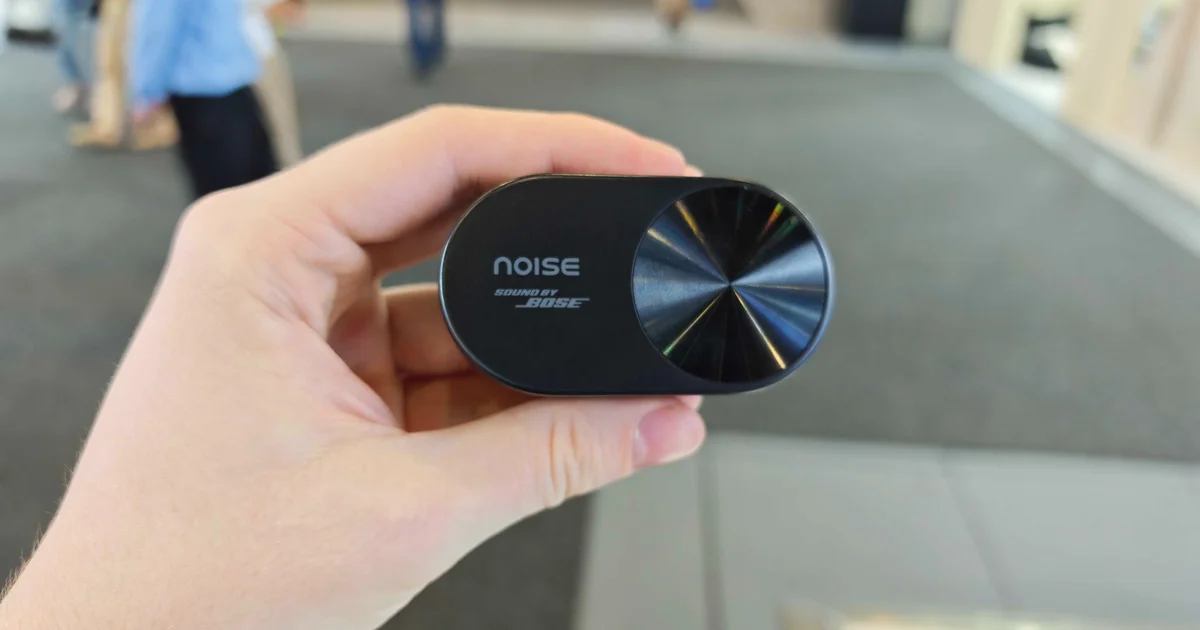
These earbuds do not enter the ear canal
Noise unveiled Master Buds Open on September 4 at IFA 2026 in Berlin.
They are the first open-ear model in the company's premium Master Series.
Sales are scheduled to begin in late September, initially through Noise's Indian retail and online channels.
The company has not yet announced final pricing, complete battery specifications or every international market that will receive them.
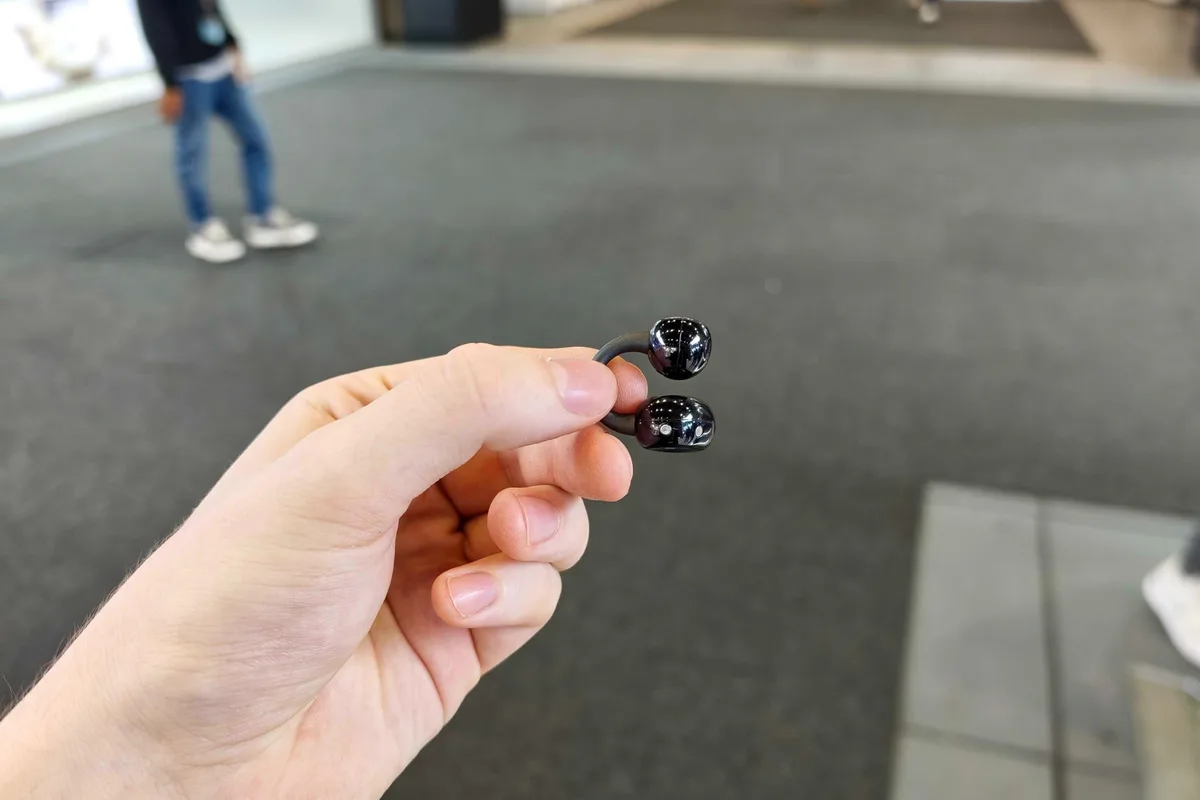
A flexible C-shaped structure clips around the ear.
One side sits behind the outer ear while the acoustic unit rests in front of the canal without sealing it.
The biggest advantage is also the biggest acoustic problem
Leaving the ear open preserves awareness of conversations, traffic and surrounding activity.
It can also be more comfortable for people who dislike silicone tips creating pressure inside the canal.
Acoustically, however, the lack of a seal makes low frequencies much more difficult to preserve.
It can also increase sound leakage to nearby people.
Those are fundamental physics problems rather than features that can simply be removed in software.
Noise is using 10.8mm drivers
Information shared around the IFA demonstrations describes 10.8mm drivers inside Master Buds Open.
Noise says its acoustic design is intended to maintain stronger bass while directing more sound toward the listener and less toward the surrounding room.
Independent testing will be important here.
Open-ear products generally have a harder time delivering convincing low-end extension than sealed in-ear headphones.
“Sound by Bose” does not mean Bose manufactures them
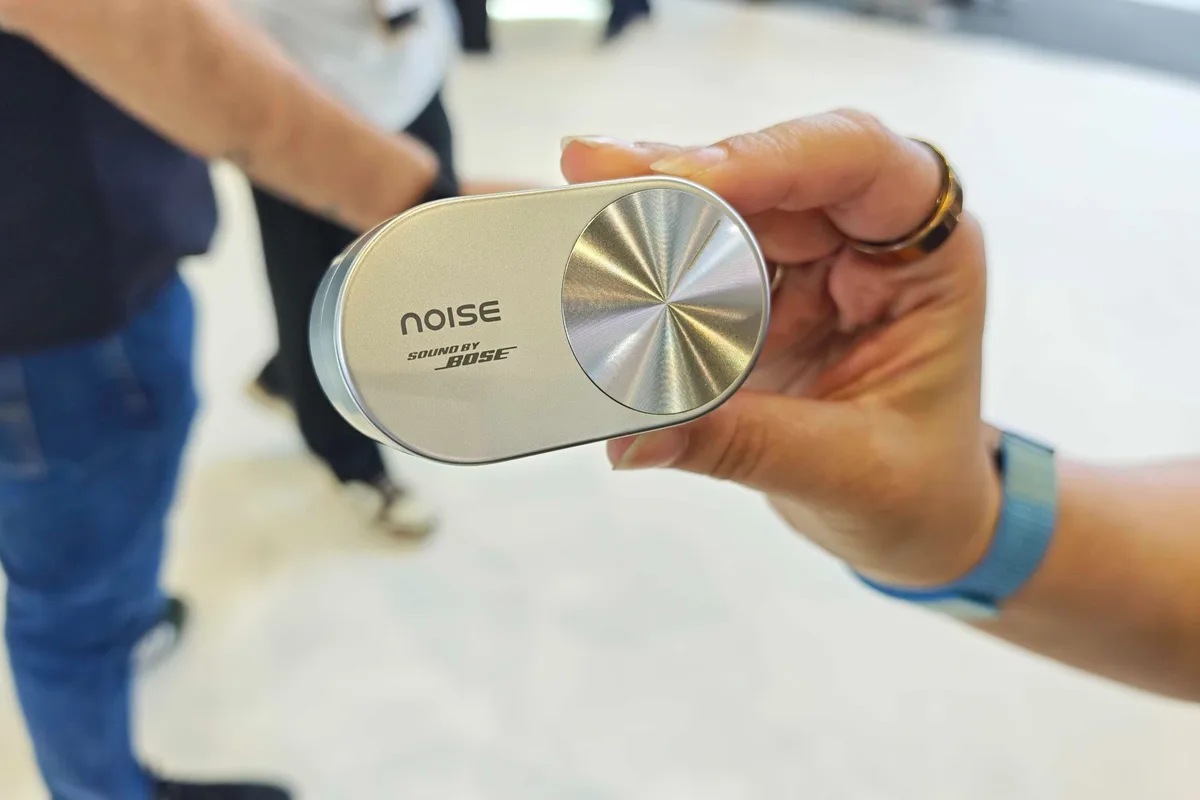
Sound by Bose branding appears prominently on the product and charging case.
That should not be confused with a rebadged Bose earbud.
Noise remains responsible for selling and positioning Master Buds Open.
Bose participates as an acoustic and technology partner through its Sound by Bose program.
The companies have not published a component-by-component breakdown of Bose's involvement.
The branding therefore represents collaboration and tuning expertise rather than a change of manufacturer.
Bose is also an investor in Noise
The relationship goes beyond one licensing agreement.
Bose has invested in Noise, and Sound by Bose technology already appears elsewhere in the Master Series.
Master Buds and Master Buds 2 both use the collaboration.
Master Buds Open extend it into the open-ear category for the first time.
That continuity makes the partnership more strategically interesting than a one-product logo arrangement.
Bose increasingly looks like an audio technology supplier
It is normal for premium speaker companies to supply branded audio systems to car manufacturers.
Consumer earbuds are different because Bose has its own directly competing products to sell.
Sound by Bose shows that at least some of its acoustic expertise can become a technology ingredient inside another company's hardware.
Noise gains immediate credibility from a brand that is far better known internationally.
Bose gains another route for its engineering beyond products carrying only its own name.
That puts the product surprisingly close to Bose's own Ultra Open Earbuds
Bose already sells Ultra Open Earbuds using its own clip-style open-ear concept.
Master Buds Open do not necessarily share the same hardware, algorithms or industrial design.
They nevertheless compete in the same broad category and target many of the same use cases.
Bose is therefore helping another company enter a market where it already has a premium product.
Price may become the key distinction
Noise has not announced the final retail figure.
Information shared around IFA points to a broad target range of roughly €99 to €199.
That range is not a final price and should not be treated as one.
It does suggest the possibility of pricing well below Bose's premium open-ear products.
If Master Buds Open land close to the lower end, the relationship between the two product lines becomes particularly interesting.
Dynamic EQ is designed for an environment that keeps changing
Noise also describes a Dynamic EQ system.
Its role is to adjust the sound as surrounding noise changes.
An open-ear product cannot isolate someone on a train platform the way a sealed ANC earbud can.
Instead, processing can alter parts of the frequency balance so music and speech remain more intelligible over environmental sound.
That does not cancel the environment.
It attempts to keep the program material audible within it.
That philosophy is almost the opposite of ANC
A sealed noise-cancelling earbud tries to build an acoustic bubble.
Master Buds Open deliberately refuse to create that bubble.
The engineering problem becomes maintaining consistent sound while outside audio remains present.
Traditional ANC reduction numbers therefore matter less here than driver position, tuning and adaptive equalization.
Spatial audio is also planned
Noise has mentioned spatial audio as part of the feature set.
The company has not yet published full details about the processing engine or supported content formats.
That distinction matters because “spatial audio” can refer to very different systems, from simple virtualization to content-aware multichannel rendering.
The final product specifications should clarify what Master Buds Open actually provide.
Four microphones are intended to handle calls
The call system uses four microphones.
Noise says processing will isolate the wearer's voice from background sound.
Open-ear earbuds remain exposed to wind and environmental noise, making outdoor call quality particularly important.
Microphone count alone does not guarantee intelligibility.
The algorithms and physical microphone placement will matter more in real use.
Google Fast Pair and dual-device connectivity are expected
Google Fast Pair should simplify pairing with Android devices.
Noise also plans simultaneous connection to two sources.
That means a user can remain connected to a laptop and smartphone without repeatedly entering Bluetooth settings.
For earbuds intended to stay on the ear for much of the day, multipoint connectivity may be one of the most useful features in ordinary use.
The charging case borrows from vinyl records
The case is one of the product's most distinctive visual elements.
A large circular metallic element covers part of its front.
Noise describes the design as inspired by vinyl records.
IFA prototypes appeared in several dark, silver and gold-toned finishes.
The look is deliberately more jewelry-like than conventional sports-oriented open earbuds.
Noise is also adding an AI companion
The company has shown an AI companion as part of its expanding audio ecosystem.
One announced use is one-tap transcription.
The earbuds could capture a meeting and pass the content into a system capable of producing notes or a summary.
Noise has not yet published complete details about supported languages, model providers, cloud processing or data retention.
Those details will be necessary before the feature can be evaluated properly.
Transcription immediately creates a privacy question
Earbuds are worn in environments filled with other people's conversations.
A one-tap transcription function therefore makes recording indicators, consent and retention policies important.
Noise needs to explain what is captured, what leaves the device and how users can delete stored material.
Until that documentation is available, the AI feature is better treated as an announced capability than a reason to buy the product.
Battery life and exact pricing are still missing
That is the largest limitation of the IFA announcement.
Noise showed functioning hardware and disclosed the broad direction of the feature set, but it did not publish a complete retail specification sheet.
Official battery-life figures are still absent.
So is the exact price.
The late-September launch should fill in both gaps.
Figures from provisional listings or from other Master Series products should not be assumed to apply automatically to this model.
Master Buds Open are also part of Noise's push beyond India
Noise already has substantial scale in its domestic smartwatch and audio markets.
IFA gives the company a global stage for a much broader expansion.
Launching that effort with Sound by Bose branding is strategically useful.
European buyers may not yet recognize Noise, while Bose has decades of brand awareness.
Putting both names on the same product shortens that credibility gap immediately.
The real test is how much Bose can be heard at a Noise price
A prestigious logo cannot remove the physical compromises of open-ear audio.
Bass remains harder to reproduce, external noise remains audible and leakage has to be controlled carefully.
Final pricing will also decide whether Master Buds Open are truly an affordable alternative or simply another premium accessory.
The collaboration nevertheless changes the story.
Noise is not merely borrowing the shape of Bose's open-ear idea.
It is working with the company whose own products helped make that premium category visible.
If Master Buds Open eventually sell for around half the price of the most expensive rivals, the interesting question will not only be whether Noise can compete with Bose.
It will be why Bose decided to help it do so.