
 By Adri
Connecting a Linux PC to a modern 4K television sounds straightforward: a graphics card, an HDMI cable and a display.
In practice, Radeon users have sometimes encountered differences between their hardware's advertised capabilities and the features supported by the Linux graphics driver.
HDMI 2.1 has been one of the best-known examples.
A Radeon card with HDMI 2.1 hardware could support certain advanced display modes under Windows without providing the same complete functionality under Linux.
That situation is changing.
On October 24, Phoronix reported that the Direct Rendering Manager graphics updates intended for Linux 7.4 had been merged.
Among them is the default activation of HDMI 2.1 Fixed Rate Link in AMDGPU, accompanied by features designed to improve compatibility with modern displays.
Why HDMI 2.1 matters for gaming
HDMI carries video and audio between a computer and a display.
However, different generations of the standard support different transmission capabilities.
High-refresh-rate 4K displays place significant demands on connection bandwidth.
Displaying more frames each second requires the transmission of more image data.
Color formats and bit depth also influence the amount of information carried by the link.
HDMI 2.1 introduced Fixed Rate Link, commonly abbreviated FRL.
This transmission method enables higher data rates than older HDMI modes using TMDS.
It is particularly useful for high resolutions and refresh rates.
Enabling FRL by default in AMDGPU improves the video output path rather than increasing the graphics processor's computational power.
VRR synchronizes display refresh with GPU output
Variable Refresh Rate is another central element of the Linux 7.4 update.
A conventional fixed-refresh display updates at regular intervals, even when the graphics processor produces frames at a changing rate.
That mismatch can cause tearing or irregular motion.
VRR allows a compatible display to adjust its refresh timing to match the frames being produced.
This can reduce tearing and improve perceived smoothness when frame rates fluctuate.
AMD supports FreeSync as part of its variable-refresh ecosystem.
The feature is particularly relevant to games with changing graphics workloads.
A complex scene may temporarily reduce GPU performance.
With a properly configured VRR display, that variation can be handled more smoothly than with a strictly fixed refresh rate.
However, VRR does not generate additional frames.
It cannot turn a game rendering at 40fps into a game natively producing 120fps.
It improves synchronization between the screen and the frames actually rendered.
ALLM can automatically select a low-latency display mode
Linux 7.4 also brings Auto Low Latency Mode support to AMDGPU's HDMI feature set.
ALLM allows a compatible source device to indicate that a television should prioritize low latency.
Many televisions apply additional image processing when displaying films or television programs.
Those operations can include motion enhancement and smoothing.
Some viewers appreciate those features for video content.
For gaming, however, they may increase the delay between an input and its appearance on screen.
ALLM helps the television select settings more appropriate for interactive content.
It should not be confused with a feature that makes the GPU render faster.
It changes how compatible display equipment handles the incoming signal.
The practical benefit depends on the television and its configuration.
A long-standing limitation of the open-source Radeon driver
The HDMI 2.1 difficulties under Linux were not simply caused by a lack of developer interest.
For several years, AMDGPU faced restrictions affecting open-source implementation of parts of the HDMI 2.1 specification.
The HDMI Forum had been an obstacle to implementing the required functionality in the public driver.
The situation changed during 2026, allowing relevant patches to move forward.
The exact reasons for that change have not been publicly established.
Some observers have speculated about Valve's possible involvement.
That remains unconfirmed and should not be presented as the official explanation.
What is documented is the gradual progress of HDMI 2.1 support through AMDGPU.
Early work involved FRL transmission.
Developers subsequently added support for VRR, FreeSync and ALLM before enabling the combined functionality by default.
Recent patches improve connection reliability
Supporting a display feature is only part of the challenge.
The driver must also handle connection negotiation and changes between operating modes reliably.
In early October, AMD submitted additional patches for its graphics driver.
One concerned HDMI VRR metadata.
The driver now places the relevant information in the VTEM packet location intended for that purpose.
According to Phoronix, the change should address a brief black screen that could occur when VRR was enabled or disabled.
Another fix adjusts a timeout used during HDMI link training.
The purpose includes improving compliance testing and connection reliability.
These changes illustrate why HDMI 2.1 support involves more than simply enabling additional bandwidth.
Correct operation also depends on negotiation between the computer and display, alongside accurate communication of the required mode information.
Linux 7.4 does not guarantee 4K 120Hz on every PC
It is important to distinguish new driver capabilities from guaranteed compatibility on every system.
Several components must support the desired video mode.
The graphics card needs the appropriate output capabilities.
The monitor or television must accept the requested signal.
The cable needs to carry that signal reliably.
The operating system and drivers must support the necessary features.
Adapters may introduce additional restrictions.
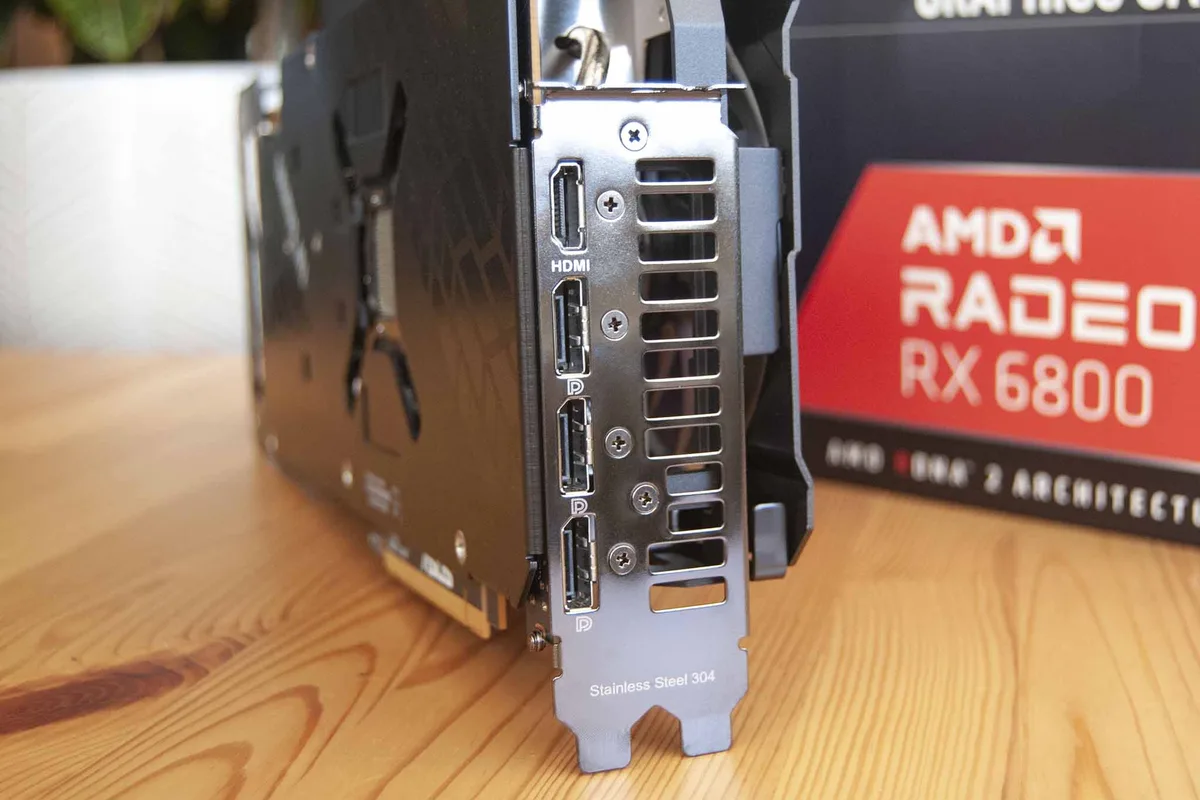
A display advertised as HDMI 2.1 does not automatically support every optional feature of the standard.
FRL, VRR and ALLM compatibility should be checked for each specific model.
Linux 7.4 supplies an important part of the overall system but cannot independently eliminate every hardware compatibility limitation.
DisplayPort remains useful
For Linux gamers, DisplayPort has long been a practical option for high-refresh-rate monitors.
Many PC displays include the connector.
Living-room setups are different.
Televisions generally provide HDMI inputs rather than DisplayPort.
A PC connected directly to a television can therefore depend heavily on HDMI support.
That makes the AMDGPU improvements particularly interesting for large-screen gaming systems.
They may also benefit living-room computers used for multimedia playback, although VRR and low-latency mode are especially relevant to games.
DisplayPort does not become obsolete because HDMI 2.1 support improves.
The two connections continue to serve different devices and usage patterns.
The changes are merged, but stable Linux 7.4 is still ahead
On October 24, the graphics subsystem changes entered the Linux 7.4 development branch.
This is an important milestone in the release process.
It does not mean that every distribution already ships a stable Linux 7.4 kernel.
Development still involves testing and potential fixes before the final release.
After publication, each distribution will follow its own adoption schedule.
Rolling-release distributions may introduce new kernels relatively quickly.
Other distributions prioritize stability and retain older kernels for longer periods.
Even with a suitable kernel installed, interactions with other software components may remain relevant.
Real-world feedback from different graphics cards and displays will therefore be important.
Intel, NVIDIA and Qualcomm also receive graphics improvements
Linux 7.4's graphics changes extend beyond AMD.
The Intel Xe driver gains improvements related to graphics management and video memory.
These include VRAM health checks and mechanisms for handling certain forms of degraded video memory.
Intel is also continuing work related to its upcoming GPU D Series accelerators.
For NVIDIA, development of the open-source Nova driver continues with additional Rust code.
The existing Nouveau driver receives further fixes.
This does not mean that Nova is already a complete replacement for every current NVIDIA configuration.
Qualcomm graphics support also expands through the MSM driver.
The changes include support for Adreno A830, A845, A850 and X2-85 GPUs.
Rockchip receives additional work related to HDMI 2.0.
Together, these developments highlight the importance of graphics drivers in supporting new hardware under Linux.
A meaningful milestone for Linux gaming
Enabling HDMI 2.1 FRL by default represents a long-awaited improvement for Radeon users.
Combined with VRR and ALLM, it allows AMDGPU to make better use of selected capabilities in modern televisions and monitors.
The change does not promise more frames rendered by the GPU and does not replace a graphics hardware upgrade.
Instead, it improves the connection's ability to transmit and display frames the computer has already produced.
That distinction matters because even a powerful computer can deliver a limited viewing experience when its display connection cannot support the intended mode.
The October 24 integration does not yet guarantee flawless compatibility on every setup.
Nevertheless, after years of restrictions, Linux 7.4 marks concrete progress toward better interoperability between Radeon graphics cards and HDMI 2.1 displays.