
 By Camille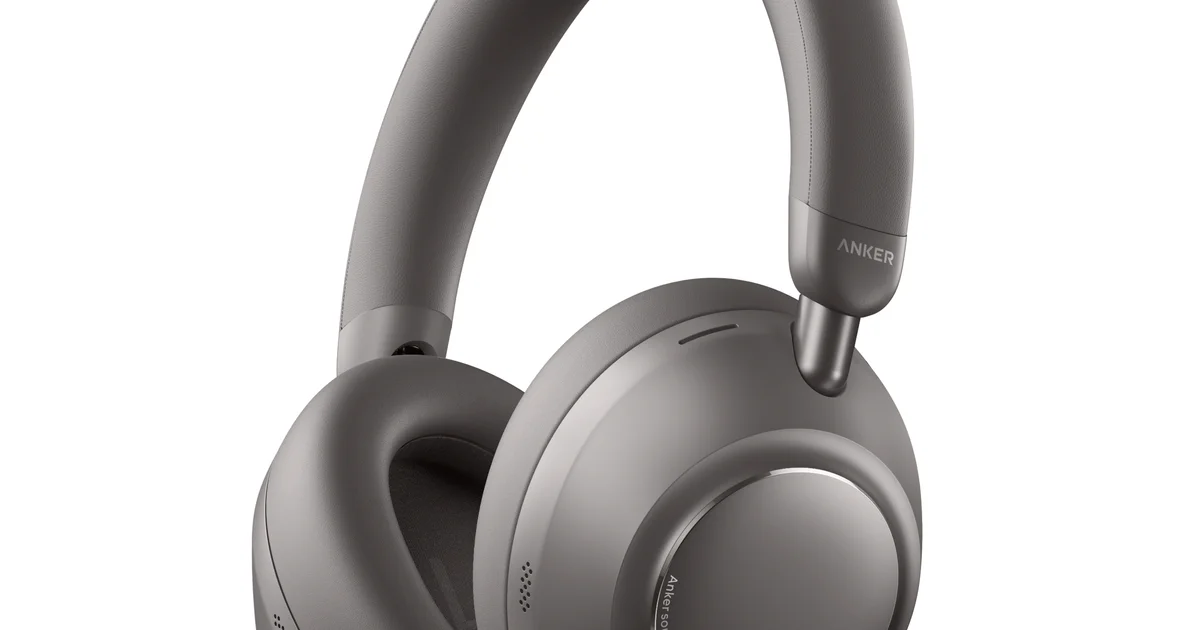
The Pro upgrade starts with a voice-processing chip
Soundcore introduced its Thus technology earlier this year in the Liberty 5 Pro family. The Space 2 Pro is the company's first over-ear headphone to use it.
Thus is mainly focused on identifying and isolating speech from environmental noise rather than providing the more fashionable kind of conversational AI feature.
Six microphones are used for voice isolation during calls.
That makes the Space 2 Pro unusually explicit about solving the outgoing side of headphone audio: what the person you are talking to actually hears.
Eight additional microphones handle adaptive ANC
The active noise-cancellation system uses eight microphones and Soundcore's Adaptive ANC 3.0.
Soundcore claims the resulting cancellation is 1.5 times stronger than the Space One Pro across the 20Hz to 2,000Hz range.
That frequency span includes low-frequency engine and HVAC noise as well as a significant portion of normal speech.
The 1.5x figure is a manufacturer claim and still needs independent testing, but the specified frequency range gives the claim more useful context than a generic percentage improvement.
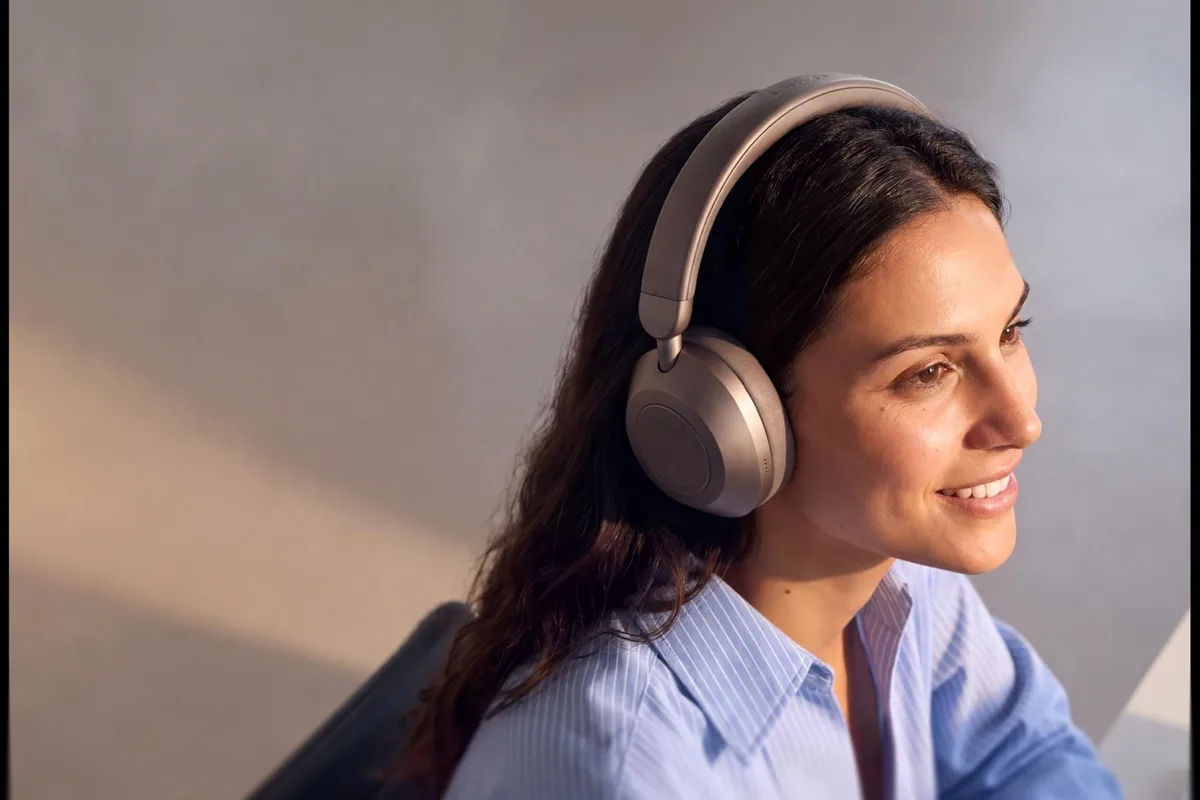
Call isolation and ANC are not the same problem
Active noise cancellation primarily protects the listener from environmental sound.
Call processing has to do something different. The microphone system must decide which parts of the captured signal belong to the speaker and which belong to traffic, ventilation, keyboards or nearby conversations.
The Thus processor is intended to perform that separation in real time.
The Verge previously praised the same processing approach in Soundcore's Liberty 5 Pro earbuds, describing its call isolation as exceptionally effective. That experience provides some context for the technology, although it is not a substitute for a full Space 2 Pro review.
LDAC, HearID and Bluetooth 6.1 cover the normal headphone duties
The Space 2 Pro supports SBC, AAC and LDAC over Bluetooth 6.1.
LDAC provides a higher-bandwidth wireless option on compatible devices. Soundcore notes that LDAC and its Spatial Audio mode cannot be enabled simultaneously.
HearID 5.0 creates a personalized equalization profile based on a listening test.
Multipoint connections are supported, including while LDAC is active according to Soundcore's current documentation.
There is also a 3.5mm auxiliary input. USB-C is used for charging but does not carry audio.
Battery life reaches 60 hours only with ANC off
Soundcore rates playback at up to 60 hours at 50 percent volume with active noise cancellation disabled.
Turn ANC on and the figure falls to 30 hours.
The company separately quotes 20 hours of call time, a useful specification for a headset whose main distinction is voice performance.
The technical documentation lists two nominal 350mAh battery cells.
It lands directly at $200
The Space 2 Pro weighs 264 grams and uses slow-rebound memory foam with protein-leather ear cushions.
Black, white and gray or titanium finishes are planned depending on market.
The headphones launch on September 22 for $199.99 in the US. Soundcore's French store lists them at €199.99, with preorders already open and shipping scheduled from the same date.
The interesting AI feature is the one nobody needs to talk to
AI branding on headphones increasingly covers assistants, transcription and generative features. The Space 2 Pro's most important use of specialized processing is much less visible.
It is trying to decide, thousands of times during a call, which sound belongs to your voice and which sound should disappear.
At $200, that alone will not excuse mediocre sound, comfort or ANC. The category is already too competitive for that.
But if Thus and the six-microphone array can make a crowded room sound empty to the person on the other end, Soundcore will have delivered a headphone upgrade that someone other than its owner can actually hear.