
 By Camille
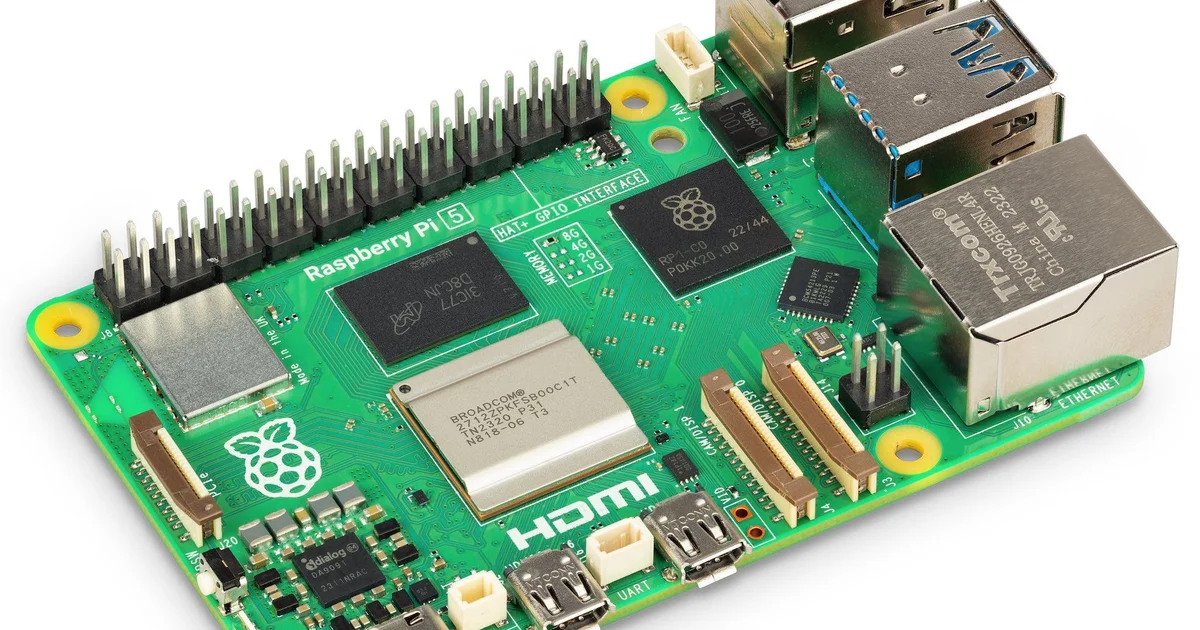
A $385 price tag is unusual territory for a computer that fits in the palm of a hand.
That is now the official price of the Raspberry Pi 5 equipped with 16GB of RAM, after a series of increases that have transformed its position in the market.
The processor has not changed. The board has not received a new graphics architecture, and the latest announcement introduces no additional hardware features.
The increase is about component costs and supply constraints.
On November 2, Raspberry Pi chief executive Eben Upton announced an immediate $80 increase, raising the 16GB model from $305 to $385.
The change is significant on its own. The full price history is even more striking.
From $120 to $385 in less than two years
Raspberry Pi launched the 16GB version of its fifth-generation single-board computer on January 9, 2025.
Its original price was $120.
The higher-memory configuration was intended for demanding workloads, including heavier desktop software, specialized computing and local experimentation with AI models.
At the end of 2025, memory costs began reshaping the price list.
In December, the board increased to $145. Another $60 rise in February 2026 brought it to $205.
April added another $100, producing a $305 price.
The latest $80 increase takes the total to $385.
The board now costs $265 more than it did at launch, representing a cumulative increase of approximately 221%.
Its current list price is 3.21 times the original figure.
That is a remarkable change for a product whose fundamental hardware specification remains the same.
Raspberry Pi says alternative memory supplies are limited
Upton's November announcement identifies a particular supply problem.
Raspberry Pi has been unable to secure sufficient alternative sources for the 16GB DRAM components used in its highest-density products.
The company says it has been qualifying alternative components wherever possible to reduce dependence on constrained suppliers.
However, those efforts have not eliminated the shortage affecting the 16GB configuration.
Other electronic components also remain difficult to obtain.
Together, these pressures have forced the company to pass additional costs to customers.
Raspberry Pi describes the increases as necessary but acknowledges that they are unwelcome.
The official announcement does not disclose the exact purchase price of the memory package or the profit margin associated with each board.
It would therefore be inappropriate to attempt to calculate those figures from the retail price alone.
AI data centers contribute to the memory squeeze
The wider memory market has been under pressure for an extended period.
Technology companies are investing heavily in AI servers and the computing infrastructure required to train and run increasingly demanding models.
Those systems require substantial memory capacity and bandwidth.
The resulting demand influences semiconductor manufacturers' investment and production decisions.
The LPDDR4X memory used by the Raspberry Pi 5 is not the same product as the high-bandwidth memory installed alongside some AI accelerators.
However, the technologies exist within a broader memory-manufacturing industry where capacity and resources are interconnected.
Raspberry Pi has previously pointed to this competition when explaining price increases.
In April 2026, the company said the cost of some LPDDR4 memory parts had increased sevenfold over the preceding year.
That helps explain why even a relatively small computer can be affected by global investment in large data centers.
Still, the full $265 increase should not be attributed exclusively to AI demand.
Product-specific sourcing constraints and shortages of other components are also part of the company's explanation.
Compute Module 5 customers face another increase
The November decision also affects the 16GB versions of Raspberry Pi Compute Module 5.
Each affected configuration receives a $40 price increase.
Compute Module 5 is designed for incorporation into custom electronic products.
It is used by developers and businesses building embedded systems rather than conventional standalone desktop computers.
Its configurations vary according to wireless connectivity and onboard eMMC storage.
The resulting prices therefore differ between models.
For a hobbyist buying a single board, a $40 increase may be inconvenient.
For a manufacturer purchasing hundreds or thousands of modules, it can materially affect the economics of a product.
The company directs customers to its official Compute Module 5 product documentation for the updated prices.
Businesses need to check the exact part number used in their designs rather than assume one price applies to every module.
The Raspberry Pi 500+ keeps its current price
One 16GB Raspberry Pi product is notably absent from the latest increases.
The Raspberry Pi 500+, a desktop computer built into a mechanical keyboard, will retain its current price.
That exception shows that the company is not applying the same increase to every product with 16GB of memory.
However, the 500+ is not directly interchangeable with a bare Raspberry Pi 5.
It is a more integrated desktop product with different physical characteristics and included equipment.
It has also experienced previous price increases.
Keeping the price unchanged in November does not mean Raspberry Pi has returned to its earlier pricing across the range.
For users primarily interested in a desktop system, however, the shrinking price gap between certain products makes the comparison increasingly relevant.
What hardware does $385 buy?
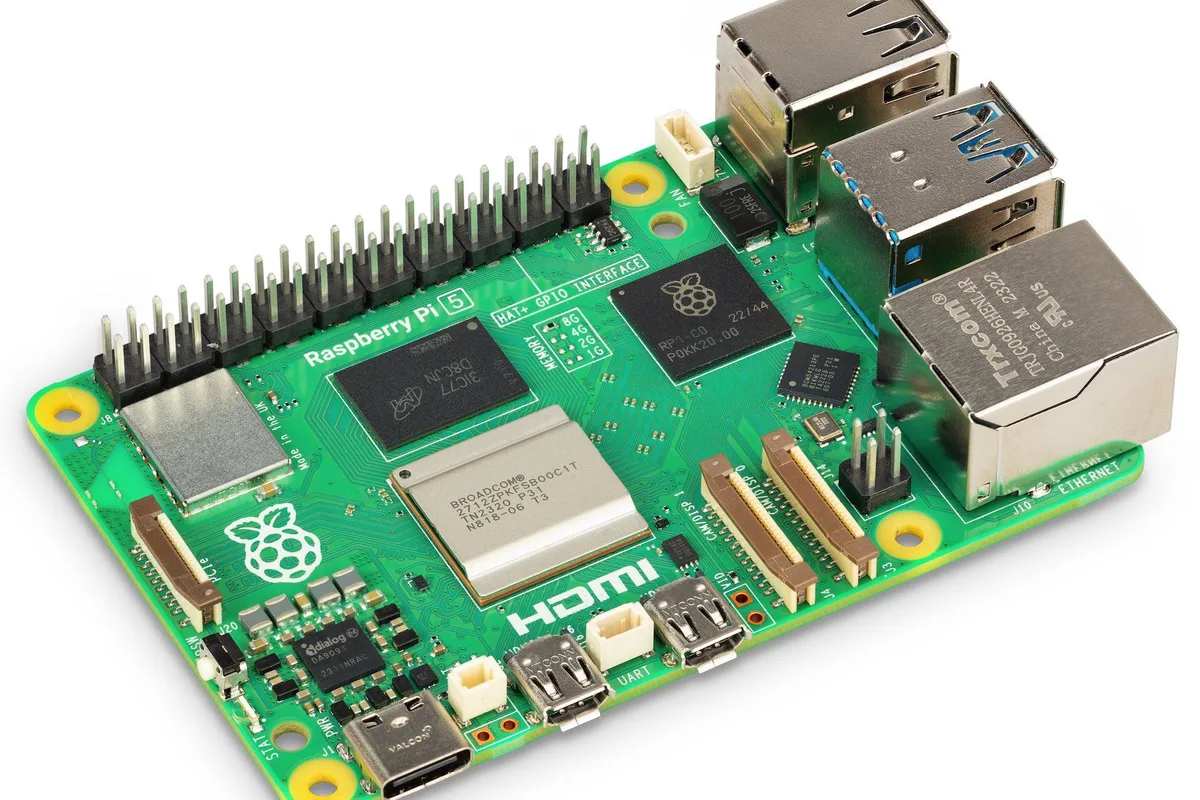
The Raspberry Pi 5 remains a capable single-board computer.
It uses a Broadcom BCM2712 processor with four Arm Cortex-A76 cores running at 2.4GHz.
Graphics are handled by a VideoCore VII GPU.
The system supports two 4K displays at 60Hz through its micro-HDMI connections, subject to the supported display configuration.
The affected model includes 16GB of LPDDR4X-4267 memory.
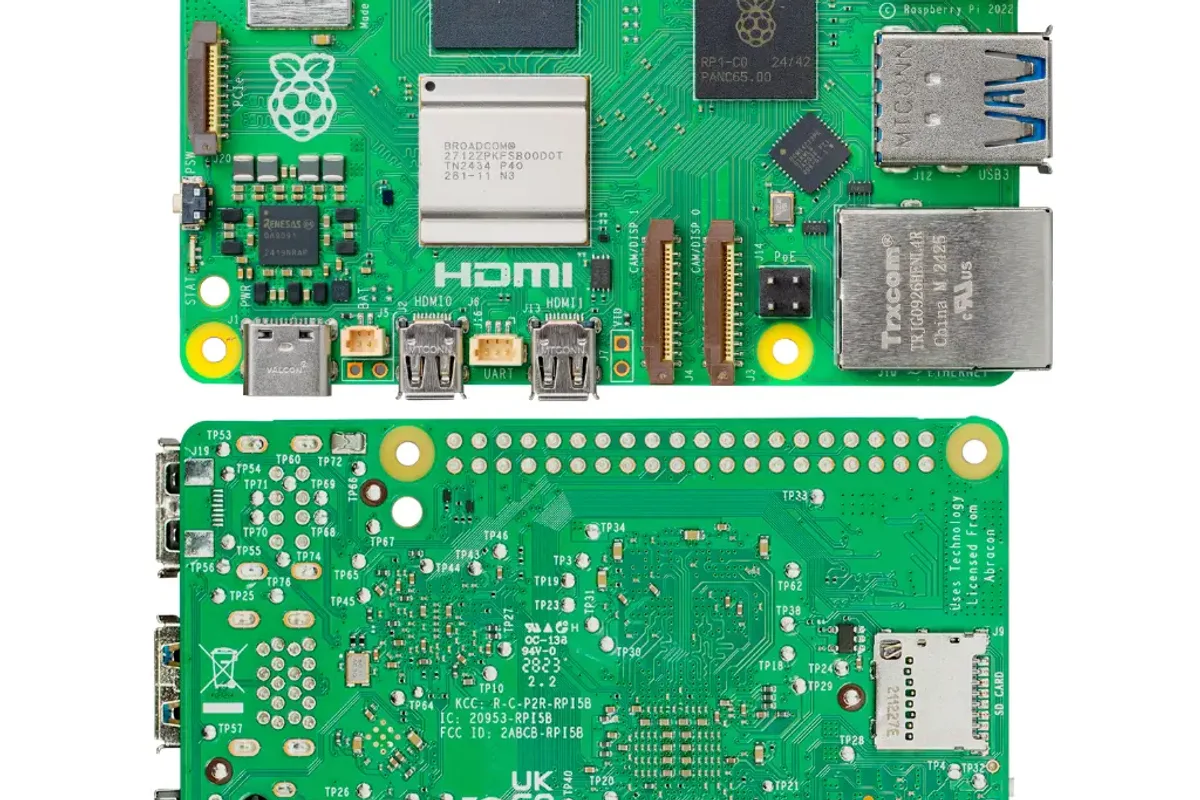
Connectivity consists of two USB 3.0 ports, two USB 2.0 ports, Gigabit Ethernet, dual-band Wi-Fi 5 and Bluetooth 5.0.
It also offers a 40-pin GPIO header, camera and display interfaces, and PCIe 2.0 x1 expansion.
Those interfaces are important parts of the board's appeal for electronics and embedded-development projects.
However, the computer does not include the integrated SSD storage found in many conventional mini PCs.
Users may need a microSD card, an appropriate power supply, cooling hardware and other accessories depending on their project.
At this price, its value increasingly depends on those specialized capabilities rather than raw desktop-computing performance.
Mini PCs become more serious competitors
A $385 board invites comparison with complete compact computers.
Some mini PCs in this broad price category include a chassis, memory, storage and a processor capable of handling demanding desktop applications.
For browsing, office software and general multitasking, they may provide better value.
However, that comparison does not tell the whole story.
Raspberry Pi offers a hardware and software ecosystem designed around experimentation, customization and embedded computing.
Its GPIO interface, camera connections and extensive range of expansion boards are not standard features of every mini PC.
A compact desktop computer may therefore be a better choice for ordinary productivity.
A Raspberry Pi can still be the more suitable option for sensor control, robotics, electronics education or a custom appliance.
The higher price does not remove those advantages.
It does make the decision to purchase the most expensive configuration harder to justify without a specific requirement.
Many projects do not need 16GB
Raspberry Pi's advice to buyers is straightforward: avoid paying for more memory than an application needs.
That guidance is particularly relevant now that the price difference between memory configurations has become so large.
A small DNS server, a simple monitoring device or a lightweight embedded controller may operate comfortably with far less memory.
Projects running multiple containers, large databases or demanding desktop workloads may benefit more from a 16GB configuration.
The correct decision depends on actual usage.
Developers should measure memory consumption under representative workloads and allow reasonable headroom for future changes.
That approach is more reliable than choosing the highest capacity automatically.
Lower-memory boards or earlier Raspberry Pi generations may offer better economics for many projects.
Local AI users should consider more than RAM capacity
When the 16GB Raspberry Pi 5 launched, Raspberry Pi highlighted applications such as local language models and scientific computing.
More memory can allow certain programs or models to run when they would otherwise exceed the capacity of an 8GB system.
But capacity is only part of AI performance.
Processor speed, memory bandwidth, software optimization and model architecture also matter.
The Raspberry Pi 5 does not become a high-performance AI workstation simply because it contains 16GB of RAM.
Small optimized models can be useful for education, experiments and selected local tasks.
More demanding workloads may benefit from a different computing platform or specialized acceleration.
At $385, buyers should examine expected application performance rather than use RAM capacity as the sole measure of value.
Embedded developers face a different problem
For businesses, the impact can extend beyond purchasing a more expensive board.
A manufacturer may have designed an entire product around a specific Compute Module 5 configuration.
Switching to a different memory capacity or computing platform can require engineering work.
Compatibility, power consumption, software behavior and certification may all need to be checked again.
The cost of redesigning a product can exceed the component-price difference.
That makes sudden supply-chain changes especially difficult for embedded systems with long manufacturing lifetimes.
Raspberry Pi encourages commercial customers to discuss memory optimization with its team.
Reducing memory requirements may help some companies retain the same platform while lowering production costs.
But the feasibility of such changes depends on the application's actual technical requirements.
European prices will not simply mirror $385
The announced $385 price is a US-dollar list price.
It should not be treated as a universal retail price in Europe.
Local taxes, currency conversion, distribution arrangements and availability influence what customers actually pay.
Retailers may also hold stock acquired before the latest increase.
Some offers could therefore temporarily reflect older prices while others incorporate the new list price.
Buyers should compare the exact 16GB board and check whether an offer includes accessories.
Raspberry Pi also warns that some sellers have used the memory shortage to inflate prices or advertise misleading products.
The company recommends purchasing through authorized resellers.
That advice is particularly relevant when the same model appears at widely different prices.
Raspberry Pi intends to reverse increases eventually
Upton does not describe the higher prices as a permanent strategic repositioning of the brand.
Raspberry Pi expects memory-market conditions to improve over time.
The company says it intends to reverse price increases when component costs decline.
However, it has provided no precise timetable.
It has not committed to a specific future price for the 16GB model.
Customers should therefore distinguish an intention to lower prices from an announced discount with an effective date.
The return to lower prices depends on industrial conditions that Raspberry Pi does not fully control.
For purchases that cannot be postponed, the current official pricing remains the relevant reference.
A familiar computer faces a very different value calculation
The Raspberry Pi 5 remains useful because of its compact size, expansion options and established development ecosystem.
Those strengths have not disappeared.
What has changed is the financial calculation surrounding the 16GB version.
At $120, it offered an accessible route into higher-memory single-board computing.
At $385, it competes with a much broader selection of computing hardware.
The November 2 increase shows how supply constraints affecting one essential component can reshape an entire product's value proposition.
For modest projects, the company's own recommendation is increasingly persuasive: measure real requirements and avoid unused capacity.
For applications that genuinely need 16GB in the Raspberry Pi ecosystem, the higher price may be unavoidable.
Whether the board becomes affordable again will depend less on a new processor or a revised circuit board than on the memory industry's ability to restore more favorable supply conditions.